
High-Spec Circuit Fabrication for Extreme Industrial Applications
Pre-engineered boards manufactured in Shenzhen to meet IPC Class 3 and Russian GOST standards for power, heavy machinery, and sub-zero telemetry.

High-Quality China Multilayer PCB Fabrication (1–60 Layers, IPC-2/3) for Eurasian Industrial Automation & Telecom
Product Specifications & RFQ →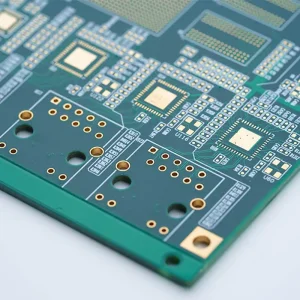
Famous High-Tg PCB Manufacturing (TG150–TG300) for Russian Automotive, Aerospace & Severe Siberian Cold Systems
Product Specifications & RFQ →
High Thermal Conductivity Aluminum MCPCBs for Mining Converters, Energy Grids & Industrial High-Output LED Modules
Product Specifications & RFQ →
OEM High-Tg Ruggedized Circuit Substrates for Rail Locomotives, Defense Hardware & Harsh Eurasian Power Grids
Product Specifications & RFQ →The Russian Electronics Sourcing Landscape: Paradigm Shifts & Realities
A strategic overview of industrial transition, import substitution policies, and new bilateral component supply channels across the Russian Federation and CIS region.
Structural Reconfiguration of Industrial Component Ingestion
The Russian industrial electronics ecosystem is navigating the most comprehensive structural realignment in modern Eurasian history. Historically anchored to Western European and North American distributors (such as Mouser, Digi-Key, EBV Elektronik, and Arrow Electronics), Russian original equipment manufacturers (OEMs), defense contractors, instrument design bureaus, and contract manufacturers (EMS) in hubs like Moscow (Zelenograd), Saint Petersburg, Ekaterinburg, and Novosibirsk faced immediate systemic ruptures. Traditional procurement channels ceased overnight, triggering profound operational deficits in active silicon, analog power ICs, microcontrollers, RF transceivers, and discrete passives.
To preserve industrial continuity, Russian federal mandates—notably the state-backed Importozameshchenie (Import Substitution) policies and the Ministry of Industry and Trade’s Strategy for the Development of the Electronic Industry up to 2030—prioritized two urgent operational directives: First, accelerating domestic design via indigenous fabless architectures (e.g., Baikal, Elbrus, Milandr, Mikron); and second, forging resilient, uninhibited, direct-factory procurement lines with Tier-1 electronic manufacturing ecosystems in Shenzhen and the greater Greater Bay Area of China.
Severe Obsolescence & EOL
Sudden termination of direct factory support from Western chipmakers forced Russian engineers to scramble for end-of-life (EOL) stocks, requiring comprehensive bill-of-materials (BOM) scrubbing and rapid redesign validation to prevent manufacturing shutdowns.
Gray-Market Counterfeiting
The unchecked proliferation of intermediaries and unauthorized third-party brokers has inundated the market with remarketed, sanded, relabeled, and recycled components, causing field failure rates in Eurasian industrial deployments to skyrocket.
Cross-Border Settlement Friction
Financial sanctions disconnecting major Russian commercial institutions from SWIFT created monumental friction in foreign exchange transactions, creating an imperative for direct Ruble-to-CNY clearing mechanisms between Shenzhen suppliers and Russian buyers.
Pin-to-Pin Alternate Engineering & Strategic Silicon Migration
How PCB ADEPT bridges the East-West component divide with direct authorized relationships, verified functional cross-references, and advanced component validation.
Western-to-Asian Functional Equivalents
Rather than relying on exorbitant open-market spot brokers for scarce Western legacy chips, our dedicated engineering group performs precision functional matching to Tier-1 Chinese and Asian semiconductor manufacturers. We analyze silicon architecture, internal register mapping, thermal dissipation characteristics, and firmware compatibility to deliver drop-in pin-to-pin or minimal-firmware-patch alternatives.
- Microcontrollers (MCU): Seamless migration paths from STM32F1/F4 series to Geehy Semiconductor (APM32), GigaDevice (GD32), and HDSC/XMC architectures with cycle-accurate peripheral performance.
- Power Management & DC-DC: Direct replacements for Texas Instruments (TI), Monolithic Power Systems (MPS), and Analog Devices (ADI) with robust solutions from SGMICRO, 3PEAK, and Mornsun.
- Interface & Isolation: RS-485, CAN-bus, and digital isolators cross-referenced to Novosense, RunIC, and Chipanalog, exceeding galvanic isolation requirements under Russian GOST testing conditions.
Direct Franchise Supply Line Verification
Operating from Shenzhen ICSLOVE Technology’s headquarters in Bao'an District, our procurement personnel interface directly with original component manufacturers (OCM) and franchise-authorized first-tier distributors. This guarantees pristine provenance with full Certificates of Conformance (CoC), continuous factory date-codes, and factory moisture barrier bag (MBB) vacuum sealing.
By eliminating unauthorized secondary brokers, our sourcing channel achieves full component traceability down to wafer lots, ensuring every component placed on our 6 automated SMT lines performs reliably under intense industrial workloads.
Direct Bilateral Clearing & Specialized Logistics Infrastructure
A successful supply partnership with Russian industrial entities requires absolute mastery over fiscal clearing and logistics corridors. PCB ADEPT has engineered resilient pathways that insulate projects from secondary financial sanctions and border congestion:
- Direct RUB-to-CNY Bilateral Settlement: We facilitate compliant cross-border transactions through VTB Bank Shanghai branch, Bank of China, and direct Russian-Chinese banking corridors utilizing the Cross-Border Interbank Payment System (CIPS), bypassing Western intermediary correspondent banking networks entirely.
- Overland Railway Corridors (CR Express): Rapid containerized rail transport departing Shenzhen/Guangzhou via the Manzhouli/Zabaikalsk and Erenhot border crossings, arriving directly at Vorsino (Kaluga/Moscow) within 14–18 days, minimizing transit vibration and temperature exposure.
- Direct Far-East Maritime-Rail Multimodal: Ocean freight from Shenzhen/Yantian port to the Port of Vladivostok or Vostochny, seamlessly loaded onto the Trans-Siberian Railway for secure heavy freight delivery across Central and Western Russia.
- Expedited Airfreight: Direct cargo flights connecting Shenzhen (SZX) / Guangzhou (CAN) to Moscow Sheremetyevo (SVO) or Domodedovo (DME) for urgent 48-to-72 hour prototype dispatches with dedicated DDP customs brokerage.
Engineering for the Sub-Zero Siberian Industrial Footprint
Circuit substrates, solders, and conformal barriers engineered to endure arctic conditions (-55°C), high humidity, mechanical shock, and sulfur-rich operating fields.
High-Tg Substrates (Tg170–300)
Preventing via barrel cracking and delamination caused by severe thermal contraction in Siberian winter environments through low Z-axis coefficient of thermal expansion (CTE) laminates (Shengyi S1000-2M, ITEQ, and Isola).
Severe Thermal Shock Resistance
Specialized solder paste chemistry (SAC305 with bismuth and antimony dopants) engineered to prevent tin-pest allotropic transformations and micro-void embrittlement during cyclic excursions from -50°C to +85°C.
Automated Conformal Coating
Precision robotic dispensing of modified polyurethane and silicone coatings (compliant with Russian GOST 9.048-89 fungus resistance and IP67/IP68 ingress standards) safeguarding circuits against condensation and industrial salts.
Ready to Eliminate Supply Chain Vulnerabilities?
Submit your BOM and Gerber data for a complimentary 48-hour DFM engineering review, Western-to-Asian component cross-reference analysis, and direct Ruble/CNY pricing quote.
Send Inquiry Now5-Tier In-House Verification Protocol: Total Anti-Counterfeit Immunity
Every silicon batch arriving at our Bao'an facility undergoes exhaustive physical, chemical, and radiological analysis before releasing to high-speed YAMAHA placement lines.
Microscopic Surface Audit
Optical verification of pin lead co-planarity, indentation marks, chemical acetone testing for resurfaced or remarked blacktop packages, and date-code alignment.
Radiological X-Ray Inspection
Non-destructive real-time 3D X-Ray tomography inspecting internal lead-frame architecture, wire-bond geometries, double-die anomalies, and BGA solder voiding (<10%).
XRF Spectrometric Assay
X-Ray Fluorescence spectroscopy establishing elemental metallization of terminal leads to prevent solder joint embrittlement and certify lead-free RoHS / leaded GOST builds.
Decap & Functional Testing
Selective acid decapsulation exposing silicon dies to verify original manufacturer wafer logos, followed by V/I curve tracing and full-spectrum FCT across temperature profiles.
International IPC vs. Russian Federation GOST Standards
A comprehensive engineering crosswalk facilitating seamless technical compliance for Russian state and commercial certification frameworks.
| Evaluation Parameter | Western / Global Benchmark (IPC / ISO) | Russian State Standard (GOST / EAC) | PCB ADEPT Certified Manufacturing Floor Capability |
|---|---|---|---|
| Bare Board Fabrication | IPC-A-600 / IPC-6012 Class 2 & Class 3 | GOST R 53429-2009 (Accuracy Classes 1–5) | Class 5 compliance: 75μm trace/space, laser blind/buried micro-vias, 100% AOI. |
| PCBA Assembly Acceptance | IPC-A-610G Class 2 & Class 3 (Mission-Critical) | GOST 23752-79 / GOST R 56427-2015 | Class 3 build standard: zero solder bridgings, 100% 3D SPI and post-reflow 3D AOI. |
| Climatic Resilience Testing | MIL-STD-810G / IEC 60068 Thermal Cycling | GOST 15150-69 (Climatic Category UHL 1 / UHL 2) | Tested for survival from -55°C to +125°C under repetitive 500-cycle thermal shocks. |
| Corrosion & Biological Barrier | IPC-CC-830C / UL 94-V0 Approved Coatings | GOST 9.048-89 (Fungus Resistance Category) | Selective automated conformal coating (Polyurethane / Silicone / Parylene deposition). |
| Electromagnetic Compatibility | EN 55032 / FCC Part 15 Class A & B | EAEU TR CU 020/2011 (Technical Regulation) | Controlled impedance (±5%), high-frequency Rogers hybrid stack-ups, RF shielding. |
| Low Voltage Equipment Safety | IEC 61010-1 / UL 60950 High-Voltage Dielectric | EAEU TR CU 004/2011 Safety Standards | Hi-Pot dielectric testing up to 5kV, creepage/clearance distance verification in DFM. |
Technology Roadmap (2025–2030): Navigating Eurasian Hardware Evolution
Anticipating next-generation architectural shifts, open silicon platforms, and localized final assembly paradigms.
Integration of Open RISC-V Architectures
With proprietary Western intellectual property posing perpetual supply chain risks, both Russian design bureaus and leading Chinese research institutes have accelerated massive capital allocation toward open-standard RISC-V architectures. We collaborate actively with emerging Chinese SoC vendors offering ultra-efficient 32-bit and 64-bit multi-core RISC-V processors.
Our PCB engineering teams possess validated multi-layer HDI stack-ups and signal-integrity simulation models tailored to high-density BGA fanouts (pitch down to 0.35mm), allowing Russian device developers to quickly prototype and deploy next-generation industrial computers and secure IoT gateways without dependence on x86 or proprietary ARM licenses.
Flexible SKD & CKD Manufacturing Models
To satisfy increasing Russian localization quotas (enabling OEMs to score points under the Government Resolution No. 719 for domestic status), pure finished-product imports are giving way to Semi-Knocked-Down (SKD) and Completely-Knocked-Down (CKD) manufacturing workflows.
PCB ADEPT supports hybrid production topologies: We manage high-complexity SMT surface mounting, BGA placements, and bare board fabrication in Shenzhen, supplying pre-tested modular sub-assemblies alongside complete kitted components for final assembly, box-build integration, and software flashing inside Russian domestic contract assembly plants.
Engineering & Procurement FAQ for Eurasian Buyers
Direct, unhedged answers to the critical legal, financial, and technical questions procurement directors face daily.
Q1: How does PCB ADEPT handle direct Russian Ruble and Chinese Yuan settlements safely?
We maintain active accounts with domestic Chinese institutions equipped for direct cross-border CIPS clearing, including VTB Bank Shanghai branch and Bank of China. Contracts can be denominated and settled directly in CNY or RUB without traversing Western intermediary clearing houses or SWIFT, insulating your procurement budget from frozen funds and transaction cancellations.
Q2: How do you ensure genuine silicon authenticity when cross-referencing TI or ST parts?
When providing domestic Asian equivalents (e.g., Geehy, GigaDevice, 3PEAK, Mornsun), we procure solely through direct factory franchises and provide official Certificates of Conformance (CoC). For scarce legacy components requested by part number, our in-house test laboratory runs 5-tier verification including real-time X-Ray internal lead-frame analysis, acetone scrape testing, and acid decapsulation to guarantee 100% authentic provenance.
Q3: What are standard freight lead times for DDP delivery to Moscow or Saint Petersburg?
Depending on project urgency, we deploy three main logistical pipelines: (1) Urgent Air Charter: 4 to 7 business days door-to-door to SVO/DME; (2) China-Europe Express Direct Rail: 14 to 18 days arriving at Vorsino Hub with bonded customs pre-clearance; and (3) Multimodal Sea-Rail via Vladivostok: 22 to 28 days for cost-optimized, high-tonnage industrial power hardware.
Q4: Can PCB ADEPT deliver PCBAs meeting GOST and EAC technical regulations?
Yes. While our primary factory lines operate under international standards (ISO 9001:2015, IATF 16949, IPC-A-610 Class 3), our engineering team cross-maps all production criteria against Russian GOST R 53429 (accuracy class 5) and prepares technical compliance dossiers that facilitate swift domestic EAC Declaration and Certification under TR CU 004/2011 and TR CU 020/2011.
Q5: What are your minimum order quantities (MOQ) for prototypes vs. mass production?
We have no minimum order quantity for engineering prototypes: prototype runs start from 1 to 5 pieces with turnaround times as rapid as 3 to 9 days. For full turnkey production, our 6 SMT lines easily scale to tens of thousands of assemblies monthly, backed by MES lot-tracking that monitors component consumption and yields in real time.
Q6: How do you protect client intellectual property (IP) and firmware binaries?
All client designs are safeguarded under strict bilingual (English/Russian/Chinese) non-disclosure agreements (NDAs). Firmware programming occurs within an air-gapped, isolated programming environment with strict user-access logs. Once production programming and FCT verification finish, temporary files are permanently purged according to secure data destruction protocols.
Q7: Can you build high-amperage, thick copper PCBs for railway and heavy mining drives?
Yes. We specialize in heavy copper PCB fabrication ranging from 3oz up to 12oz finished copper thickness. Our lamination lines employ high-resin content prepregs to eliminate inner-layer voids between thick copper tracks, paired with high-Tg base laminates (Tg170–Tg180) to handle the intense thermal and current surges typical of Eurasian railway locomotives and mining equipment.
Q8: Do you offer consigned / partial-turnkey assembly if we supply proprietary ICs?
Absolutely. While full turnkey sourcing delivers the greatest cost savings through our Shenzhen supply network, we frequently support hybrid workflows where Russian clients consign specialized domestic microprocessors (e.g., Baikal or Milandr) or pre-stocked items to our Shenzhen facility, while we source 100% of passives, connectors, and power chips.
Comprehensive Circuit Substrate & Specialized Hardware Solutions
Explore our complete fabrication range engineered for extreme temperatures, high mechanical stress, RF transmission, and dense form factors.

Embedded SBC Expansion & Custom Raspberry Pi HAT Carrier Solutions for Russian Industrial Edge Automation
Product Specifications & RFQ →
ODM Complex Rigid-Flex Circuit Solutions (4–16 Layers) for Compact Avionics, Medical & High-Vibration Transport
Product Specifications & RFQ →
High-Efficiency Metal-Core Aluminum Baseboards for Heavy Power Drives, Inverters & Eurasian Traction Substations
Product Specifications & RFQ →
High-Frequency RF Microwave PTFE/Rogers PCBs Minimizing Signal Loss & EMI for Russian Radar & Telemetry
Product Specifications & RFQ →
Famous Heavy Copper Circuit Boards for High-Power Utility Grid Converters & Siberian Heavy Mining Vehicles
Product Specifications & RFQ →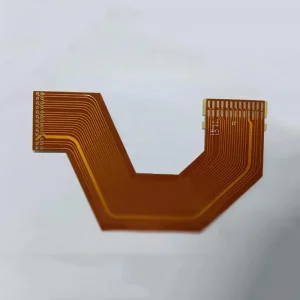
Ultra-Flexible Polyimide Circuit Substrates for Wearable Instrumentation, Medical Diagnostics & Robotic Articulations
Product Specifications & RFQ →
High-Performance Thick-Copper Thermal Dissipation PCBs for Eurasian High-Voltage DC (HVDC) Substations
Product Specifications & RFQ →
Extra Heavy-Copper Multi-Layer Power Assemblies Engineered for Extreme Cold Thermal Contraction & Surge Immunity
Product Specifications & RFQ →Initiate Your Direct Shenzhen-to-Eurasia Sourcing Channel
Eliminate unauthorized broker markups, bypass SWIFT limitations through direct bilateral clearing, and secure genuine certified components backed by 15+ years of Shenzhen EMS manufacturing leadership.