
OEM Low Quantity PCB Supplier & Quotes: Agile Manufacturing Strategies
Empowering deep-tech hardware, mission-critical systems, and NPI validation through high-mix, low-volume (HMLV) fabrication and full turnkey assembly.
Engineered Low Quantity PCB Solutions
From single validation units to pilot-scale commercial manufacturing, review our high-precision board capabilities engineered for strict OEM compliance.
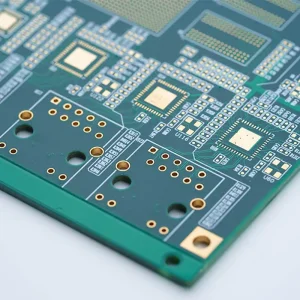

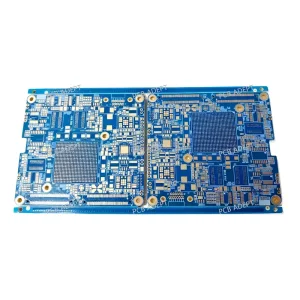



Global Commercial & Industrial Realities of Low-Quantity PCB Procurement
Hardware product development has transitioned from monolithic production volumes to iterative, market-responsive micro-batches.
The Shift to High-Mix Low-Volume (HMLV)
Legacy Tier-1 EMS plants are structurally poorly aligned for orders under 5,000 units due to fixed retooling downtime and high overhead. Modern engineering demands specialized OEM low-quantity suppliers capable of executing continuous line turnover with zero quality degradation.
Capital Efficiency in NPI Engineering
Hardware teams mitigate pre-revenue capital risk by producing iterative trial runs of 5 to 500 units. Sourcing quotes for prototypes with standard production-grade tooling allows enterprises to complete DFM, FCC/CE certification, and environmental testing prior to high-volume commitments.
Supply Velocity & Shenzhen Integration
Proximity to Huaqiangbei and Shenzhen's centralized raw laminate depots allows turnkey manufacturers to source specialized substrate cores (Rogers, Taconic, high TG FR-4) and passive arrays within hours, reducing rapid prototype cycle times down to 3–9 operational business days.
Deconstructing Low Quantity PCB Cost Drivers & Accurate Quotes
Understanding cost breakdowns protects procurement budgets and prevents engineering compromises in pilot-stage hardware builds.
Tooling & Photolithography
Unlike high-volume runs where tooling amortizes to pennies per board, prototype phototooling (NRE, photolithography film, and laser drill programming) represents a substantial portion of short-run costs. Direct factory quotes optimize panel utilization to dilute setup expenses.
BOM Minimum Order Quantities
While an OEM may only require 10 assemblies, franchised semiconductor distributors typically impose Minimum Order Quantities (MOQs) on reels of passive components or specialized microcontrollers. Strategic low-volume partners maintain internal stock pools to suppress inventory overhead.
Inspection & Validation
Statistical process control functions differently on batches of 25 versus 250,000 units. OEM low-quantity suppliers rely on Solder Paste Inspection (SPI), automated pre/post-reflow 3D AOI, First Article Inspection (FAI), and flying probe testing to verify 100% net connectivity without hard test fixtures.
Specialty Metallurgy & Dielectrics
Short-run deployments in defense or RF systems frequently require hybrid pressings (Rogers/FR-4) or specialized finishes like Electroless Nickel Electroless Palladium Immersion Gold (ENEPIG). Selecting the exact right surface finish mitigates pad micro-corrosion and ensures reliable wire-bonding.
Design-for-Cost (DFC) Directive: Early DFM consultation with your low-volume manufacturer during schematic and layout capture can reduce prototype turnaround delays by 40% and eliminate redesign cycles driven by unprocurable components or tight trace-to-edge clearances.
Technical Roadmap: Low-Volume Prototyping Through 2030
Next-generation hardware requires fabrication tolerances that were once reserved exclusively for high-density silicon packaging.
Ultra-Fine Pitch Substrates & mSAP
Modified Semi-Additive Processes (mSAP) are moving from smart devices into specialized short-run industrial boards. Trace and space capabilities are contracting from traditional 3/3 mil levels down to sub-1.5 mil, supporting advanced wafer-level chip-scale packaging (WLCSP).
AI-Assisted Optical & Process Monitoring
Through integrated Manufacturing Execution Systems (MES), our factory deploys deep-learning computer vision models on paste deposition and automated optical inspections. This catches marginal solder bridging and micro-voiding in real time, even on single-board prototype runs.
Embedded Passives & Hybrid Dielectrics
Future-ready high-speed digital and radar designs eliminate surface footprint bottlenecks by burying capacitive and resistive layers directly within inner board cores, maximizing top-layer density for mixed-signal processors.
Localized Solutions Across Demanding Industries
Low-quantity assembly demands application-specific metallurgical choices, thermal design allowances, and component screening.
Aerospace & Defense
Demands high-TG laminates (TG170–TG260) able to survive heavy mechanical vibration and thermal extremes. Built under ISO 9001 quality guidelines with complete material batch trace records.
Medical Devices
For wearable health monitoring and precision diagnostic controllers. Focuses on HDI microvias, biocompatible solder mask finishes, and zero-defect through-hole assembly testing.
RF & Anti-Drone Systems
High-frequency radar and telemetry boards requiring sub-0.5 mil trace tolerances on Rogers/PTFE dielectrics for balanced signal integrity and low insertion loss.
Automotive & Power Inverters
Heavy copper boards and aluminum-core metal-clad PCBs (MCPCB) built to handle heat dissipation in battery management systems and industrial motor controls.
Factory-Direct High-Mix Assembly Capabilities
Access factory-direct pricing for rapid prototyping, RF assemblies, rigid-flex integration, and metal-backed thermal circuit boards.


Frequently Asked Questions: Low Quantity PCB Fabrication & Assembly
Key technical and commercial considerations for purchasing managers and hardware engineers.