
High-Reliability & Specialized PCB Solutions
Explore our core substrate manufacturing lines engineered for severe thermal operating environments, aerospace avionic systems, and industrial high-current electronic assemblies.
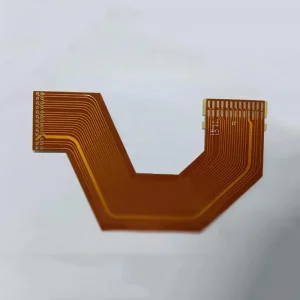
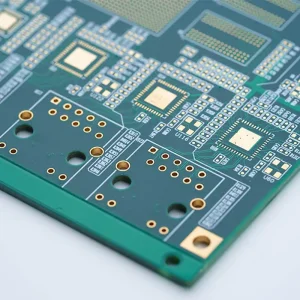





Global Landscape of Rigid Polyimide PCBs
Why modern mission-critical hardware architectures are systematically abandoning standard high-Tg FR-4 in favor of pure non-MDA polyimide resin systems.
Thermal Resilience Beyond 250°C
Traditional epoxies degrade rapidly when sustained temperatures exceed 170°C. Rigid polyimides maintain mechanical integrity up to continuous operating levels of 250°C to 260°C, and survive short-term thermal excursions surpassing 300°C without resin softening or delamination.
Near-Zero Z-Axis Expansion
Plated through-hole (PTH) fatigue is the #1 cause of downhole and aerospace circuit failures. Polyimide's Coefficient of Thermal Expansion (CTE) along the Z-axis remains exceptionally low (1.1% to 1.3% from 50°C to 250°C), eliminating copper barrel fracture and corner knee cracking.
Space-Grade Vacuum Outgassing
Compliant with ASTM E595 and NASA SP-R-0022A outgassing standards, pure polyimide rigid laminates display Total Mass Loss (TML) of less than 0.8% and Collected Volatile Condensable Material (CVCM) under 0.05%, making them ideal for orbital satellites and optical instrumentation.
Procurement Trend Insight: The Industrial Transition to Non-MDA Resins
Global regulatory compliance frameworks (such as EU REACH Annex XIV) have strictly restricted 4,4'-methylenedianiline (MDA). Leading ODM manufacturers in China, including PCB ADEPT, have fully completed the technical transition to advanced MDA-free, halogen-free polyimide formulations (such as Ventec VT-901 and Arlon 85N), providing defense and aerospace OEMs with total supply chain compliance and superior copper adhesion peel strengths (>8.0 lb/in at 200°C).
Rigid Polyimide vs. High-Tg FR-4 Material Science
A rigorous parametric breakdown to guide hardware engineers when specifying laminate grade, stackup geometry, and desmear processing rules.
| Material Property | Standard High-Tg FR-4 (Isola 370HR) | Toughened Polyimide (Arlon 33N) | Pure Polyimide (Ventec VT-901 / Arlon 85N) | Engineering Benefit |
|---|---|---|---|---|
| Glass Transition Temp (Tg DMA) | 180°C | 225°C | 260°C – 280°C | Zero softening during sustained extreme-temperature operation. |
| Decomposition Temp (Td 5% loss) | 340°C | 385°C | >410°C | Immunity to resin degradation during multi-pass SAC305 reflow. |
| Z-Axis CTE (50°C to 250°C) | 3.8% – 4.5% | 2.2% | 1.1% – 1.2% | Eliminates PTH barrel cracking in high-vibration aerospace loads. |
| Time to Delamination (T288) | 15 – 30 min | >60 min | >120 min | Guarantees multi-cycle manual reworkability without board blistering. |
| Time to Delamination (T300) | <5 min | 15 min | >60 min | Critical survivability index for downhole oil drilling tools. |
| Moisture Absorption (%) | 0.15% | 0.30% | 0.45% – 0.85% | Mandates strict factory pre-bake bakeout cycles prior to SMT. |
| Dielectric Constant (Dk @ 1 GHz) | 3.92 | 3.80 | 3.90 – 4.10 | Predictable high-speed impedance matching across thermal swings. |
The Critical Desmear & Etchback Mandate
Polyimide cross-linking produces a highly chemically inert resin smear during mechanical drilling. Unlike FR-4, which readily responds to standard alkaline potassium permanganate, rigid polyimide demands multi-stage atmospheric Plasma Desmear (using CF4/O2 gas blends) or concentrated hot chromic acid. PCB ADEPT's advanced automated plasma chambers ensure deep 3-point chemical etchback, providing an absolute physical mechanical interlock between internal copper foil and electroless through-hole copper barrels.
Hygroscopic Management & Pre-Assembly Bake Protocols
Polyimide has a naturally higher moisture absorption rate (0.4%–0.85%) than brominated epoxies. If a rigid polyimide PCB undergoes 260°C lead-free reflow without prior dehydration, absorbed interstitial moisture instantaneously turns to superheated steam, causing catastrophic inner-layer delamination or micro-voiding. Our Shenzhen assembly facility enforces an automated 8-hour, 120°C nitrogen-purged pre-bake protocol before SMT placement to ensure flawless reflow yields.
China Factory Efficiency & Turnkey Ecosystem Superiority
How PCB ADEPT leverages Shenzhen's concentrated electronic manufacturing corridor to compress rigid polyimide prototype-to-volume lead times by over 60%.
Specialty Raw Material Stock
Western board houses frequently require 4 to 8 weeks simply to import certified polyimide prepregs. PCB ADEPT maintains immediate standing warehouse inventory of Ventec VT-901, Arlon 85N, and ShengYi polyimides in Bao'an, slashing laminate procurement delays to zero days.
High-Temp Vacuum Lamination
Polyimide resin systems require cure cycles reaching 220°C–240°C under high vacuum for 240+ minutes. Our facility operates multi-opening Burkle automated vacuum presses with customized multi-stage cooling profiles to prevent internal stress concentration and laminate warpage.
Integrated SMT & In-Circuit Testing
Avoid finger-pointing between bare board fabricators and assembly shops. From high-temp soldering alloys (HMP / Sn95Sb5 / SAC305) to 3D SPI, 3D AOI, and functional burn-in chambers, PCB ADEPT delivers complete turnkey accountability under ISO 9001 and MES traceability.
Localized Application Scenarios for Rigid Polyimide PCBs
Engineered for industries where thermal, mechanical, or electrical failure is not an option.
Downhole Oil & Gas (MWD/LWD)
Drilling tool instrumentation operates under hydrostatic pressures exceeding 20,000 psi and ambient temperatures of 175°C to 200°C. Rigid polyimide withstands years of heavy shock and downhole thermal stress without barrel fatigue.
Aerospace & FADEC Controls
Full Authority Digital Engine Control (FADEC) units mounted directly to commercial and military jet turbine casings experience extreme thermal cycling (-55°C to +215°C). Polyimide ensures IPC Class 3/A zero-defect reliability.
Burn-In Test Boards (BIBs)
Semiconductor reliability stress testing requires burn-in boards to sit inside 150°C to 220°C test ovens continuously for thousands of hours under heavy electrical bias. Rigid polyimide prevents inner-layer leakage and pad lifting.
Automotive SiC Power Converters
800V EV powertrains employing Silicon Carbide (SiC) MOSFETs run at power densities generating severe localized junction temperatures. Rigid polyimide multi-layer boards manage direct high-voltage thermal spikes safely.
2026 Rigid Polyimide PCB Pricelist & Cost Matrix
Estimated industrial pricing benchmarks for pure high-Tg rigid polyimide substrates (Ventec VT-901 or Arlon 85N equivalent, IPC Class 3 standards, ENIG surface finish).
| Layer Count | Prototype Lot (5–10 Pcs, 100x100mm) | Pilot Production (1–5 Sq. Meters) | Mass Volume (>20 Sq. Meters) | Standard Lead Time (Turnkey) | Quick-Turn Expedited |
|---|---|---|---|---|---|
| 2-Layer Polyimide | $280 – $380 | $350 – $480 / m² | $260 – $340 / m² | 5 – 7 Working Days | 72 Hours |
| 4-Layer Polyimide | $450 – $600 | $580 – $750 / m² | $440 – $560 / m² | 7 – 9 Working Days | 4 Working Days |
| 6-Layer Polyimide | $650 – $880 | $820 – $1,050 / m² | $620 – $780 / m² | 8 – 10 Working Days | 5 Working Days |
| 8-Layer Polyimide | $850 – $1,150 | $1,080 – $1,380 / m² | $820 – $1,020 / m² | 10 – 12 Working Days | 6 Working Days |
| 10 to 14 Layers | $1,250 – $1,750 | $1,450 – $1,900 / m² | $1,150 – $1,480 / m² | 12 – 15 Working Days | 8 Working Days |
| 16 to 24 Layers (HDI/Buried) | $2,100 – $3,200 | $2,400 – $3,300 / m² | $1,850 – $2,600 / m² | 15 – 20 Working Days | 10 Working Days |
Laminate Raw Cost Premium
Pure polyimide core and prepreg materials are approximately 5x to 8x higher in raw material cost than standard FR-4 laminates. Accurate panel utilization analysis during engineering CAM review can save 15% to 25% on total BOM expenditure.
Tooling & Drill Bit Wear
Polyimide resin's abrasive properties drastically accelerate drill bit wear. Drill hits per bit are restricted to 800–1,000 hits (vs 2,500+ for FR-4) to avoid hole-wall roughness and barrel gouging, representing a critical precision tooling cost.
Surface Finish Compatibility
Electroless Nickel Electroless Palladium Immersion Gold (ENEPIG) or 30-50 micro-inches of Hard Gold over Nickel are strongly recommended over standard HASL to preserve bond integrity under long-duration high-heat operation.
Technology Trajectory & Global OEM Audit Framework
Critical trends dominating the polyimide arena and the exact technical audit questions procurement engineers must ask factory suppliers.
Emerging Trend: Hybrid Ceramic & Polyimide Multilayers
With high-frequency 5G/6G millimeter-wave radar and satellite communications converging into high-temperature power modules, designers are creating asymmetric hybrid stackups. By laminating Rogers 4350B or Taconic RF laminates with high-Tg Polyimide cores (VT-901), engineers achieve low-loss dielectric performance alongside polyimide's structural thermal stability. This requires specialized multi-stage press cycles with customized temperature ramp-up rates (1.5°C–2.0°C/min) to prevent inner-layer shear stress.
Emerging Trend: Embedded Heavy Copper with Pure Polyimide
Electric vehicle fast-charging systems and aviation DC-DC converters generate severe I²R resistive heating. Integrating 3oz, 4oz, or 6oz heavy copper traces inside rigid polyimide allows circuits to dissipate 150A+ sustained currents. Polyimide's high thermal decomposition threshold (>400°C) prevents copper delamination during abrupt short-circuit over-current events.
Strategic RFQ / RFP Audit Checklist for Global Sourcing Directors
When evaluating a Chinese or Asian ODM rigid polyimide board supplier, insist on verifying the following factory process controls:
- Plasma Etchback Chambers: Ensure the factory uses CF4/O2 gas plasma desmear rather than standard permanganate baths alone to guarantee positive 3-point etchback on through-holes.
- High-Vacuum Press Capabilities: Confirm hydraulic multi-daylight vacuum presses capable of sustaining 230°C+ for minimum 240-minute dwell cycles.
- Bakeout Verification Stations: Review automated pre-bake convection ovens running validated dehydrating profiles prior to SMT reflow lines.
- IPC-6012 Class 3 Microsection Verification: Verify cross-sectioning metallurgical coupon labs checking minimum copper plating thickness of 25 µm (1 mil) in hole barrels.
Frequently Asked Questions: Rigid Polyimide PCB Manufacturing
In-depth engineering answers to common technical, design, and procurement inquiries from overseas system architects.
What is the fundamental difference between Rigid Polyimide and Flexible Polyimide (FPC)?
Why is plasma desmear mandatory for rigid polyimide through-hole processing?
How does polyimide's moisture absorption affect SMT assembly and soldering?
Which surface finishes are recommended for high-Tg rigid polyimide boards?
Can PCB ADEPT manufacture hybrid stackups combining Rigid Polyimide with High-Frequency laminates?
What IPC performance classifications apply to Rigid Polyimide fabrication?
What files are required to get an accurate price quotation and DFM analysis?
What are the typical prototyping and production lead times at your Shenzhen facility?
Advanced Multilayer, Heavy Copper & Fast-Turn Capabilities
Explore our extended electronics manufacturing capabilities spanning fast prototyping, high-density interconnect (HDI), and ultra-high-layer backplanes.

