
Precision Turnkey Products & PCB Assemblies
Explore our certified hardware builds spanning multi-layer rigid-flex, heavy copper power converters, edge computing hats, and extreme-density interconnects.

ODM China Suppliers for Rigid Flex PCB - Single, Double-Sided, 4-16 Layer & Complex Multi-Layer Factory Solutions
Request Quotation
China Raspberry Pi HAT from Reliable Suppliers and Factory - Enhance Your Projects with Versatile Expansion Boards
Request Quotation
Buy High-Quality Heavy Copper PCBs from China Factory: Ideal for Power Converters and Strong Current Applications
Request Quotation
ODM Heavy Copper PCB for Power Converters - High Current Capacity, Excellent Heat Dissipation | China Suppliers
Request Quotation
High-Quality High-Density Interconnect PCB Suppliers in China - Factory Direct HDI PCB Solutions Company
Request Quotation
Buy China Suppliers and Factory for Raspberry Pi HAT: Enhance Your Projects with Versatile Expansion Boards
Request Quotation
Famous High-Quality Rigid Flex PCB from China Factory - Single & Double-Sided, 4-16 Layer Suppliers Quotes
Request Quotation
ODM Rapid PCB Prototyping and Validation by China Suppliers: Quality Factory Solutions for Modern Electronics
Request QuotationGlobal Paradigms in Contract Electronics Manufacturing
The contract PCB assembly (PCBA) landscape has transitioned from transactional board stuffing to holistic Electronic Manufacturing Services (EMS) integration driven by silicon packaging complexity, high component density, and accelerated lifecycle pressures.
Silicon Densification & Ultra-Fine Pitch
Modern microprocessors, system-on-modules (SoMs), and GaN power stages feature sub-0.35mm pitch BGAs and 01005 passives. Contract manufacturers must deploy closed-loop dual-camera Solder Paste Inspection (SPI) combined with 3D Automated Optical Inspection (AOI) to eliminate bridged joints and head-in-pillow defects prior to wave or reflow curing.
Supply Chain Antifragility
Global supply disruptions necessitate a dual-track procurement methodology. Leading Tier-1 and specialized Shenzhen assemblers mitigate long-lead active components by delivering dynamic BOM scrub evaluations, drop-in footprint-compatible redesign proposals, and verified authorized distribution inventory channels (TI, ADI, STMicroelectronics, Microchip).
High Thermal Flux & Power Density
Electrification across e-mobility, DC fast charging, and energy storage architectures mandates heavy copper stack-ups (3oz to 10oz) paired with aluminum, copper cores, and ceramic substrates. Contract PCBA suppliers require custom reflow thermal zones and high-mass pre-heating setups to achieve IPC-A-610 Class 2 and Class 3 solder barrel wetting.
Shenzhen Factory 4.0: Speed, Resilience & Cluster Velocity
Why Tier-1 product developers, unicorn robotics pioneers, and critical mission industrial firms center their hardware manufacturing pipelines inside Shenzhen's Greater Bay Area industrial fabric.
1-Hour Hyper-Localized Component Cluster
Shenzhen's Bao'an and Longhua districts feature unmatched component supply access. Raw FR-4 laminates, custom aluminum/heavy-copper substructures, surface passivation chemistry (ENIG, ENEPIG, Immersion Silver), and micro-passives are sourced within minutes, shortening prototype cycles to as fast as 48–72 hours.
Engineered BOM Cost Optimization
Beyond simple board manufacturing, tier-one contract suppliers provide direct engineering teardowns. By recommending domestically certified drop-in passives, standard crystals, inductors, and specialized connectors, bill-of-materials expenditures are frequently compressed by 10% to 25% without sacrificing signal margins or MTBF reliability metrics.
Full Box Build & Mechanical Integration
Contract factories eliminate multi-vendor friction by providing full mechatronic box build assembly: precision CNC machining, injection toolmaking, potting, conformal coating, automated firmware flashing, customized burn-in cycling, and drop-ship packaging directly destined for western B2B distributors.
Localized High-Reliability Deployment Scenarios
Targeted manufacturing rules and stack-up disciplines optimized for specialized operating environments across heavy industry, aerospace, and high-speed telemetry.
High-Frequency RF & Radar Systems
Designed for radar detectors, satellite transceivers, and commercial drone link architectures. Employs low-loss Rogers, Taconic, and PTFE/FR-4 hybrid lamination. Tight dielectric constant (Dk) tolerances and controlled impedance traces guarantee phase integrity above 500MHz and mmWave bands.
Automotive, Aerospace & Defense
Demands TG170 to TG300 extreme glass transition temperature laminates. Boards resist continuous thermal shock, vibration, and automotive engine compartment temperatures. SMT assemblies undergo 100% First Article Inspection (FAI), multi-axis X-ray BGA void analysis, and selective conformal coating.
Medical Diagnostic & Wearable Flex
Combines 4–16 layer rigid-flex PCB configurations for tight ergonomic assemblies inside ultrasonic wands, blood analyte monitors, and wearable telemetry trackers. Dynamic flexing zones feature polyimide adhesiveless cores, rolled annealed (RA) copper, and laser-drilled microvias.
Frequently Asked Questions: Contract PCBA Partnering
Direct technical and operational guidelines for overseas supply managers and chief hardware engineers vetting Shenzhen manufacturing partnerships.
What is the standard engineering documentation required for turnkey PCBA quotation?
To deliver an audit-ready DFM and price quotation within 24 hours, suppliers require: Gerber RS-274X or ODB++ files, a complete Bill of Materials (BOM) including Manufacturer Part Numbers (MPN) and approved alternate vendors, XY Pick-and-Place (centroid) coordinate data, board fabrication drawing specifying stack-up/materials, and Functional Testing (FCT) guidelines or custom test firmware instructions.
How are component counterfeit risks managed in contract manufacturing?
Reputable contract assemblers deploy rigorous Incoming Quality Control (IQC) procedures. Components are procured exclusively through franchised direct distributors (e.g., Digi-Key, Mouser, Arrow, Avnet) or verified brand original factories. In-house IQC verifies lot codes, package co-planarity, moisture sensitivity levels (MSL), pin oxidation via microscopic inspection, and internal die authenticity via decapsulation or X-ray when requested.
What is the difference between IPC Class 2 and Class 3 electronics manufacturing?
IPC Class 2 governs standard dedicated service commercial electronics (telecom, office automation) where high reliability is required but uninterrupted runtime is not paramount. IPC Class 3 covers high-reliability harsh-environment systems (aerospace, medical life-support, automotive ADAS) requiring zero-downtime, continuous performance, thicker plating barrel minimums, tighter solder voiding criteria (<15% under BGAs), and exhaustive thermal stress testing.
Can contract manufacturers handle partial consignment along with turnkey procurement?
Yes. Flexible contract EMS providers support turnkey, consigned, and hybrid sourcing models. In hybrid configurations, overseas clients typically supply proprietary programmed MCUs, custom ASICs, or specialized sensors, while the assembly partner sources common passive passives, power management ICs, discretes, and fabricates bare printed boards locally to optimize time-to-market and freight overhead.
Featured High-Reliability PCBA Catalog
Direct supply solutions encompassing RF/Microwave transmission systems, rapid prototyping, extreme-Tg automotive modules, and ultra-dense multi-layer circuit boards.
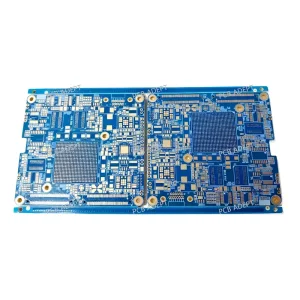
ODM High-Quality RF & Microwave PCBs for Mobile Phones and Radar Systems by China Suppliers and Factory - ≥500MHz Frequency
Request Quotation
ODM Rapid PCB Prototyping and Validation Solutions: Top China Suppliers and Factory for Modern Electronics
Request Quotation
Famous China Factory Suppliers of RF & Microwave PCBs for Mobile Phones, Base Stations, and Radar Systems - ≥500MHz Frequency
Request Quotation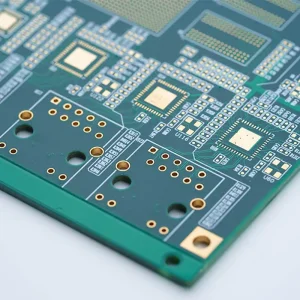
ODM High TG PCB Suppliers and Factory in China for Automotive, Aerospace, and Defense Industries (TG150, TG170, TG180, TG260, TG300)
Request Quotation
High-Quality China Multilayer PCB Suppliers - High-quality 1-60 Layers PCBs, IPC2 Grade, Fastest Lead Time 48 Hours
Request Quotation
ODM Heavy Copper PCB for Power Converters - High Current Capacity and Heat Dissipation | China Suppliers & Factory
Request Quotation
China China Suppliers Rigid Flex PCB Factory: Single & Double-Sided, 4-16 Layer Complex Multi-Layer Boards
Request Quotation