
High-Precision Hardware & Assembly Portfolio
Explore the initial tier of our high-reliability manufacturing capabilities, spanning multi-layer RF, heavy copper boards, and rapid prototypes.




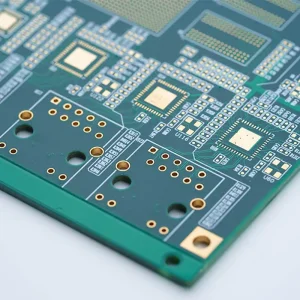

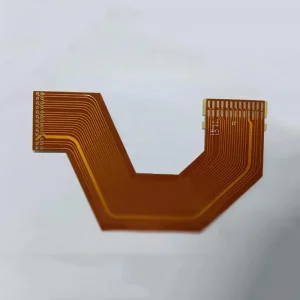
Global State of Flexible Circuit Assembly & Industrial Trends
The transition toward sub-miniaturization, multi-axis kinetic integration, and elevated signal speeds is transforming global FPC and rigid-flex procurement.
Dynamic Flexing & Micro-Pitch Placement
Traditional rigid interconnects cannot satisfy multi-fold mechanical architectures in modern foldables, aerospace hinges, and medical endoscopic catheters. Flexible assemblies must withstand up to millions of bend cycles while supporting micro-pitch surface mount components down to 01005 passives and 0.3mm pitch BGAs without trace micro-fracturing or solder joint fatigue.
Material Science: Adhesiveless Polyimide
Standard flexible copper-clad laminates (FCCL) with adhesive layers present severe thermal expansion mismatch during lead-free reflow (260°C peak). Leading assembly factories have standardized on adhesiveless polyimide substrates, which deliver thinner dielectric spacing, lower dielectric loss (Df), superior dimensional stability, and enhanced copper-to-dielectric peel strength under elevated temperatures.
High-Density Interconnect (HDI) Rigid-Flex
The confluence of high-speed digital architecture and dimensional constraints requires hybrid HDI rigid-flex designs. Modern fabrication involves stacked and staggered microvias, laser direct imaging (LDI), copper-filled vias via periodic pulse reverse plating, and sequential lamination cycles (up to 4x), eliminating bulky ribbon cables and wire harnesses.
Why Sourcing from Shenzhen, China Delivers Asymmetric Value
Shenzhen's Greater Bay Area consolidates raw laminate manufacturing, active component distribution, custom tooling, and high-speed automated assembly within a 30-kilometer radius.
Dedicated Pallet & Carrier Tooling Engineering
Flexible substrates cannot traverse SMT lines unsupported. In Shenzhen factories like PCB ADEPT (ICSLOVE Technology), dedicated magnetic carriers, high-precision vacuum fixtures, and synthetic stone pallets (Durostone/Ricocel) are fabricated via high-speed CNC in-house within 24 hours, ensuring flat, zero-distortion solder paste printing and reflow passes.
Direct Electronic Component Supply Channels
Shenzhen's direct integration with top franchised distributors and component manufacturers (TI, STMicroelectronics, ADI, Murata, TE Connectivity) protects against lead-time shocks. Procurement engineers leverage verified local stock pools and alternate second-source qualified equivalents to maintain on-time fulfillment without production downtime.
Aggressive Rapid Prototyping Lead Times
Western board assemblers commonly quote 4 to 6 weeks for custom flex tooling and SMT integration. Leveraging continuous shifts, 6 automated SMT lines, and localized bare-flex fabrication, China's EMS facilities execute full turnkey prototypes (1 to 500 pcs) in 3 to 9 business days, shrinking product time-to-market dramatically.
Mission-Critical Applications for Flexible Printed Circuits
Flexible PCBA serves environments where space constraints, kinetic motion, weight minimization, and harsh operating parameters converge.
Class II & III Medical Devices
Wearable biosensors, continuous glucose monitors (CGM), ultrasound transducers, and surgical robotic wrists deploy flex PCBA to conform directly to human biomechanics. Polyimide substrate biocompatibility, gold contact reliability, and zero-defect automated optical inspection (AOI) guarantee fail-safe patient telemetry.
Automotive & EV Battery Management Systems (BMS)
Electric vehicle battery packs are replacing traditional, heavy wire looms with flexible circuit assemblies. These FPCs integrate surface-mounted NTC thermistors and voltage monitoring ICs across battery cell arrays, shedding up to 60% system weight while resisting vibration and thermal shocks up to 125°C.
Aerospace, Defense & Anti-Drone Systems
Radar front-ends, gimballed electro-optical camera payloads, and frequency-agile counter-UAS (anti-drone) hardware require light, robust packaging. Our rigid-flex assemblies deploy Rogers high-frequency laminates bonded to polyimide flex cores, maintaining controlled 50Ω impedance without signal attenuation.
FPC & Rigid-Flex Technical Capability Matrix
Pre-qualify your product's mechanical and electrical manufacturing parameters with our standard factory process windows.
| Manufacturing Parameter | Standard Capability | Advanced / HDI Capability | Industrial Validation / Notes |
|---|---|---|---|
| Layer Count | 1 to 6 Layers (Pure Flex) | 4 to 22 Layers (Rigid-Flex) | IPC-6013 Class 3 Multi-layer blind/buried vias |
| Base Substrates | Polyimide (PI), PET, FR-4 | Adhesiveless PI, Rogers + PI Hybrid | DuPont Pyralux, Shengyi, Panasonic Megtron |
| Stiffener Integration | FR-4, Polyimide Tape | Stainless Steel (304), Aluminum, Ceramic | Thermal-cured epoxy and PSA bonding |
| Min. Trace Width / Spacing | 0.075 mm / 0.075 mm (3/3 mil) | 0.038 mm / 0.038 mm (1.5/1.5 mil) | Laser Direct Imaging (LDI) cleanroom controlled |
| SMT Component Pitch | 0402 passives, 0.5mm IC pitch | 01005 chips, 0.3mm BGA pitch | High-speed YAMAHA mounters with vacuum nozzles |
| Surface Finishes | OSP, Lead-Free HASL, ENIG | ENEPIG, Selective Hard Gold Plating | Superior wire-bonding and sliding contact endurance |
| Inspection & Verification | SPI, 2D AOI, E-Test (Flying Probe) | 3D AOI, 3D X-Ray (AXI), Dynamic Bend Test | 100% netlist verification, solder joint void checking <10% |
Frequently Asked Questions on Flexible PCBA Sourcing
Critical operational answers for procurement directors, DFM leads, and supply chain managers.
Secondary Lineup: Advanced Flex, HDI & Substrate Solutions
Source high-density interconnects, ultra-thin bendable circuits, and thermal management assemblies directly from our Shenzhen production lines.


