Buy The manufacturer of anti-drone jamming guns Manufacturer, Pricelist

In recent years, the development and changes of drones have led to many safety hazards. More and more units have begun to attach importance to the layout of anti-drone equipment, and portable signal jamming guns are one of them.

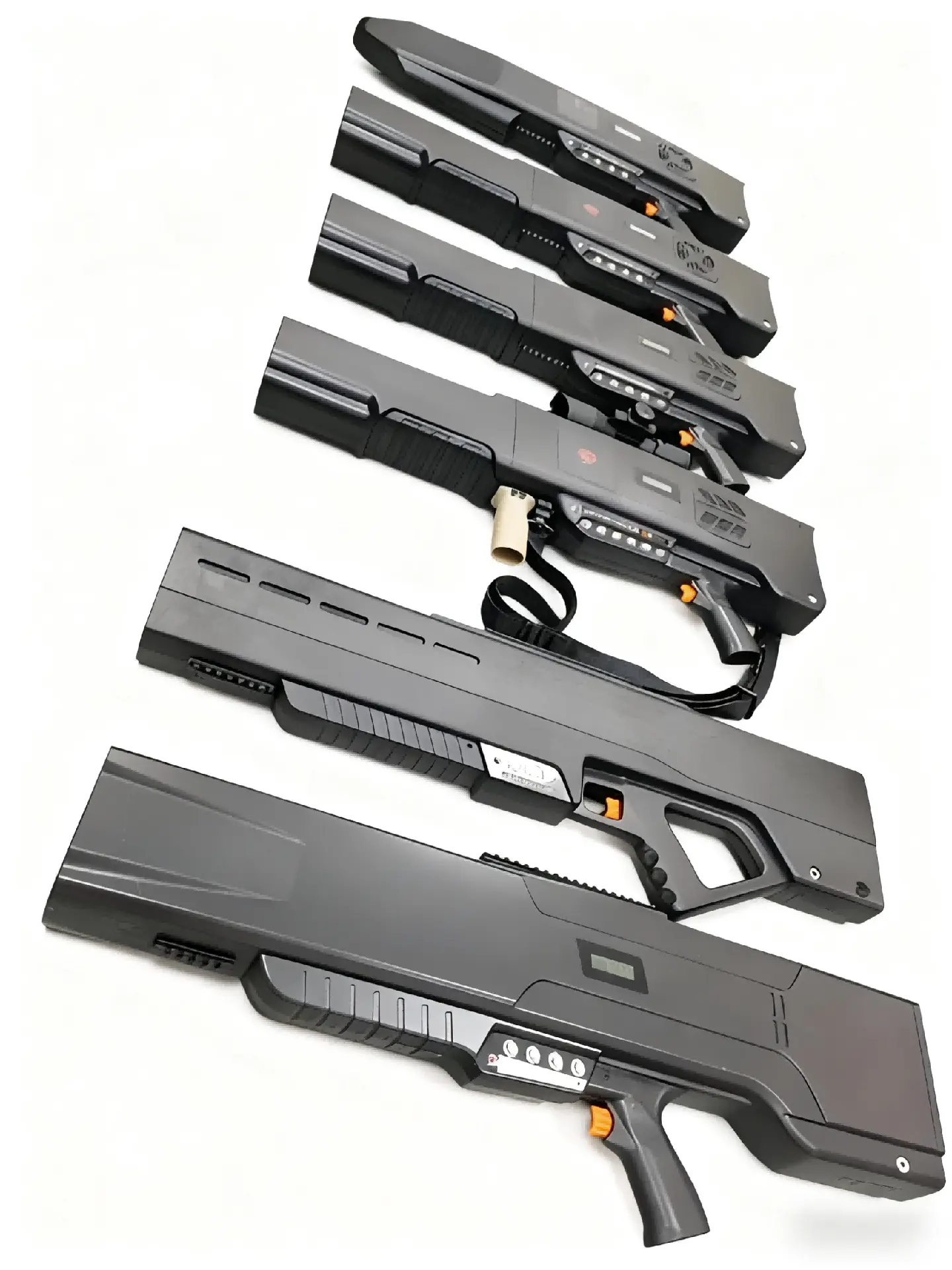
Anti-drone jamming guns, which resemble rifles in appearance, are actually high-tech equipment that integrates multi-frequency signal jamming technology, precise electronics, and user-friendly design. Their main mission is to cut off the communication link between the drone and its remote control by emitting specific frequency electromagnetic waves, forcing the target drone to hover, return, or land.

PCBADEPT Technology has 3‑years’ experience in the assembly and production of anti‑drone equipment, covering the whole process from row material procurement to testing and finished‑product shipment.

The precise assembly of the core electronic module - the "heart" of the interference signal

Core components: The equipment contains signal generators for different drone frequency bands (such as 2.4G, 5.8G, GPS frequency band), as well as power amplifiers to amplify these signals. Patent information indicates that a mature jamming system covers mainstream drone communication frequency bands such as 840-845MHz, 922-928MHz, 2405-2483MHz, etc., and outputs power ranging from 8W to 20W in different frequency bands.

Precise assembly process: Main electronic components, such as circuit boards (PCBA), power management modules and batteries, are precisely integrated into the gun-shaped casing. The assembly of key components like antennas also involves specialized installation fixtures to assist workers in performing operations such as screw locking, ensuring assembly accuracy and efficiency.

Overall integration - Coordinated assembly of the "gun" structure and the antenna

Wire system assembly: The antenna is the "muzzle" of the interference gun, directly determining the effective range. To enhance efficiency, high-quality interference guns adopt high-gain horn antennas or Yagi antenna arrays. Taking the patent CN210092355U as an example, one design is to hide multiple antennas within a retractable gun barrel, protected by a shock-absorbing mechanism and heat sinks. When needed, it is extended to ensure both performance and reliability. During the production process, attention should be paid to issues such as employees reversing the wire interface connections.

Assembly of structural and functional components: The entire machine integrates a large number of components, including frequency band selection switch, trigger, sight rail, large-capacity battery compartment, and even an adjustable shoulder pad to enhance the stability of single-shot firing. Many manufacturers use the one-piece mold ABS injection molding process to manufacture the casing, which takes into account both aesthetics, lightness, and protection.

Strict quality control and factory testing

Function and reliability tests: These include battery life tests (such as continuous operation for 2 hours), heat dissipation performance tests (with a built-in dual-fan cooling system), as well as drop tests and temperature/humidity tests in various simulated environments. The models with scopes also need to undergo aiming baseline calibration. Our company has its own microwave signal testing room and aging room, which can complete the complete testing of anti-drone interference equipment.

Summary

The production of anti-drone jamming guns integrates precise RF electronics manufacturing with mature gun design for human-machine engineering. A mature production line not only needs to complete the assembly of internal precision circuit boards, but also needs to coordinate the work of numerous components such as antennas, batteries, and cooling systems. Ultimately, these equipment that combine precise electronics and advanced manufacturing are produced in professional factories around the world (such as Australia, Europe, and China), and flow to critical fields such as defense and security to safeguard the safety of low-altitude areas.

Product Description

Product Details
Frequently Asked Questions
What are the main technical parameters and specifications?

Comprehensive product dimensions, operating limits, performance ratings, and material properties are maintained in strict alignment with standard industrial quality benchmarks.

Are OEM and custom manufacturing services supported?

Yes, custom specifications, dimensions, branding, and packaging configurations can be accommodated based on defined operational needs and project volumes.

What testing and quality assurance procedures are followed?

Each unit is subjected to rigorous end-of-line inspections and quality validation tests to ensure complete structural integrity, durability, and reliable real-world performance.

What is the standard production and delivery timeline?

Lead times depend on order scale and logistical routing. Standard consignments are dispatched promptly upon confirmation, while tailored orders follow a verified fulfillment schedule.

How is the product packed to prevent damage in transit?

Standard international shipping practices are utilized, including reinforced exterior wrapping, interior cushioning, and moisture protection to safeguard cargo across long-haul freight.

What after-sales service and technical assistance are available?

Comprehensive customer support is provided, covering installation guidance, functional troubleshooting, and ongoing technical consultation throughout the product lifecycle.

Related Products