
High-Spec Hardware for Uruguayan Systems Integrators
Engineered for seamless integration into Southern Cone field telemetry, defense protocols, high-speed microwave infrastructure, and high-density industrial control equipment.
-
 Edge Computing & SBCExplore Pi HAT Solutions
Uruguay IoT Precision: Raspberry Pi HAT & Custom Expansion Boards
Ruggedized daughtercards engineered for automated cattle monitoring, LoRaWAN soil moisture probes, and remote weather stations across Colonia and Salto.
-
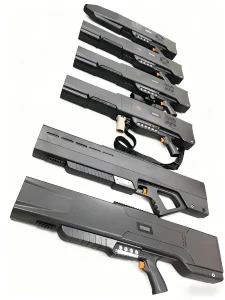 Defense & RF CountermeasuresView RF Jamming Systems
Defense-Grade Counter-UAS Jamming PCBA & Power Amp Modules
Ultra-dense RF assemblies delivering continuous multi-band disruption (GNSS, 2.4GHz, 5.8GHz) optimized for maritime and border security deployments.
-
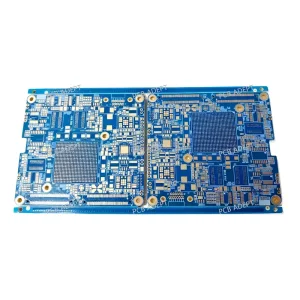 RF & Microwave PCBsDiscover RF Substrates
High-Frequency RF & Microwave Substrates (≥500MHz Low-Loss)
Rogers and Taconic-based low-dielectric constant laminates tailored for telecommunication base stations, radar relays, and Montevideo satellite downlinks.
-
 High-Density Interconnect (HDI)Order Multilayer Boards
Multilayer Rigid PCBs (1–60 Layers, IPC Class 2/3 Certified)
Blind/buried microvias, controlled impedance (±5%), and 48-hour turnarounds engineered for complex computing servers and industrial gateways.
The Electronics Manufacturing Landscape: Global Drivers & Uruguay's Nexus
A comprehensive assessment of supply chain evolution, geopolitical nearshoring, and high-reliability PCB assembly capabilities powering the Oriental Republic of Uruguay.
1. The Global Electronics Manufacturing Paradigm: Resilience, Miniaturization, and System-Level Integration
The global printed circuit board assembly (PCBA) sector is navigating a defining structural shift. Driven by advanced automotive electrification, decentralized computing, edge-AI acceleration, and next-generation telecommunications, global contract electronic manufacturers (CEMs) have shifted from straightforward assembly to comprehensive lifecycle orchestration. Where surface mount technology (SMT) was previously evaluated merely on placement speeds (chips per hour), current enterprise procurement mandates rigorous design for manufacturability (DFM), algorithmic optical inspections (3D AOI & 3D SPI), deep supply-chain component validation, and traceability conforming to IPC-A-610 Class 3 standards.
Concurrently, component supply volatility over recent years has reshaped how original equipment manufacturers (OEMs) operate. Hardware engineers are no longer designing around rigid single-source footprints. Instead, agile manufacturing demands dynamic component matching—replacing hard-to-source active ICs, field-effect transistors, and passives with drop-in, pin-compatible alternatives sourced through authenticated global distribution lines without compromising electromagnetic compliance (EMC) or signal integrity.
Uruguay as South America's Premier Innovation Hub
Uruguay occupies a distinctive, disproportionately influential position within Latin America. Recognized for legal stability, world-class digital connectivity (Plan Ceibal, 100% optical fiber backbone), and progressive investment frameworks, the nation has evolved into a premier software and hardware design sanctuary. R&D centers within Zonamerica, Parque de las Ciencias, and Parque Tecnológico del LATU (Laboratorio Tecnológico del Uruguay) routinely pioneer IoT architectures for export across the Americas and the European Union.
The Local Manufacturing Bottleneck
Despite exceptional hardware design talent in Montevideo, domestic high-volume PCB fabrication and surface mount capacity within Uruguay remain tightly constrained. Local electronics operations are largely geared toward low-volume manual prototyping, specialized wire harnessing, and final enclosure assembly. High-layer counts (8+ layers), impedance-controlled RF laminates, and ultra-fine pitch component placement (01005 passives, 0.3mm ball-grid arrays) necessitate capital-intensive cleanrooms and automated SMT lines found primarily in specialized tier-1 Shenzhen EMS ecosystems.
The China-Uruguay Strategic Supply Bridge
Bridging Chinese electronics manufacturing excellence with Uruguay’s Free Trade Zones (Regimen de Zonas Francas) establishes a tremendous commercial edge. Electronics companies operating out of Montevideo leverage duty exemptions on incoming sub-assemblies, perform specialized firmware injection and final verification within Uruguay, and re-export finished high-margin smart equipment seamlessly into Mercosur giants Brazil and Argentina.
Target Localized Applications Driving Hardware Demand Across Uruguay
Smart Agritech & Livestock Biometrics
Uruguay's mandatory national livestock traceability system (Sistema Nacional de Información Ganadera - SNIG) represents a benchmark in global agritech. The demand for ultra-low-power ear-tag transponders, UHF RFID trackers, solar-augmented LoRaWAN gateways, and multispectral drone payloads requires conformal-coated, moisture-resistant PCBA that withstands severe environmental exposure across extensive pastoral fields.
- Ultra-low standby current (<5μA) power design
- Conformal silicone coating protecting against condensation
- Sub-GHz LoRa and cellular NB-IoT integration
Renewable Energy & Smart Grid Management
Generating over 95% of its electricity from renewable sources (predominantly wind, hydro, and biomass), Uruguay's national utility (UTE) continually modernizes its transmission infrastructure. This creates steady demand for high-reliability heavy copper PCBs capable of enduring high thermal stress within grid tie-inverters, wind turbine pitch controllers, and commercial battery energy storage systems (BESS).
- Heavy copper traces (3oz to 10oz) for extreme current loads
- Thermal relief design and aluminum substrate heat-sinking
- Galvanic isolation meeting high-voltage safety norms
Maritime, Logistics & Port Automation
The Port of Montevideo serves as the deep-water logistical gateway for the Rio de la Plata basin. Container tracking transceivers, automated crane telemetry, and cold-chain temperature logging devices depend on shock-resistant rigid-flex boards and RF modules resilient to corrosive saline marine atmospheres and continuous mechanical vibrations.
- Rigid-flex interconnects eliminating failure-prone wire harnesses
- Immersion Gold (ENIG / ENEPIG) preventing contact oxidation
- Drop-shock resilience verified up to 50G impacts
Accelerate Your Engineering Pipeline to Uruguay & Mercosur
Whether you require 10 fast-turn prototypes for field-testing in Canelones or 50,000 IPC-A-610 Class 3 turnkey boards delivered to Zonamerica Free Zone, our Shenzhen manufacturing facility guarantees 99.8% first-pass yields, DFM optimization, and traceable component kitting.
Send Inquiry NowEnd-to-End Quality Architecture: From Gerber to Final Dispatch
How rigorous automated testing, precision SMT tolerances, and verified component traceability mitigate operational risks for international hardware procurement.
1. Algorithmic DFM & DFA Auditing
Every Gerber, IPC-2581, or ODB++ dataset undergoes multi-point Design for Manufacturability (DFM) and Design for Assembly (DFA) evaluation. We check annular rings, aspect ratios, trace/spacing clearances, solder mask bridges, and thermal relief balance before copper clad etching commences, eliminating rework cycles before physical fabrication.
2. Precision Inline SMT with 3D AOI & SPI
Equipped with ultra-fast Yamaha and Panasonic mounters, our cleanroom SMT lines accurately populate passives down to 01005 footprint and micro-BGAs down to 0.3mm ball pitch. Solder volume is verified in real-time via 3D Solder Paste Inspection (SPI), while post-reflow 3D Automated Optical Inspection (AOI) detects coplanarity defects, tombstoning, and solder bridging.
3. Comprehensive Testing & Traceability
High-reliability applications demand non-destructive verification. We utilize 3D Automated X-ray Inspection (AXI) for hidden BGA/QFN solder joints, Flying Probe Testing (FPT) for bed-of-nails verification, and custom In-Circuit (ICT) & Functional Testing (FCT). All production metrics are linked to unique 2D data-matrix barcodes through our MES system.
| Manufacturing Parameter | Standard PCB Capability | Advanced / Mission-Critical Capability |
|---|---|---|
| Layer Count Range | 1 – 8 Layers (FR4 High-Tg) | Up to 60 Layers (Hybrid Rogers + FR4, Polyimide) |
| Minimum Trace / Spacing | 3.5 mil / 3.5 mil (0.089mm) | 2.0 mil / 2.0 mil (0.050mm) for Ultra-HDI |
| Microvia & HDI Architecture | Through-hole, blind/buried via | Any-Layer HDI, Stacked Copper-Filled Vias (1+N+1 to 4+N+4) |
| Surface Finishes | HASL, Lead-Free HASL, OSP | Electroless Nickel Immersion Gold (ENIG), ENEPIG, Immersion Silver, Hard Gold |
| Component Placement Range | 0402, 0603, SOP, QFP, standard ICs | 01005 micro-passives, 0.3mm BGA pitch, PoP (Package-on-Package), Ultra-fine QFN |
| Inspection & Verification | Manual visual, standard 2D AOI | 3D SPI, 3D AOI, 3D AXI (X-Ray), Flying Probe, In-Circuit Test (ICT), Burn-In Screening |
| Certifications & Standards | IPC-A-610 Class 2, ISO 9001, RoHS | IPC-A-610 Class 3, ISO 13485 (Medical), IATF 16949 (Automotive), UL94V-0 |
Regulatory Compliance for the Uruguayan and South American Market
Hardware deployed in Uruguay must align with regional electromagnetic compatibility standards, URSEC (Unidad Reguladora de Servicios de Comunicaciones) radio frequency certifications for wireless telecommunications (915–928 MHz ISM band, cellular LTE bands 4/28), and safety compliance overseen by LATU and UNIT standards. Our turnkey assembly processes incorporate full lead-free RoHS and REACH documentation alongside comprehensive material declarations.
Custom Circuit Solutions for Every Industrial Sector
Explore our extensive PCB fabrication, flexible circuit architectures, rapid prototyping, and high-power thermal management boards trusted by OEMs across 50+ countries.
-
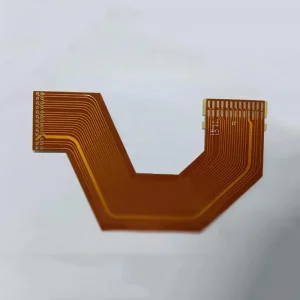 Flexible ElectronicsExplore Flex Solutions
Ultra-Thin Flexible PCBs for Compact Agritech Wearables & Drones
1–6 layer bendable polyimide flex circuits engineered for dynamic flexing, miniature sensor enclosures, and high-density space-constrained instrumentation.
-
 Turnkey EngineeringRequest ODM Prototyping
Turnkey ODM PCB Prototyping & Design-to-Manufacturing Services
From schematic capture to functional pilot batches. Rapid 3-to-7 day sample delivery supporting R&D labs and engineering incubators throughout Montevideo.
-
 Power ElectronicsGet Heavy Copper Quotes
Heavy Copper PCBs (Up to 10oz) for Inverters & Grid Converters
Built to endure immense current-carrying demands, high thermal spikes, and continuous duty cycles across solar, wind, and industrial motor drives.
-
 Signal Integrity & EMIExplore High-Frequency Boards
High-Frequency Low-Loss PCBs with Precision EMI Shielding
Engineered for telecommunications, 5G repeaters, and automotive radar. Optimized dielectric properties ensure minimal attenuation and crosstalk suppression.
-
 Hybrid Rigid-FlexView Rigid-Flex Specs
Multilayer Rigid-Flex PCBs (4–16 Layers) for Space Optimization
Eliminate cabling harness vulnerabilities in aerospace, portable diagnostic medical tools, and harsh vibration-prone industrial robotic cells.
-
Fast-Turn PrototypesStart Rapid Prototyping
Rapid PCB Prototype Fabrication (24-Hour Expedited Delivery)
Validate hardware concepts at lightning speed. Complete standard FR-4 prototype fabrication with instant Gerber file checking and automated DFM feedback.
-
Embedded HardwareOrder Embedded HATs
Industrial Raspberry Pi Expansion Modules & Baseboards
Scalable single-board computer integration offering isolated RS-485, CAN bus, high-speed Ethernet, and multi-channel analog inputs for factory automation.
-
Custom ExpansionInquire On Custom Boards
Custom SBC Expansion Boards with Full Component Procurement
Fully tested commercial expansion modules produced with authorized IC kitting from Texas Instruments, STMicroelectronics, Microchip, and Analog Devices.
Optimizing Electronics Logistics: The Free Zone Advantage in Uruguay
A strategic blueprint for international hardware procurement, tariff mitigation, and streamlined delivery to Montevideo, Punta del Este, and inland industrial hubs.
Direct Air & Maritime Freight Corridors
Shipments depart directly from Shenzhen Bao'an International Airport (SZX) or Hong Kong (HKG) arriving at Carrasco International Airport (MVD) in Montevideo via priority courier (DHL, FedEx, UPS) within 4 to 6 business days. For volume sea freight, direct container routes connect Shenzhen Port (Yantian/Shekou) with the Port of Montevideo, ensuring reliable supply lines for bulk equipment enclosures and components.
Leveraging Zonamerica & Free Trade Regimes
Uruguay's Ley de Zonas Francas (Free Zone Law No. 15.921) exempts companies operating inside designated zones from domestic corporate income taxes, import duties, and value-added taxes on materials brought into the zone. Importing raw PCBs or semi-assembled PCBAs directly into Zonamerica or WTC Free Zone Montevideo allows hardware firms to complete proprietary firmware loading and box build assembly duty-free.
Mercosur Re-Export Strategy & Tariff Optimization
Deploying assembled boards within Uruguay unlocks strategic re-export potential into neighboring Brazil and Argentina under specialized regional trade agreements. By managing high-end electronics manufacturing in China, where component kitting and SMT economies of scale are maximized, and managing software integration in Uruguay, technology firms achieve optimal cost structures without sacrificing IP safety.
Frequently Asked Questions: PCBA Sourcing for Uruguay
Direct technical and logistical clarity for hardware engineers, supply chain managers, and CTOs sourcing electronics manufacturing services.
What specific engineering files are required to initiate a turnkey PCBA quotation?
We require the complete Gerber RS-274X or ODB++ fabrication archive, a consolidated Bill of Materials (BOM) in Microsoft Excel (.xlsx/.csv) containing manufacturer part numbers (MPN), reference designators, and approved alternative vendors, alongside the SMT pick-and-place centroid coordinate file (XY data). If your project requires programming or functional testing (FCT), please include firmware hex files and step-by-step testing instructions.
Can you assist Uruguayan hardware startups with component obsolescence and supply-chain risk mitigation?
Yes. Our in-house component procurement team possesses over 15 years of supply chain experience across Shenzhen, Singapore, and global authorized distribution networks (Digi-Key, Mouser, Arrow, Avnet). Whenever an obsolete, discontinued, or long-lead-time IC is flagged on your BOM, our hardware engineers recommend pin-to-pin, drop-in replacement alternatives that preserve original power dissipation, voltage ratings, and pinout architecture, submitting datasheets for your approval prior to purchasing.
How are electronics shipped directly to Montevideo, and how is customs handled?
We routinely dispatch urgent prototypes and medium production runs via air courier (DHL, FedEx, UPS) directly to Carrasco International Airport (MVD). Shipments destined for Uruguayan Free Trade Zones (Zonamerica, Parque de las Ciencias) are invoiced under international DDU or DAP terms, providing standardized commercial invoices, customs-compliant packing lists with harmonized tariff system (HTS) codes (e.g., 8534.00 for bare PCBs, 8543.90 for populated assemblies), and Certificates of Origin (COO).
What conformal coating options do you provide for harsh outdoor agricultural and maritime electronics?
We provide robotic selective conformal coating utilizing acrylic (HumiSeal 1B31 / 1B73), silicone, and polyurethane compounds. For equipment installed across Uruguayan cattle ranches or coastal marine ports, conformal coating provides moisture barrier protection, fungal resistance, and chemical shielding against fertilizer fumes and salt spray corrosion in accordance with IPC-CC-830 standards.
What is the typical turnaround time for prototype vs. production assembly?
Standard bare PCB prototypes can be turned around within 24 to 48 hours. Turnkey prototype assembly (including full component kitting) typically ships within 7 to 10 working days, subject to component availability. Production batch orders generally range from 15 to 25 business days. Fast-track expedited programs are available for mission-critical client deadlines.
Ready to Manufacture High-Precision Electronics for the Uruguay Market?
Partner with an industry-certified Shenzhen contract manufacturer that combines world-class SMT automation, rigorous IPC quality standards, and dedicated engineering support. Get in touch with our team today for a comprehensive DFM review and detailed price quotation.
Send Inquiry Now