Turnkey PCB & Assembly Rapid Solutions
Explore certified rapid-prototyping, thermal management, high-frequency RF, and HDI rigid-flex manufacturing solutions ready for immediate production dispatch.





Global Landscape: Famous PCB Assembly Flexible Companies
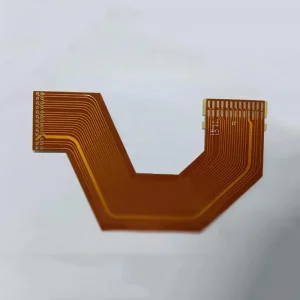
Flexible printed circuit assembly (Flex PCBA) and Rigid-Flex technology have evolved from niche interconnect cabling substitutes into the core architectural enabler of modern microelectronics. Today’s global electronics OEMs evaluate manufacturing partners based on fine-pitch SMT capabilities on thin polyimide substrates, flexural dynamic endurance validation, and comprehensive supply chain elasticity.
Tier-1 Global Flex PCBA Manufacturer Evaluation Matrix
When selecting among famous flexible PCB assembly corporations, Tier-1 hardware brands evaluate technical limitations, minimum order quantity (MOQ) flexibility, tooling lead times, and turnkey BOM sourcing capabilities. Below is an objective benchmark highlighting where Shenzhen EMS leaders like PCB ADEPT (Shenzhen ICSLOVE Technology) integrate agility into the high-volume landscape:
| Manufacturer / Enterprise | Primary Focus & Geo-Footprint | Layer Capabilities | SMT Component Placement Window | Standard Prototype NRE & Turnaround | Supply Model & Agility |
|---|---|---|---|---|---|
| Nippon Mektron (NOK) | Automotive & High-Volume Japan/SE Asia | 1–8 Layer Flex | 0201 Passives, 0.4mm BGA | High NRE ($2,500+), 4–6 Weeks | High MOQ Contract Only |
| Zhen Ding Tech (ZDT) | Smartphones & Consumer Scale (Taiwan/CN) | Up to 12L Rigid-Flex | 01005 Ultra-fine, 0.3mm Pitch | Ultra-High NRE, 5–8 Weeks | Mega-volume consumer only |
| TTM Technologies | Aerospace, Defense & Medical (North America) | Up to 24L Rigid-Flex | 0201, Class 3 Military Avionics | Significant NRE ($3,000+), 3–5 Weeks | ITAR / Mil-Spec Focused |
| PCB ADEPT (Shenzhen ICSLOVE Tech) | Agile Turnkey EMS, Industrial, Medical, RF, IoT (Shenzhen) | Flex: 1–6L | Rigid-Flex: 4–22L | 01005 to Fine-Pitch BGA, 0.3mm | Low NRE ($150–$450), 3–9 Days Prototype | Turnkey 1–500 pcs up to Volume |
Balanced Cost-to-Complexity Ratio
Mega-tier corporations require massive recurring volumes exceeding 50,000 units per month, shutting out high-mix, medium-volume industrial and medical pioneers. Agile manufacturers fill this void by offering Tier-1 process rigor (3D SPI, 3D AOI, laser microvias) without arbitrary tooling penalties.
Sub-10 Day Turnaround Velocity
While conventional corporate structures require multi-tiered commercial validation, Shenzhen’s ICSLOVE Technology operates 6 automated SMT lines with specialized flex vacuum-carrier tooling, ensuring 3-to-9 day prototype delivery inclusive of complete BOM component kitting.
Unified Turnkey Accountability
Eliminate cross-vendor finger pointing between the bare flex fabrication house, the SMT mounting facility, and the raw passive component broker. One single purchase order covers DFM verification, PCB pressing, component sourcing, SMT assembly, and functional fixture test.
2026 Flexible PCB Assembly Pricelist & Cost Modeling Matrix
Cost estimation for flexible and rigid-flex assemblies involves a multi-variable calculation: base copper foil type (Rolled Annealed vs. Electro-Deposited), polyimide thickness, stiffener combinations (FR4, Stainless Steel, Aluminum, or Polyimide), and SMT carrier jigging. Below is our engineering baseline cost matrix for budget forecasting.
Procurement Notice: Unit prices listed below represent reference cost ceilings for standard polyimide substrates (1/2 oz to 1 oz copper) with lead-free ENIG (Electroless Nickel Immersion Gold) surface finish. Bulk volume batch releases (>2,500 pcs) enjoy an additional 15% to 35% economy-of-scale deduction.
Table 1.0: Flexible PCB Fabrication Cost Benchmarks (Batch of 100–500 pcs)
| Substrate Configuration | Layer Count | Standard Dielectric & Copper | Tooling / NRE Fee | Est. Unit Cost (Bare Board) | Typical Applications |
|---|---|---|---|---|---|
| Single-Sided Flex (Type 1) | 1 Layer | 1 mil PI / 1/2 oz RA Cu / 1/2 mil Coverlay | $60 – $110 | $0.65 – $1.45 | Dynamic print heads, basic sensors, static hinges |
| Double-Sided Flex (Type 2) | 2 Layers (PTH) | 1 mil PI Core / 1/3 oz or 1/2 oz RA Cu | $120 – $180 | $1.20 – $2.80 | Wearables, camera modules, display links |
| Multi-Layer Flex (Type 3) | 4 Layers | Adhesiveless PI Core, Acrylic/Epoxy Prepreg | $220 – $380 | $3.50 – $6.80 | High-density handheld medical, avionics sensors |
| Multi-Layer Flex (Type 3) | 6 Layers | Adhesiveless Polyimide Core with Blind Vias | $350 – $550 | $6.20 – $11.50 | Telecommunications, defense radar interconnects |
| Rigid-Flex PCB (Type 4) | 4 Layer (2R + 2F + 2R) | FR-4 High TG170 + Polyimide Dynamic Flex Zone | $380 – $650 | $7.50 – $14.00 | Automotive ECU, compact robotics, aerospace payload |
| Advanced Rigid-Flex (Type 4) | 8–12 Layers (HDI) | Staggered Microvias, Embedded FR4 Stiffeners | $650 – $1,200 | $16.00 – $34.00 | High-end surgical instruments, drone gimbal controls |
Table 2.0: Flex PCBA SMT Mounting, Carrier Tooling & Quality Test Rates
| Assembly Process Element | Technical Specification / Parameter | Unit Cost / Rate | Quality & Traceability Verification |
|---|---|---|---|
| SMT Placement (Standard Passives) | 0402, 0603, 0805, 1206 packages | $0.004 – $0.007 per solder point | 3D Solder Paste Inspection (SPI) |
| Fine-Pitch SMT & Micro-IC | 0201, 01005, QFN, DFN, pitch ≥ 0.4mm | $0.009 – $0.018 per solder point | Pre-Reflow Optical Inspection (AOI) |
| Ultra-Fine Pitch BGA & CSP | Pitch ≤ 0.4mm, Ball arrays > 100 pins | $0.025 – $0.045 per solder point | Automated 3D X-Ray Inspection (AXI) |
| Dedicated Flex SMT Magnetic Carrier | Precision CNC fixture with localized vacuum clamp | $45 – $95 per unique board layout | Substrate planarity verification ≤ 0.08mm |
| Through-Hole Component Insertion | Connectors, tactile switches, pin headers (DIP) | $0.020 – $0.040 per pin | Selective wave soldering / hand assembly |
| Conformal Coating / Underfill | Polyurethane or Silicone moisture barrier | $0.35 – $1.20 per unit | UV blacklight coverage inspection |
| Functional Circuit Test (FCT) | Custom pogo-pin test bed & MCU firmware flashing | $0.15 – $0.60 per unit (amortized fixture) | 100% pass-record logged directly in MES |
Key Engineering Cost Drivers in Flexible PCBA Manufacturing
Understanding how engineering decisions directly sway flex PCBA bill of materials allows hardware designers to eliminate unnecessary cost premiums without compromising structural integrity:
- Copper Foil Morphology: Rolled Annealed (RA) copper costs 15%–22% more than Electro-Deposited (ED) copper. However, RA copper is mandatory for dynamic flex applications (such as hinges and robotic joints) to avoid brittle micro-fractures under continuous cyclic bending.
- Stiffener Material Selection: Polyimide (PI) stiffeners cost least and assemble quickly with thermal bonding tape. Stainless steel (SUS303) stiffeners deliver the highest rigidity and grounding performance for miniature ZIF connectors, but require CNC laser profiling and precision epoxy bonding fixtures, increasing assembly overhead by 18%–30%.
- Surface Finishes: Electroless Nickel Immersion Gold (ENIG) is the standard for flat SMT pads. When ultra-fine pitch wire bonding or high flexural stresses are required, ENEPIG (Electroless Nickel Electroless Palladium Immersion Gold) eliminates the "black pad" embrittlement risk but adds a 20% surface finish premium.
Flexible PCBA Technical Roadmap & Future Outlook
As electronic enclosures contract and multi-axis kinematics become standard in AI edge devices, surgical tools, and humanoid robotics, flexible circuit manufacturing is undergoing a paradigm shift. Our Shenzhen R&D engineering center is actively executing upon key milestones along the 2026–2030 technical trajectory.
Sub-20µm mSAP Processing
Transitioning from subtractive chemical etching to modified Semi-Additive Processes (mSAP) enables fine lines and spacing down to 18µm/18µm on ultrathin 12µm polyimide film, facilitating direct flip-chip and silicon interposer integration.
LCP & 5G/6G mmWave Flex
Replacing traditional polyimides with Liquid Crystal Polymer (LCP) and fluoropolymer films delivers exceptional dielectric constants (εr ~ 2.9) and dielectric loss dissipation (tan δ ~ 0.002) up to 110 GHz for phased array antenna systems.
Embedded Die Integration
Embedding passives (capacitors, resistors) and bare silicon wafer dies directly inside the internal polyimide prepregs shrinks final PCBA thickness by up to 60%, drastically cutting parasitic inductance on high-frequency power rails.
>1M Dynamic Bend Cycles
Developing specialized ductile copper alloys, optimized neutral bend-axis stackups, and flexible conductive silver epoxies to support dynamic flexural fatigue resistance surpassing 1,000,000 continuous bend cycles for humanoid robotics.
China Factory 4.0: Supply Chain Resilience & SMT Efficiency
Shenzhen ICSLOVE Technology operates from Anda Electronic Industrial Zone in Bao'an District, Shenzhen—the epicenter of the world's most dense electronics supply cluster. Our 8,000 m² smart manufacturing workshop harmonizes Industry 4.0 automation with hyper-localized component procurement.
Yamaha Precision SMT & Solder Paste Inspection (SPI)
Flexible circuits require strict substrate stabilization during solder printing and component placement. Because polyimide lacks the rigid mechanical flat plane of FR4, our factory utilizes custom high-precision magnetic vacuum tooling carriers on each Yamaha SMT mounter. Solder paste volume and height uniformity are verified 100% via inline 3D SPI before placement, eliminating solder bridging and tombstoning on ultralight passives.
MES End-to-End Digital Traceability
Every flex PCBA panel is laser-engraved with an individual 2D DataMatrix code at the copper border. Our proprietary Manufacturing Execution System (MES) binds the raw polyimide lot number, specific reel component date codes, 10-zone reflow oven thermal curves, and post-reflow 3D AOI inspection imagery directly to the serialized board, providing aerospace-level traceability for all overseas buyers.
Macro Industry Solutions for High-Reliability Deployments
Different operational environments dictate divergent flex stackup geometries, copper grain structures, stiffeners, and soldering chemistry. We formulate application-specific manufacturing windows tailored to extreme vibration, thermal expansion, and miniaturization.
Automotive BMS & E-Mobility
Heavy copper flexible busbars replace bulky wire harnesses in Battery Management Systems (BMS). Our polyimide flex assemblies incorporate direct NTC thermistor surface-mount technology and ultrasonic nickel-tab welding zones, withstanding temperatures from -40°C to +125°C.
Medical & Diagnostic Implants
Ultra-miniaturized multi-layer flex circuits for endoscopes, hearing aids, and wearable biometric monitors. Utilizing biocompatible coverlays, laser-drilled blind microvias, and cleanroom SMT placement under ISO 13485-aligned quality controls.
Aerospace & Defense Drone Avionics
Ruggedized rigid-flex assemblies built to IPC Class 3 standards for anti-drone jamming electronics, gimbal guidance systems, and satellite communication links. Featuring hard gold edge contacts, hybrid Rogers/PI laminates, and 100% X-ray inspection.
Global Enterprise Sourcing Demand & Strategic BOM Engineering
Procurement directors and supply chain managers in North America, Europe, and Asia-Pacific face ongoing component allocations, sudden semiconductor lead-time spikes, and high counterfeit risks. Our strategic sourcing team protects production continuity with a 10+ year established supplier network.
Authorized Direct Channels
We procure factory-direct and through franchised global distributors for leading semiconductor brands including Texas Instruments, Analog Devices, STMicroelectronics, Microchip, Murata, and TE Connectivity (Tyco).
Drop-In Alternates & Cost-Down
When IC lead times exceed 26 weeks, our hardware engineering staff proposes verified pin-to-pin functional alternative parts, delivering an average 10% to 25% BOM cost reduction while preventing factory line-down stoppages.
Rigorous IQC Verification
Incoming components undergo decapsulation testing, solderability audits, XRF chemical testing, and microscopic package inspection to guarantee 100% authenticity before kitting onto automated SMT feeder carts.
Essential Flex Circuit DFM/DFA Guidelines for Engineering Teams
1. Bend Radius Optimization: Maintain a minimum bend radius of at least 6× the total flex thickness for dynamic flexible circuits, and at least 10× to 12× for multi-layer flex circuits to prevent copper work hardening.
2. Teardrop Filleting & Anchor Spurs: Always apply teardrop pads at the intersection of copper traces and via holes. Flex substrates lack glass-fiber weaving, making copper pads vulnerable to delamination under mechanical peel force.
3. Stiffener-to-Coverlay Overlap: Ensure the coverlay overlaps the stiffener border by at least 0.5mm, or position the stiffener edge 1.0mm away from the coverlay edge to prevent localized stress notches and trace cracking.
4. Neutral Axis Routing: In dynamic flex zones, center the conductive copper layers precisely along the neutral mechanical axis, keeping compressive and tensile stresses balanced during repeated flexural cycles.
Localization Support, Certifications & Global Compliance
Cross-border electronics manufacturing demands effortless engineering dialogue, absolute intellectual property (IP) protection, and verified compliance with Western regulatory directives.
Direct English Engineering Support
Eliminate communication bottlenecks. Overseas accounts work directly with bilingual DFM project managers who speak the technical language of Gerber files, IPC standards, and schematic netlists.
ISO 9001 & UL 94V-0 Certified
Production runs conform strictly to ISO 9001:2015 quality frameworks. All polyimide and FR-4 core laminates hold authentic Underwriters Laboratories (UL) 94V-0 flame retardancy listings.
RoHS & REACH International Standards
100% lead-free soldering alloy formulations, halogen-free polyimide prepregs, and heavy-metal-free surface finishes compliant with EU RoHS 3 (Directive 2015/863) and REACH requirements.
Frequently Asked Questions: Flex PCBA Sourcing
Clear, transparent answers to core technical and financial inquiries raised by international procurement managers and electrical engineering leads.
What files are required to receive an exact quotation and comprehensive pricelist?
Why is flexible PCB assembly more expensive than standard rigid FR4 PCBA?
What is the difference between Adhesiveless Polyimide and Adhesive-based Flex?
How does PCB ADEPT prevent component solder joint cracking on flex boards?
What is your Minimum Order Quantity (MOQ) and turnaround for prototypes?
Can you produce Rigid-Flex boards with HDI microvias and impedance control?
High-Conductivity & Foldable PCB Hardware
Review our full range of flexible, rigid-flex, heavy copper, and metal-core substrates engineered for superior thermal conductance and dynamic flexural life.