
High-Precision Flexible, Rigid-Flex & Advanced PCB Solutions
Engineered for high-reliability consumer, automotive, and mission-critical RF electronics. Certified ISO 9001, UL, and RoHS compliant manufacturing lines operating with sub-millimeter placement accuracy.


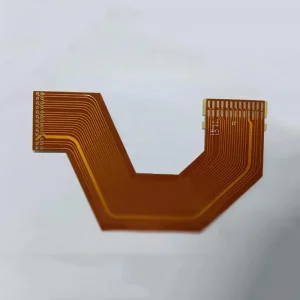

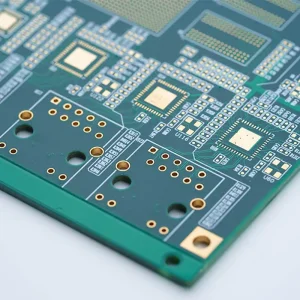


The Architecture of Modern Flex PCB Assembly (FPCBA)
Transitioning from conventional rigid boards to dynamic flexible circuits requires fundamentally different thermomechanical and assembly protocols. Here is how modern tier-1 EMS facilities overcome physics-induced manufacturing constraints.
Substrate Hydrodynamics & Pre-Baking
Polyimide (PI) films possess hygroscopic properties, absorbing ambient moisture up to 3.0% by weight. If assembled directly, rapid moisture expansion during 260°C lead-free reflow causes catastrophic micro-delamination and blistering.
- Automated nitrogen baking at 105°C–120°C for 4–8 hours prior to paste printing.
- Strict sealed transport to SMT placement within a 2-hour cleanroom window.
- Adhesiveless FCCL options for higher thermal resilience and tighter impedance.
Custom Magnetic & Vacuum Pallet Tooling
Flexible substrates lack physical rigidity. Without planarity during stencil printing and pick-and-place, mechanical flexure causes bridging, tombstoning, and missing solder volume on fine-pitch components.
- High-precision CNC synthetic stone (Durostone) and magnetic carrier pallets.
- Integrated vacuum plate positioning ensuring surface coplanarity within ±0.05mm.
- Dedicated localized stiffener pockets preventing mechanical trace fractures.
Reflow Convection & Thermal Profiling
Because flexible circuits exhibit a remarkably low thermal mass compared to multi-layer FR4 boards, traditional thermal curves cause localized overheating, copper peel-off, and polyimide degradation.
- 10-zone reflow convection profiling with real-time temperature data logging.
- Nitrogen-inerted chambers (O2 < 500 ppm) enhancing solder joint wetting.
- Strict gradient ramp-up limits preventing thermal expansion shear stress.
China Factory Advantages in Flex PCB Assembly Ecosystems
Why leading global medical, automotive, and consumer hardware enterprises consolidate their Flex PCBA operations in Shenzhen's hyper-dense electronic manufacturing corridor.
1-Hour Turnkey Sourcing Velocity
Shenzhen's industrial clustering allows raw polyimide substrates, specialized chemical coverlays, laser-cut stiffeners (FR4, PI, Stainless Steel, Aluminum), and original passive/active silicon to be procured and pre-tested in fractions of Western lead times.
Direct supply relationships with original component makers like Texas Instruments, Analog Devices, STMicroelectronics, and Murata protect your BOM against stockouts while reducing component procurement margins by 10% to 18%.
Bespoke Stiffener & Mechanical Integration
Flexible circuits rarely exist in isolation; they bridge disparate planar structures or fit complex 3D housing geometries. Shenzhen EMS facilities excel at multi-material laminations integrating distinct selective stiffeners:
- Stainless Steel (SUS): 0.1mm–0.5mm ultra-thin reinforcement for ZIF connectors.
- FR4 Stiffeners: Localized rigidity under heavy BGA and QFN packages.
- Aluminum Heat Sinks: High thermal conductivity paths for LED/power chips.
Integrated Traceability via MES Architecture
Every individual FPC panel undergoes high-resolution 2D barcode laser marking before assembly. Our centralized Manufacturing Execution System (MES) links solder paste inspection (SPI), automated pick-and-place feeder slots, reflow thermal chamber logs, and 3D AOI inspection imagery.
This closed-loop digital paper trail complies fully with ISO 9001, IATF 16949 (Automotive), and ISO 13485 (Medical Devices) specifications, ensuring total auditability for global procurement departments.
Vertical Application Solutions & Strategic Use Cases
Flexible circuit assemblies solve severe mechanical envelope, weight, and signal integrity constraints across modern high-reliability applications.
Medical Devices & Bio-Telemetry
Implantable sensors, handheld ultrasound probes, hearing aids, and continuous glucose monitoring (CGM) patches demand biocompatible, ultra-miniaturized FPCBA. We implement ENIG / ENEPIG surface finishes on adhesiveless polyimide substrates, eliminating ionic contamination and ensuring zero whisker risk over decades of continuous bodily contact.
Automotive Battery Management (BMS)
Electric vehicle (EV) battery packs are replacing bulky, failure-prone copper wiring harnesses with consolidated flexible circuit strips. These FPC assemblies integrate cell voltage sensing, NTC thermistor temperature sensing, and fuse protection into an ultra-thin package capable of surviving high vibration, thermal shock (-40°C to +125°C), and harsh electrolyte vapors.
Aerospace Avionics & Dynamic Gimbals
From satellite folding solar wing interconnects to UAV optical gimbal camera heads, flexible assemblies handle millions of dynamic bending cycles without impedance variance or trace fatigue. IPC-6013 Class 3 rigid-flex stackups allow seamless signal propagation from rigid sensor boards through flex ribbons to onboard flight controllers.
Foldable Hardware & Wearable Tech
Modern AR/VR headsets, smartwatches, and multi-folding smartphones require high-density interconnect (HDI) flex designs featuring laser-drilled blind/buried micro-vias down to 50µm and trace/space geometries below 35/35µm. Our SMT pick-and-place lines populate 01005 passives and 0.3mm pitch WLCSP silicon without bridging or edge voiding.
Industrial Robotics & High-Flex Cabling
Six-axis industrial robotic arms and pick-and-place gantries experience high torsional stress and multi-million flexural fatigue cycles. Through grain-oriented rolled annealed (RA) copper foil and flexible epoxy coverlays, our flex PCB assemblies outlast conventional drag chains while minimizing internal cabinet weight.
Engineering Capability Matrix: Flex & Rigid-Flex PCBA
Comprehensive design-for-manufacturing (DFM) parameters verified by our Shenzhen production engineering staff for global hardware developers.
| Process Parameter | Standard Capability | Advanced / HDI Limit | Industrial Quality Standard |
|---|---|---|---|
| Layer Count Range | 1 – 6 Layers (Pure Flex) | 4 – 24 Layers (Rigid-Flex) | IPC-6013 Class 2 / 3 |
| Base Substrate Material | Polyimide (PI), PET | Adhesiveless Polyimide, LCP, PTFE | IPC-4204A Compliant |
| Copper Foil Type & Weight | ED / RA Copper (0.5 oz – 2 oz) | Ultra-Thin Rolled Annealed (RA, 1/3 oz) | ASTM B451 Standard |
| Min. Trace Width / Spacing | 50µm / 50µm (2.0 / 2.0 mil) | 25µm / 25µm (mSAP Process) | Automated Optical Inspection (AOI) |
| Micro-Via Laser Hole Diameter | 0.10 mm (4 mil) | 0.05 mm (2 mil) UV Laser | IPC-TM-650 Cross-Sectioned |
| Surface Finishing Systems | Lead-Free HASL, ENIG (1-3 µ" Au) | ENEPIG, Hard Electrolytic Gold, Immersion Silver | IPC-4552 / IPC-4556 |
| SMT Component Placement | 0201, 0402, QFP, SOP, BGA | 01005 chips, 0.3mm Pitch BGA / CSP | IPC-A-610 Class 3 Standards |
| Placement Precision & Repeatability | ±0.03 mm | ±0.015 mm (High-Speed Yamaha/Panasonic) | Laser Fiducial Alignment |
| Test & Inspection Protocols | 100% E-test, 3D SPI, Post-Reflow AOI | 3D X-Ray (AXI), Flying Probe, In-Circuit (ICT) | MES Fully Traced Batch Logs |
Global Enterprise Sourcing Protocols: Vetting a Flex PCB Assembly Factory
Essential checklist criteria utilized by multinational sourcing directors to eliminate operational, technical, and supply chain liabilities before issuing volume purchase orders.
Complete File Deliverables
Supplying Gerber RS-274X or ODB++ files along with explicit flex layer stackup drawings showing transition zones, coverlay apertures, stiffener thickness, and adhesive boundaries.
Validated BOM with MPNs
Explicit manufacturer part numbers (MPN) for all silicon, passives, and mechanical components. Sourcing protocols must confirm authorized distributor chains to preclude counterfeit components.
Dynamic Fatigue Cycles
Specifying whether the FPC is designed for static flex-to-fit installation or dynamic bending cycles. Dynamic assemblies demand rolled annealed copper and balanced neutral axis placement.
FAI & PPAP Level 3
Verification through comprehensive First Article Inspection (FAI) reports, micro-section metallurgical analysis, ionic cleanliness testing, and Production Part Approval Process (PPAP) documentation.
High-Layer, Heavy Copper & Specialized Hardware Assemblies
Explore our complete fabrication, prototyping, and volume production solutions engineered to handle heavy power density, high frequencies, and dynamic electronic demands.



Frequently Asked Questions: Flex PCB Assembly Manufacturing
In-depth engineering answers covering manufacturing physics, quality management, component handling, and international procurement logistics.
Why is pre-baking mandatory for flexible PCB assemblies before SMT reflow?
How do you maintain coplanarity and avoid warping on ultra-thin flexible circuits during SMT placement?
What is the engineering difference between Rolled Annealed (RA) and Electro-Deposited (ED) copper in FPCBA?
Which stiffener material is ideal for my flexible circuit assembly design?
• FR4 Stiffener: Standard cost-effective option used under SMT component landing areas (BGAs, ICs, connector receptacles) to prevent solder joint fatigue caused by localized board deflection.
• Polyimide (PI) Stiffener: Adds thickness to insertion finger zones (e.g., matching 0.3mm or 0.2mm ZIF connector specifications) while retaining some flexibility.
• Stainless Steel / Aluminum Stiffener: Provides ultra-thin mechanical rigidity (as thin as 0.1mm) with maximum planar flatness, and acts as a grounding path and thermal heatsink in compact mobile and avionics housings.