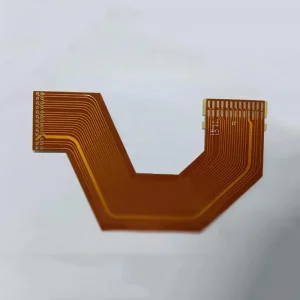
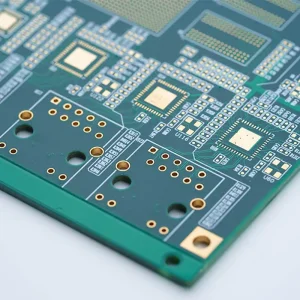
High-Precision Prototypes & Multilayer Assemblies
Explore engineering-verified circuit boards fabricated to IPC Class 2 and Class 3 specifications with quick-turn rapid dispatch from Shenzhen facilities.




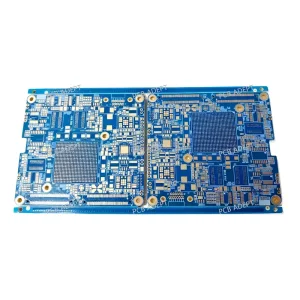


Rigid-Flex PCB Industry Evolution: The Monolithic 3D Interconnect Revolution
How the structural convergence of polyimide flex films and FR-4 glass-epoxy composites is redefining spatial volume constraints and electrical integrity in next-generation aerospace, EV, and medical hardware.
From Planar Routing to Volumetric Miniaturization
Traditional electronic architectures relied heavily on rigid multi-board systems interconnected by discrete multi-pin wire harnesses, pin headers, and crimp connectors. This approach introduced significant insertion loss, impedance discontinuities, and mechanical points of failure during thermal expansion cycles. Rigid-flex technology integrates flexible polyimide conductive layers directly into the laminated body of rigid FR-4 or high-Tg materials, forming a continuous electrical conduit. This shift allows modern aerospace avionics, endoscopic surgical robots, and compact military radar units to utilize non-standard, curved interior geometries without sacrificing mechanical reliability.
Dynamic Flexing vs. Flex-to-Install Mechanics
Rigid-flex manufacturing requires distinguishing between static "flex-to-install" configurations and high-endurance dynamic flexing arms. While flex-to-install applications bend once during chassis assembly (demanding a bending radius of at least 6× to 10× total flex thickness), dynamic flex designs, such as high-cycle robotic joint cables and camera gimbals, must endure millions of flexural cycles without copper fatigue or delamination. Fabricating these dynamic flex regions requires adhesiveless rolled-annealed (RA) copper foil, grain orientation alignment along the bend axis, and specialized low-modulus acrylic or epoxy coverlays rather than standard brittle solder masks.
Thermal Dissipation & Structural Integrity
As microprocessors and gallium nitride (GaN) power switches operate at escalating thermal densities, traditional thermal management suffers from thermal boundary layer resistances between rigid substrates and daughtercards. Modern rigid-flex manufacturing integrates heavy copper thermal planes (up to 3oz or 4oz) in rigid power-stage zones, combined with direct copper coin embedding and staggered thermal via arrays. The flexible polyimide bridge, possessing high thermal stability (Tg exceeding 250°C and thermal decomposition temperatures >350°C), acts as both an electrical interconnect and a mechanical shock absorber that decouples mechanical stresses from sensitive solder joints.
Rigid-Flex PCB Pricelist Breakdown & Factory Cost Variables
Comprehensive cost matrices, engineering yields, and layer-stack cost multipliers for procurement directors, DFM leads, and global supply chain managers sourcing from Shenzhen, China.
| Stack-up & Layer Architecture | Material Configuration | Surface Finish | Impedance / Line-Space | Prototype (5-10 pcs) | Mid-Volume (100-500 pcs) | Volume (>1,000 pcs) | Standard Lead Time |
|---|---|---|---|---|---|---|---|
| 4-Layer Rigid-Flex (1R+2F+1R) | Standard FR-4 + Adhesiveless PI (1/2oz RA Cu) | ENIG (Au: 1-2u") | ±10% / 4.0 mil / 4.0 mil | $280 - $450 / Lot | $18 - $28 / pc | $9.50 - $14 / pc | 5 - 7 Working Days |
| 6-Layer Rigid-Flex (2R+2F+2R) | High-Tg FR-4 (Tg170) + Polyimide + No-Flow PP | ENIG (Au: 2-3u") | ±8% / 3.5 mil / 3.5 mil | $420 - $680 / Lot | $32 - $48 / pc | $16 - $24 / pc | 7 - 9 Working Days |
| 8-Layer Multi-Flex (3R+2F+3R) | Shengyi S1000-2M + DuPont Pyralux AP Core | ENEPIG / Hard Gold | ±7% / 3.0 mil / 3.0 mil | $650 - $980 / Lot | $52 - $75 / pc | $28 - $39 / pc | 9 - 12 Working Days |
| 10-Layer HDI Rigid-Flex (1+N+1) | Laser Microvias + Adhesiveless PI + Blind/Buried Vias | Immersion Silver / ENIG | ±5% / 2.5 mil / 2.5 mil | $950 - $1,450 / Lot | $78 - $115 / pc | $45 - $68 / pc | 12 - 15 Working Days |
| 12-16 Layer Complex Any-Layer | High-Speed Low-Loss PTFE/Rogers Core + PI Flex | Electroless Nickel / Immersion Gold | Controlled Dk/Df / 2.0 mil Line | $1,400 - $2,200 / Lot | $125 - $190 / pc | $72 - $110 / pc | 15 - 18 Working Days |
Lamination Pressure Cycles & Pre-Preg Flow
Unlike standard FR-4 multilayers requiring a single lamination cycle, rigid-flex PCBs demand multiple thermal press cycles. First, the flex core is laminated with coverlay films using vacuum hydraulic presses. Then, rigid outer cores are laminated with specialized "no-flow" or "low-flow" prepregs (such as 106 or 1080 prepreg styles). This prevents resin from bleeding into the transition zone and contaminating the exposed flexible arm, which would cause embrittlement and catastrophic bend failures. Each added press cycle increases tooling setup costs, autoclave thermal cycles, and cycle times.
Base Copper & Core Polyimide Grading
Pricing is fundamentally governed by raw material grade. Low-cost flexible boards utilize adhesived copper cores (copper foil bonded to polyimide using acrylic adhesive), which are thicker, exhibit lower thermal resistance, and deteriorate under high-temperature lead-free reflow profiles. Adept PCBA utilizes premium adhesiveless base laminates (such as DuPont Pyralux AP, ITEQ, or Shengyi flex materials). Cast adhesiveless cores offer superior dimensional stability (shrinkage <0.05%), reduced dielectric thickness (down to 12.5µm), and eliminate adhesive squeeze-out during through-hole drilling, preventing microvia pad lifting.
Tooling, Laser Skiving & Controlled-Depth Routing
Releasing the flexible section from the laminated sandwich requires high-precision UV/CO2 laser ablation and controlled-depth CNC milling. Mechanical routers must stop within a vertical tolerance of ±20µm to sever the rigid caps without nicking the underlying polyimide flex coverlay or damaging surface copper traces. Furthermore, special baking fixtures and aluminum backing plates must be custom-machined for SMT assembly to prevent warpage during 260°C peak convection reflow. These precision tooling parameters make up 15–25% of initial NRE charges on small prototype batches.
Engineered Rigid-Flex Solutions Across Mission-Critical Domains
From high-frequency phased array radar payloads to biocompatible hermetic medical implants, discover how our custom rigid-flex designs meet demanding operating environments.
Aerospace, Avionics & Defense
Modern defense systems, airborne counter-UAS platforms, and low-earth orbit (LEO) small satellites operate under extreme vibrational g-loads (up to 30G RMS) and broad operating thermal windows (-55°C to +125°C). In these environments, wire harnesses risk terminal pin fretting and cold solder cracking. Our IPC-6013 Class 3 aerospace rigid-flex boards incorporate teardrop pad junctions, copper-filled blind microvias, and anchor spurs on flex termination fingers. Rigid regions utilize polyimide laminates or high-frequency Rogers hydrocarbon cores combined with adhesiveless flex cores to survive severe outgassing and thermal shock cycles.
Medical Diagnostic & Implantable Systems
Next-generation endoscopic cameras, wearable continuous blood glucose sensors, and motorized surgical articulators demand high interconnect density within sub-millimeter form factors. We engineer biocompatible rigid-flex PCBs with line widths and spaces down to 2.5 mil (65µm), leveraging micro-HDI staggered vias and micro-BGA packages (0.35mm pitch). Utilizing liquid photo-imageable (LPI) coverlays and ultra-thin 1/3oz copper foils, these boards fold into catheter shafts or titanium capsule enclosures while offering high signal-to-noise ratios for high-impedance biopotential sensing.
Automotive EV Battery Management (BMS)
Electric vehicle traction battery packs require voltage and temperature monitoring across hundreds of lithium-ion cells. Traditional discrete wiring harnesses introduce substantial pack mass, assembly bottlenecking, and fire safety risks from crimp resistance. We produce 2-meter extended rigid-flex busbar monitoring strips that combine surface-mount NTC thermistors, fusing components, and voltage pick-up pads directly along a continuous polyimide flex trunk. Certified under IATF 16949, these assemblies resist electrolyte vapor exposure, damp heat cycling, and high-voltage isolation breakdown.
5G/6G & Millimeter-Wave Telecommunications
Radio-frequency antennas and active array antenna modules (AAM) operating beyond 28GHz encounter severe signal degradation when traversing conventional board-to-board connectors. Our RF rigid-flex hybrid architectures blend low-loss Rogers (RO4350B, RO3003) or Panasonic Megtron cores in the rigid antenna patch zones with thin, low-dielectric-constant (Dk 3.2, Df 0.002) adhesiveless polyimide or modified polyimide (MPI) flex conduits. Cross-hatch ground planes and coplanar waveguide (CPW) geometries maintain continuous 50Ω single-ended and 100Ω differential impedance matching directly into the transceiver chassis.
Industrial Robotics & High-Cycle Automation
Articulated robotic arm effectors, high-speed pick-and-place heads, and CNC spindle encoders subject interconnects to continuous torsional twisting and tight-radius linear flexure. In these setups, standard flexible printed circuits develop trace fractures within weeks. Our industrial dynamic rigid-flex designs utilize electro-deposited annealed (ED-A) or rolled-annealed foils, double-sided polyimide coverlays with staggered bend radii, and tear-stop copper tabs along the outer edges of the flex strip. These boards comfortably achieve more than 20 million continuous flex cycles in ISO Class 5 cleanroom test fixtures.
Edge AI Compute & Smart Wearables
Wearable augmented reality (AR) glasses and edge-computing vision modules demand substantial processing throughput in frames weighing under 50 grams. We manufacture complex 8-layer to 12-layer any-layer HDI rigid-flex configurations featuring microvias stacked directly over buried vias (VIPPO). By consolidating DDR4/LPDDR5 memory lines, high-definition camera serial interfaces (MIPI CSI), and power management integrated circuits (PMIC) into an integrated wrap-around flex geometry, system designers eliminate multi-board stacking connectors, optimizing both casing thickness and thermal balance.
Enterprise Factory Audits, Regulatory Traceability & QA Protocols
Eliminating supply chain uncertainty for international procurement directors through verifiable QA testing, MES lot tracking, and full compliance with IPC Class 3 quality gates.
100% Netlist Electrical Verification
Every rigid-flex panel undergoes complete continuity and isolation testing via high-speed double-sided dual-shuttle flying probe testers or dedicated bed-of-nails fixtures. Testing is performed at up to 250V with micro-ohm Kelvin 4-wire resistance monitoring to identify hairline trace cracks or micro-voids across flex-to-rigid transition interfaces.
Microsectioning & Thermal Stress Profiling
Per IPC-TM-650 standards, microsection coupons are extracted from every production master panel. Metallographic cross-sections verify hole-wall plating thickness (averaging >25µm copper in via barrels), barrel integrity during solder float testing (3 cycles at 288°C for 10 seconds), and proper nail-head formation without inner-layer resin smear.
MES End-to-End Lot Traceability
Our Manufacturing Execution System (MES) assigns an individualized laser-etched 2D DataMatrix barcode to each board. This links every PCB to its raw material laminate master lot (DuPont, Shengyi, Rogers), copper foil batch numbers, etching chemistry line speeds, lamination autoclave press pressure records, and operator IDs for a minimum 10-year archival history.
International Regulatory Certifications
All rigid-flex manufacturing lines maintain audited accreditations covering ISO 9001:2015, IATF 16949 for automotive electronics, and ISO 13485 for medical systems. Flame retardancy is verified under UL 94V-0 (E-file registered). Chemical compliance documentation covers full EU RoHS 3 (Directive 2015/863/EU), REACH SVHC lists, and conflict mineral reporting.
Engineering Roadmap 2026–2030: Next Frontiers in Rigid-Flex Fabrication
A strategic view of evolving dielectric materials, ultra-fine feature scaling, and packaging integrations shaping tomorrow's hardware platforms.
Ultra-Fine Line Scaling (mSAP & SAP)
Traditional subtractive chemical etching reaches its physical limit around 2.5 mil (65µm) trace/space due to trapezoidal undercut defects. We are scaling modified Semi-Additive Processes (mSAP) and full SAP to flexible substrates, achieving line/space dimensions down to 1.2 mil / 1.2 mil (30µm / 30µm). This advance enables the direct routing of 0.3mm pitch silicon-on-wafer packages onto dynamic flexible substrates.
Liquid Crystal Polymer (LCP) & Sub-THz Films
While standard polyimide films absorb moisture (0.8–1.5% moisture absorption rate) and exhibit increased dielectric loss at frequencies above 30GHz, Liquid Crystal Polymer (LCP) dielectrics feature near-zero moisture uptake (<0.04%) and a consistent Dk of 2.9 up to 110GHz. Our cleanroom facilities are developing thermo-compression bonding protocols for pure LCP and LCP-fluoropolymer multi-layer rigid-flex interconnects designed for 6G radar and satellite transceivers.
Embedded Passives & Active Bare Die (Embedding)
To reduce surface footprint, our high-density packaging roadmap integrates thin-film resistors, capacitive sheets, and thinned active silicon bare-die directly inside the internal prepreg cavity of the rigid core. Connected by microvias to the flexible core layers, this monolithic integration frees up outer board space, minimizes parasitic inductance, and improves EMI shielding across delicate sensor circuits.
AI-Assisted Neural DFM & Optical Metrology
By training neural network models on thousands of historical rigid-flex lamination runs, our internal CAM tools predict local polyimide expansion and contraction across high-density zones with micron precision. Real-time compensation dynamically adjusts laser drilling targeting and photolithography scaling, keeping multilayer annular ring breakout rates below 0.02% on complex multi-tier stackups.
Technical & Procurement FAQ for Rigid-Flex Circuit Boards
Detailed engineering and supply chain answers covering DFM rules, laminate properties, bend radius calculations, and production turnaround windows.
How do you calculate the minimum bend radius for rigid-flex circuits to prevent copper fracture?
What is the structural difference between adhesived and adhesiveless flexible base laminates?
How do your CAM engineers prevent resin starvation and squeeze-out at the rigid-to-flex transition zone?
What documentation and CAM files are required for an accurate DFM review and quotation?
Can you manufacture rigid-flex PCBs with HDI (High Density Interconnect) laser microvias across flexible sections?
What are your typical prototype and volume production lead times for complex rigid-flex boards?
What surface finishes provide the highest reliability on rigid-flex interconnect fingers and SMT pads?
Heavy Copper, High-TG & Specialized Flex PCB Lines
Complete your supply chain qualification with our comprehensive portfolio of high-temperature automotive substrates, RF-microwave laminates, and advanced flexible circuits.