High-Quality High Thermal Conductivity Aluminum PCB from China Suppliers and Factory Companies, Factories

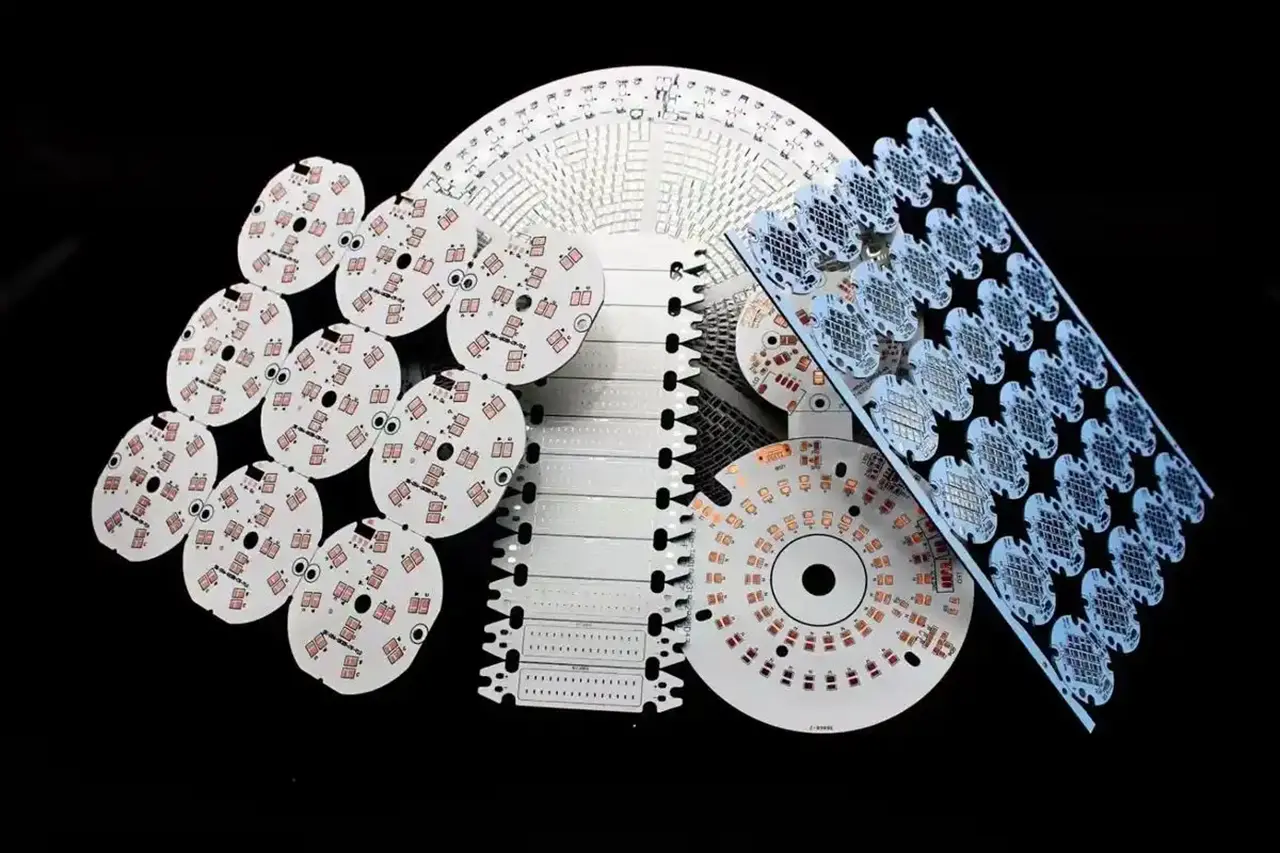
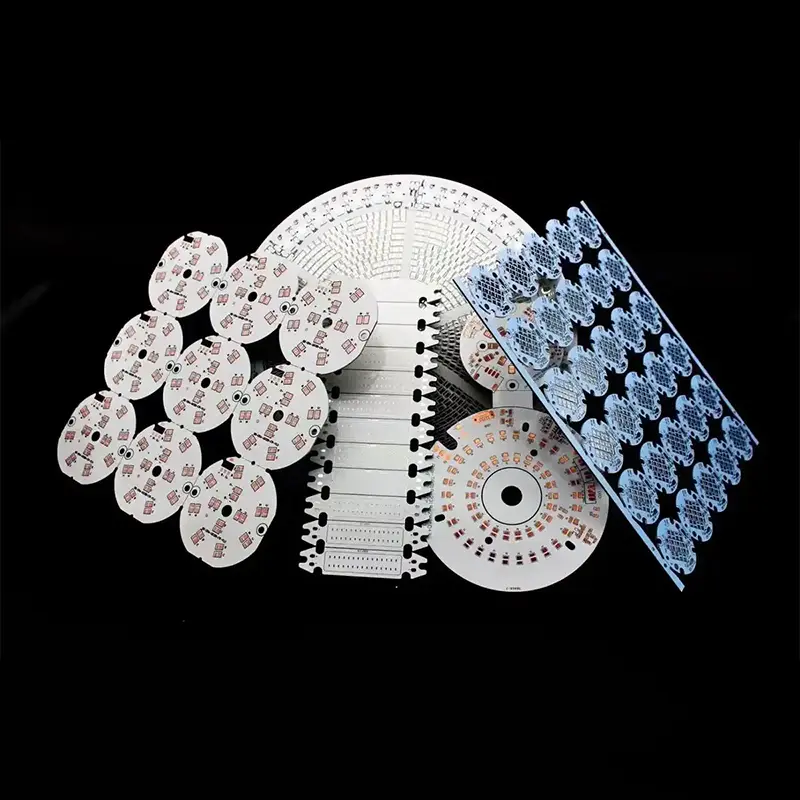
Aluminum PCB, a specialized printed circuit board, features a metal substrate made of aluminum alloy. This innovative design comprises three key layers: the circuit layer (copper foil), the insulating layer (thermal conductive insulating adhesive or PI), and the metal base layer (aluminum plate). Unlike traditional FR-4 epoxy glass cloth substrates, aluminum PCBs boast exceptional thermal conductivity, making them ideal for high-performance applications. As a leading factory and supplier in China, we provide high-quality aluminum PCBs that meet the diverse needs of our customers. Discover the advantages of our aluminum PCBs and enhance your electronic designs with superior thermal management solutions today

Product Description

◆ What is Aluminum PCB?

Structural Layer Common Materials Core Function
Circuit layer Electrolytic copper foil ranging from 18 to 140μm Make circuits and carry the welding of components
Insulating layer Thermal conductive epoxy resin / ceramic filling adhesive Insulation isolation + heat conduction (thermal conductivity 0.8–8W/m·K)
Metal base layer Aluminum alloy (mainly 6061/5052) The heat dissipation base quickly disperses the heat conducted by the insulation layer
Aluminum PCB-2

◆ Main Application Scenarios

  • 💡
    LED Lighting: LED beads (especially high-power LEDs) generate concentrated heat. Aluminum substrates are the core substrates for street lamps, spotlights, and panel lights, which can keep the temperature rise of the beads within a safe range.
  • ⚡
    ① Power Electronics: Power modules (MOSFETs, IGBTs) of power adapters, frequency converters, and inverters need to dissipate heat quickly to prevent component burnout.
  • 🚗
    ② Automotive Electronics: On-board LED headlights, power controllers in the engine compartment, motor driver boards for new energy vehicles.
  • 🎵
    ③ Audio Equipment: Power amplifier boards, audio power modules — reducing sound quality distortion caused by heat generation.

◆ Core Features

▶ Ultra-High Heat Dissipation

The metallic thermal conductivity of aluminum plates can quickly transfer the heat generated by components (such as LEDs, power transistors) to the external heat dissipation structure, significantly reducing the temperature rise of the components and extending their service life.

▶ Lightweight + High Mechanical Strength

The density of aluminum alloy is much lower than that of copper and steel, and its bending resistance and impact resistance are superior to those of ordinary PCBs, making it suitable for portable and vehicle-mounted devices.

▶ Good Dimensional Stability

The coefficient of thermal expansion (CTE) of aluminum alloy can be matched with components, reducing warping and solder joint cracking caused by temperature changes.

▶ Insulation Safety

The insulation layer can withstand high voltage (common withstand voltage ≥3000V AC), preventing short circuits between the circuit and the aluminum plate.

◆ Key Design and Manufacturing Points

Design Considerations

The heat dissipation pads need to be fully in contact with the aluminum plate: under the pads of high-power devices, "heat-conducting pads" should be designed and connected to the side of the aluminum plate through metallized vias (≥0.3mm) to enhance heat dissipation.

Line width adaptation current: Aluminum substrates are mostly used in high-current scenarios. The line width should be designed according to "1A current corresponding to 0.3mm line width (copper thickness 35μm)" to avoid heat generation.

Avoid burrs during aluminum plate cutting: Burrs on the edges of aluminum plates can easily puncture the insulation layer, so chamfering (≥0.5mm) treatment is required.

Manufacturing Process

Insulation layer bonding: High-temperature and high-pressure (180℃/3MPa) bonding is required to ensure that the insulation layer is free of bubbles and the peel strength is ≥1.0N/mm.

Surface treatment: Tin plating / nickel-gold plating is preferred, and OSP (organic film has poor heat resistance) should be avoided.

Forming method: CNC milling is adopted (instead of die-cutting for ordinary PCBs) to ensure the flatness of the aluminum plate edges.

◆ Send Inquiry

Your Name*

E-mail*

Phone Number

Country

Remarks*

Reset

? Frequently Asked Questions

Q What is the main advantage of using an aluminum PCB over a standard FR4 PCB?
The primary advantage of aluminum PCBs is their superior thermal management. The aluminum base layer rapidly conducts and dissipates heat away from components, significantly reducing operating temperatures. This makes them ideal for high-power applications such as LED lighting and power electronics, where FR4 boards would suffer from thermal stress and reduced component lifespan.
Q What aluminum alloys are commonly used in aluminum PCB manufacturing?
The most commonly used aluminum alloys for PCB substrates are 6061 and 5052. These alloys offer an excellent combination of thermal conductivity, mechanical strength, and machinability. The 6061 alloy is particularly favored for its high strength and good corrosion resistance, while 5052 is valued for its superior formability and weldability.
Q What is the typical thermal conductivity range of the insulating layer in an aluminum PCB?
The insulating layer in an aluminum PCB — typically made of thermal conductive epoxy resin or ceramic-filled adhesive — has a thermal conductivity ranging from 0.8 to 8 W/m·K. Higher thermal conductivity values are used in demanding applications where maximum heat transfer from the circuit layer to the aluminum base is required.
Q Why is CNC milling preferred over die-cutting for aluminum PCB fabrication?
CNC milling is preferred because it ensures clean, precise edges on the aluminum base without creating burrs. Burrs formed during cutting can pierce the thin insulating layer, potentially causing short circuits between the copper circuit and the aluminum substrate. CNC milling also allows for chamfering (≥0.5mm) at the edges, further protecting the insulation integrity.
Q What surface treatment options are recommended for aluminum PCBs?
Tin plating and nickel-gold (ENIG) plating are the recommended surface treatments for aluminum PCBs. OSP (Organic Solderability Preservative) should be avoided because the organic film has poor heat resistance, which is a critical drawback in the high-temperature environments where aluminum PCBs are typically deployed.
Q What voltage can the insulating layer of an aluminum PCB typically withstand?
The insulating layer of a standard aluminum PCB can typically withstand a voltage of ≥3000V AC. This high dielectric strength effectively prevents short circuits between the copper circuit layer and the aluminum base, ensuring electrical safety even in demanding industrial and automotive applications.

Related Products