
High-Velocity Flagship Electronics for Industrial Expansion
Engineered for high-durability telecommunication networks, electric mobility platforms, and smart urban infrastructure throughout the DKI Jakarta and West Java industrial sectors.
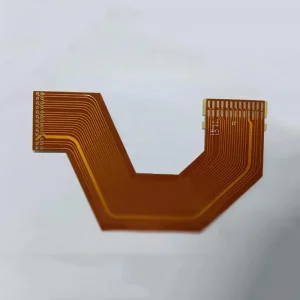
OEM Flexible PCB Solutions for Jakarta Smart Consumer Electronics
- Ultra-thin Polyimide (PI) Substrate
- Dynamic 1-6 Layer Bending Capability
- Ideal for IoT Devices & Medical Wearables

High-Frequency PCB Assemblies for 5G Jakarta Cellular Infrastructure
- Low Dielectric Loss PTFE / Rogers
- Precision Tight Impedance Control (±5%)
- Telemetry & Urban Small-Cell Systems
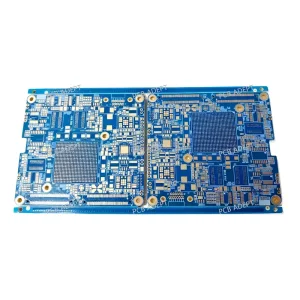
RF & Microwave Circuit Boards for Jakarta Industrial Remote Telemetry
- Operation Frequencies ≥500MHz to 24GHz
- ENIG / Hard Gold High-Reliability Finish
- Optimized Signal Attenuation Margin

High Thermal Aluminum Metal-Core PCBs for EV & Industrial Lighting
- Thermal Conductivity: 1.5 to 4.0 W/m·K
- Rapid Heat Dissipation for Heavy Drives
- Heavy Breakdown Voltage Resistance
Jakarta's Electronics Revolution: The Crossroads of "Making Indonesia 4.0"
The Special Capital Region of Jakarta (Daerah Khusus Ibukota Jakarta) and its continuous metropolitan industrial perimeter—encompassing Bogor, Depok, Tangerang, and Bekasi (Jabodetabek)—represent the undisputed economic engine of Indonesia. Generating over 25% of the national GDP, this economic zone is undergoing a historic structural transformation. Driven by the Indonesian Ministry of Industry's national strategic roadmap, "Making Indonesia 4.0", the capital region is swiftly moving beyond traditional semi-knockdown (SKD) light consumer assembly into advanced mechatronics, automotive electrification, Internet of Things (IoT) hardware, and high-frequency communication electronics.
Historically, hardware manufacturing in Jakarta leaned on legacy electronic board importing. However, the dramatic intensification of domestic infrastructure construction—including high-speed rail telemetry, smart grid modernization spearheaded by Perusahaan Listrik Negara (PLN), and widespread 4G LTE-to-5G enterprise cellular densification—has exposed a structural requirement for robust, industrial-grade Printed Circuit Boards (PCBs) and turnkey Surface Mount Technology (SMT) assembly. For original equipment manufacturers (OEMs), design firms, and system integrators situated within Jakarta's tech hubs (such as Mega Kuningan and TB Simatupang) and manufacturing facilities in West Java, procuring components and circuit boards that can reliably withstand severe tropical conditions (ambient humidity >80% and continuous 30°C+ temperatures) has become a mission-critical imperative.
Industrial parks flanking Jakarta, such as Jababeka (Cikarang), MM2100, KIIC (Karawang International Industrial City), and Suryacipta, are housing an unprecedented surge of Tier-1 and Tier-2 automotive suppliers and contract electronic manufacturers. As global automakers scale their EV platforms across Indonesia's nickel-rich industrial corridor, demand for specialized heavy-copper printed circuits (3oz to 6oz+), direct-plated copper ceramic substrates, and high-thermal-conductivity metal-core PCBs (MCPCBs) has risen exponentially. Indonesian procurement specialists and lead systems architects can no longer rely on unverified multi-tier trading intermediaries; they require deep-tier technical transparency, direct-from-source engineering review, and rapid Design for Manufacturability (DFM) verification.
Localized Engineering Application Scenarios
From deep-sea port logistics automation at Tanjung Priok to smart city grids across Central Jakarta, our advanced PCB & PCBA manufacturing directly addresses extreme operational constraints.
Automotive & EV Powertrains (Cikarang Corridor)
Electric buses for TransJakarta, commercial fleet electrification, and two-wheeler battery swapping stations require battery management systems (BMS) with rigorous thermal tolerance. Heavy copper PCBs (up to 8oz) withstand high-amperage surges without thermal delamination under Jakarta's heavy stop-and-go traffic profiles.
Smart Grid & Urban IoT (PLN & Smart Jakarta)
Advanced Metering Infrastructure (AMI) deployed across residential and commercial sectors in South and West Jakarta integrates cellular NB-IoT and LoRa modules. Our multi-layer FR-4 boards featuring ENIG finish guarantee long-term oxidation protection against high humidity and sulfurous urban atmospheric pollutants.
FinTech & POS Peripherals (Jakarta Financial District)
As Southeast Asia's digital finance capital, Jakarta's retail relies heavily on QRIS payment terminals, portable POS scanners, and biometric kiosks. Our ultra-compact High-Density Interconnect (HDI) PCBs (Any-Layer via-in-pad plating) reduce device footprints while safeguarding complex signal integrity.
Telecom Base Station Backhaul (Telkomsel & Indosat)
To overcome dense metropolitan signal shadows, high-frequency Rogers and Taconic hybrid laminates are deployed in microcell transceivers across Jakarta's high-rise corridors. Low dissipation factors (Df down to 0.002) eliminate RF attenuation across sub-6 GHz and millimeter-wave frequencies.
Harbor Automation (Tanjung Priok Container Port)
Port cargo routing, container tracking RFID gates, and automated crane drive logic rely on industrial-grade Rigid-Flex PCBs. The combination of structural mechanical rigidity and dynamic bending eliminates failure-prone wire harnesses subjected to saline moisture and mechanical vibration.
Industrial SCADA & Cleanroom Automation
Pharmaceutical hubs in Pulogadung and chemical process plants in Banten employ specialized controllers requiring IPC Class 3 multilayer builds with anti-electromigration conformal coating, protecting microelectronic traces from reactive chemical vapor ingress.
Shenzhen Supply Chain Agility: Scaling Jakarta's Production Velocity
While local assembly plants in Indonesia excel at high-volume final box build, the specialized upstream production of precision raw laminates, micro-via laser drilling, high-layer count pressing, and high-speed multi-chip SMT remains heavily dependent on global electronics clusters. PCB ADEPT (Shenzhen ICSLOVE Technology Co., Ltd.) provides Indonesian engineering and procurement organizations with direct, unencumbered access to Shenzhen's world-leading electronics cluster—the most responsive electronics ecosystem on Earth.
By consolidating bare board fabrication, precision component procurement, and turnkey box build assembly under a unified ISO 9001:2015 quality architecture, we eliminate the costly communication friction, margin stacking, and schedule fragmentation that routinely plague traditional multi-vendor trade agreements.
| Operational Parameters | Fragmented Local Sourcing in SEA | PCB ADEPT Direct-Factory Turnkey Ecosystem |
|---|---|---|
| Rapid Prototyping Lead Time | 18 – 30 Business Days (dependent on cross-shipment) | 3 – 7 Working Days (complete turnkey PCB + SMT) |
| Component Procurement Reach | Limited local broker inventory; high risk of gray-market lots | Direct franchise lines: TI, ADI, ST, Microchip, Murata, TE Connectivity |
| BOM Cost Optimization | Standard markup; minimal alternative cross-referencing | 10% to 22% typical reduction via validated pin-to-pin functional alternates |
| Quality Traceability | Disjointed paper reports from independent vendors | End-to-end MES lot recording: SPI → Pre-Reflow AOI → 3D AOI → FCT |
| Logistics to Greater Jakarta | Discontinuous freight handling; multi-agent customs hold-ups | Streamlined Air Courier (CGK Airport) or Direct Ocean Freight (Tanjung Priok) |
Engineering Roadmap & Architectural Trajectory (2025–2030)
Evaluating how high-density, hybrid substrate fabrication and thermal physics address Jakarta’s next-generation electrical engineering hurdles.
Micro-via HDI & Substrate-Like PCB (SLP) Evolution
As smart devices transition toward edge AI processors requiring 0.35mm pitch BGAs, traditional mechanical drilling reaches its physical limits. Our roadmap implements advanced laser direct imaging (LDI), any-layer HDI up to 4+N+4, and mSAP (modified Semi-Additive Process) trace geometry down to 25/25μm line/space, facilitating hyper-dense logic boards for enterprise robotics and high-frame telematics.
High-Tg & Halogen-Free Environmental Formulations
Mitigating conductive anodic filament (CAF) growth is the single greatest reliability obstacle in tropical Indonesia. Standard FR-4 laminates degrade when moisture penetrates the resin-glass interface under high bias voltages. Our technology roadmap mandates high-Tg materials (>170°C to 200°C) with specialized silane-treated glass cloth to guarantee dielectric isolation across 10,000+ hours of continuous industrial use.
Next-Gen Embedded Passives & Hybrid Dielectrics
Reducing board real estate while improving EMI/EMC compliance requires the direct integration of thin-film resistors and capacitive layers inside inner core stackups. Combining ceramic-filled hydrocarbon laminates with standard FR-4 prepregs delivers low-loss RF characteristics on upper communication layers while maintaining budget stability across standard power-distribution inner planes.
Automated SMT & 3D Optical Metrology
Our production floor operates YAMAHA modular mounters paired with 10-zone nitrogen reflow ovens capable of 01005 passives and ultra-fine pitch PoP (Package-on-Package) components. Post-reflow 3D Automated Optical Inspection (AOI) coupled with real-time Solder Paste Inspection (SPI) guarantees coplanarity, zero tombstoning, and minimal voiding ratios (<10%) beneath critical thermal pads.
Regulatory Compliance, TKDN Synergy & Customs Optimization
A frequent challenge faced by international procurement managers operating in Indonesia is navigating local content requirements known as TKDN (Tingkat Komponen Dalam Negeri) alongside statutory certifications. Government tenders and industrial projects governed by state enterprises (BUMN) require strict compliance metrics. While bare circuit boards and specialized semiconductors often originate internationally due to the absence of domestic wafer foundries, Indonesian manufacturers can strategically optimize their cumulative TKDN rating by partnering with PCB ADEPT for specialized sub-assemblies, localized enclosure tooling, and local firmware programming workflows.
TKDN Value-Chain Structure
By delegating complex multi-layer bare board fabrication and high-risk micro-SMT to our certified facility, Jakarta OEM plants can focus their local manufacturing value add on system integration, software deployment, functional testing, wiring harness production, and final injection molding to meet statutory threshold percentages seamlessly.
SDPPI & SNI Readiness
Every wireless module, RF PCB, and digital terminal intended for Indonesian commercial distribution must comply with technical regulations issued by SDPPI (Direktorat Jenderal Sumber Daya dan Perangkat Pos dan Informatika) and the SNI (Standard Nasional Indonesia). We provide comprehensive test coupon verifications, impedance logs, and flammability certifications (UL 94V-0) required by local laboratories.
Customs Clearance & Kawasan Berikat
Operating through registered Harmonized System (HS) codes (e.g., HS 8534.00 for printed circuits and HS 8542.31 for processors), we collaborate closely with Jakarta forwarders and customs brokerages (PPJK). We accommodate Masterlist tax exemption documentation and deliver directly to Kawasan Berikat (Bonded Logistics Hubs), avoiding redundant value-added tax (PPN) outlays during transit.
Comprehensive Manufacturing Lines: Built to Global Industrial Standards
Explore our full range of bare board technologies, multi-layer HDI circuits, high-current vehicle power platforms, and turnkey sub-assembly modules ready for Indonesian market delivery.

High Density Interconnect (HDI) PCBs for Advanced Jakarta Smart Terminals
- 1+N+1 to 4+N+4 Micro-via Architecture
- Laser Drilled Blind & Buried Vias
- Exceptional Fine-Pitch Component Density

4-16 Layer Complex Multilayer Rigid Flex PCBs for Robotics
- Hybrid PI and FR-4 Multilayer Lamination
- Eliminates Internal Cable Harness Failures
- Industrial Automation & Medical Certified

Custom Raspberry Pi HAT & Carrier Boards for Jakarta IoT Projects
- Standard 40-Pin GPIO Expansion Compatible
- Turnkey SMT Assembly with IC Sourcing
- Rapid Deployment for Edge Computing Hubs

Heavy Copper PCBs for Power Inverters & EV Charging Stations
- Copper Thickness Options: 3oz to 10oz
- Handles Sustained High-Amperage Currents
- Superior Mechanical & Thermal Resistance

High-Layer Count Multilayer PCBs (Up to 60 Layers) for Data Centers
- IPC Class 2 and Class 3 Certified
- Controlled Impedance Backplane Design
- Expedited 48-Hour Rapid Delivery Routes
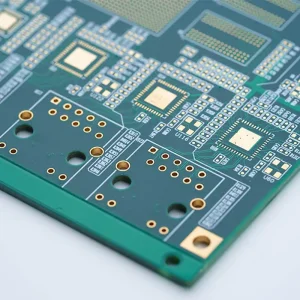
Automotive High-TG PCBs (Tg150-Tg300) for Extreme Engine Bays
- Glass Transition Temperatures up to 300°C
- Low Z-Axis Thermal Expansion Coefficient
- Engineered for Automotive Under-the-Hood ECUs

Rapid Turnaround PCB Prototype Solutions for Indonesian Startups
- 24-Hour Quick Turn Bare Board Fabrication
- Full Flying Probe Electrical Testing
- Complete DFM Engineering Report Included
ODM Single & Double-Sided Rigid-Flex PCBs for Ruggedized Gear
- Custom Stiffeners (FR-4, Aluminum, Stainless Steel)
- Resists Constant Vibration & Dynamic Stress
- Ideal for Industrial Marine & Sensor Heads
Frequently Asked Questions by Indonesian Procurement Teams
Comprehensive technical guidance on importing, tropical environmental reliability, quality standards, and BOM supply chain stability.
How does PCB ADEPT prevent moisture-induced delamination in Jakarta's high-humidity climate?
What is the typical shipping transit time from your Shenzhen facility to Jakarta industrial parks?
Can your engineering team support our company's Indonesian TKDN certification goals?
How do you ensure component authenticity and mitigate counterfeit risks for our BOMs?
What manufacturing files and data packages are required to generate an official quote?
Accelerate Your Indonesian Electronics Manufacturing Today
Partner directly with PCB ADEPT’s Shenzhen manufacturing facility. Benefit from DFM reviews, genuine component procurement, precision SMT assembly, and dependable logistics straight into the Jakarta industrial corridor.