
Flagship Electronics Manufacturing Modules for Kazakhstan Projects
Engineered for extreme sub-zero telemetry, severe mechanical vibration, and mission-critical energy automation.
-
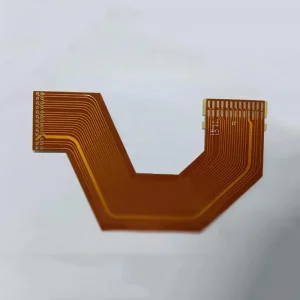 Flexible Polyimide PCB: Foldable & Lightweight Telemetry Solutions for Kazakhstan IoT SystemsExplore Specification & Price
 -
 High-Frequency Low-Loss PTFE PCB: Specialized Radar & Wireless Infrastructure for Almaty NetworksExplore Specification & Price
 -
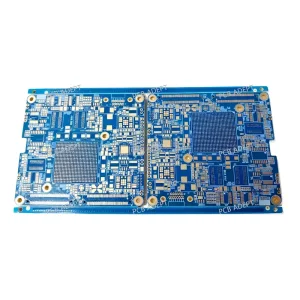 Controlled Impedance RF & Microwave PCB (≥500MHz) for Eurasian Transit CommunicationsExplore Specification & Price
 -
 High Thermal Conductivity Aluminum Metal-Core PCB: Industrial Heat Sinking for Caspian Oilfield PumpsExplore Specification & Price
Kazakhstan Industrial Landscape: The High-Reliability Electronics Paradigm
The Republic of Kazakhstan is undergoing a pivotal industrial transition. Spurred by national digital transformation initiatives like Digital Kazakhstan, massive upgrades across the national rail carrier Kazakhstan Temir Zholy (KTZ), and deep modernization in the Tengiz, Kashagan, and Karachaganak energy basins, the demand for robust, industrial-grade electronics has surged exponentially. Industrial operators from Astana to Almaty are no longer satisfied with standard commercial-grade electronics; the brutal continental climate—where winter temperatures drop to -45°C in northern Karaganda and summer desert heat reaches +45°C in the Mangystau region—demands electronics manufacturing services (EMS) built to rigid IPC-A-610 Class 3 specifications.
Historically, Kazakhstan’s domestic electronics supply chain was heavily constrained by limited local semiconductor fabrication plants and surface-mount technology (SMT) infrastructure. Most enterprises operated strictly as final-stage assembly workshops or system integrators reliant on imported finished boards. Today, regional technology parks such as the Astana Hub and the Alatau Innovation City Special Economic Zone (SEZ) near Almaty are cultivating domestic engineering teams who design proprietary supervisory control and data acquisition (SCADA) systems, remote environmental sensors, and advanced asset trackers. However, scaling these designs requires deep, agile fabrication partnerships with high-capacity manufacturing centers that can navigate strict impedance controls, heavy-copper high-power substrates, and rigorous environmental stress screening (ESS).
Thermal Cycling Resilience
Electronic systems operating in outdoor substations and oil extraction fields experience diurnal temperature shifts of over 40°C. FR-4 materials must exhibit high glass transition temperatures (Tg ≥ 170°C to 180°C) and low z-axis coefficients of thermal expansion (CTE) to prevent via-barrel cracking and micro-delamination.
Sulfur & Chemical Protection
Refineries and downstream petrochem complexes near Atyrau produce elevated levels of hydrogen sulfide (H₂S). Standard immersion silver or HASL lead-free finishes rapidly corrode. We implement Electroless Nickel Electroless Palladium Immersion Gold (ENEPIG) and vacuum-applied conformal coating to prevent silver dendritic migration.
High Mechanical Shock & G-Force
Underground drill strings, seismic surveying probes, and freight locomotive vibration monitors face continuous mechanical shock. Utilizing rigid-flex PCB configurations eliminates failure-prone wire harnesses and manual solder points, guaranteeing seamless signal continuity.
The Khorgos Logistics Expressway: Direct Turnkey EMS Integration
Procurement teams in Almaty, Shymkent, and Astana face a structural challenge when sourcing from Western European or North American board shops: exorbitant lead times, complex multi-hop air freight, and compounding tariff hurdles. By contrast, the strategic partnership between China and Kazakhstan—anchored by the Khorgos Eastern Gate Special Economic Zone and the Altynkol–Dostyk rail arteries—creates an unprecedented logistics corridor. High-precision PCBA products manufactured in our Shenzhen high-speed facilities can clear customs and arrive at Kazakhstani assembly hubs within 5 to 8 rail-freight or cross-border truck transit days.
Shenzhen ICSLOVE Technology (PCB ADEPT) pairs this geographic proximity with deep vertical supply chain integration. We eliminate the disjointed friction of dealing with multiple intermediate brokers. By managing bare PCB fabrication, direct factory-level franchised component sourcing (Texas Instruments, STMicroelectronics, Analog Devices, Murata), precision SMT placement down to 01005 passives and ultra-fine-pitch BGAs, and automated optical inspection (AOI) all under one roof, Kazakhstani enterprises secure an unassailable margin advantage coupled with total traceability.
| Critical Engineering Parameter | Standard Commercial PCB Importers | PCB ADEPT Industrial-Grade Standard for Kazakhstan |
|---|---|---|
| Glass Transition Temp (Tg) | Standard Tg 130°C–140°C (Susceptible to winter delamination) | High Tg ≥ 170°C to 180°C (Shengyi S1000-2, ITEQ IT-180A) |
| Copper Foil Thickness | 0.5 oz to 1.0 oz (Prone to overcurrent burnout) | Heavy Copper: Up to 6 oz – 10 oz for high-amperage mining drives |
| Surface Protection Finishes | Standard Lead-Free HASL or Basic OSP | Electroless Nickel Immersion Gold (ENIG) & ENEPIG (Sulfur-resistant) |
| Traceability & Quality Screening | Batch-level visual inspection; spot checks | 100% AOI, 3D SPI, Flying Probe / E-Test, X-Ray for BGA Voiding (<10%) |
| Khorgos Express Transit Time | 35–45 days via maritime routes to Black Sea / Baltic | 5–8 direct land rail/truck transport from Shenzhen to Almaty Hub |
Mission-Critical Deployment Scenarios in Kazakhstan
Proven engineering implementations solving real environmental and mechanical dilemmas across Central Asian industries.
1. Tengiz & Caspian Downhole Extraction Telemetry
Downhole drilling instrumentation operating 3,000 meters beneath the Caspian Basin encounters ambient temperatures exceeding 150°C and relentless hydrostatic pressures. We engineer High-Tg Polytetrafluoroethylene (PTFE) and Ceramic-filled Hybrid Multi-Layer PCBs equipped with high-temperature solder alloys (Au80Sn20 / HMP) that prevent wire-bond lift-off and ensure real-time acoustic telemetry transmission to surface SCADA systems.
2. Karaganda Open-Pit Mining & Heavy Vehicle Telematics
Giant haul trucks and automated excavators in Central Kazakhstan generate brutal harmonic vibration and electromagnetic interference (EMI). Our Heavy Copper Aluminum-Core Circuit Boards dissipate up to 100A continuous currents through isolated DC-DC motor converters while resisting mechanical resonance that typically shatters ceramic surface-mount capacitors.
3. Dzungarian Gate & Ereymentau Wind Power Inverters
Kazakhstan’s wind energy corridors experience fierce wind gusts and rapid thermal inversion. Grid-tie inverter subsystems rely on our Rigid-Flex 4-to-16 Layer Assemblies to route high-frequency IGBT trigger pulses with microsecond timing accuracy, eliminating ground-loop interference and maintaining maximum power point tracking (MPPT) efficiency.
4. KTZ Silk Road Railway Autonomous Signaling Transponders
Spanning thousands of kilometers of remote steppe, wayside transponders monitoring train integrity require multi-year battery life and absolute RF reliability. Utilizing Rogers 4350B / 4003C RF substrates with precision controlled-impedance lines (±5%), our transponder boards ensure uninterrupted satellite link communication and wayside safety interlocking.
Comprehensive PCB & Assembly Production Capabilities
From rapid 48-hour engineering prototypes to high-volume multi-layer lamination, built to IPC-A-610 Class 3 specifications.
-
 High-Density Interconnect (HDI) Any-Layer Microvia PCB for Smart Grid GatewaysExplore Specification & Price
 -
 Single & Double-Sided Complex Rigid-Flex PCB (4–16 Layer Stackups)Explore Specification & Price
 -
 Industrial Automation Raspberry Pi HAT Expansion Modules & Embedded I/O ShieldsExplore Specification & Price
 -
 Heavy Copper (Up to 10oz) High-Current PCB for Mining Traction & Power InvertersExplore Specification & Price
 -
 Ultra-High Multi-Layer PCB (1–60 Layers): IPC Class 2/3 Fast-Turn DeliveryExplore Specification & Price
 -
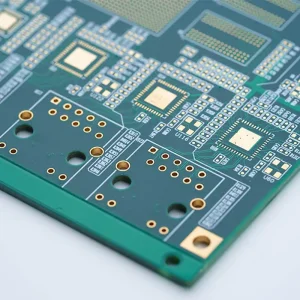 Extreme Temperature High-TG Laminates (TG150–TG300) for Avionics & Oil DrillsExplore Specification & Price
 -
 Rapid Prototype PCB Engineering & SMT Assembly Validation Service (24–72H)Explore Specification & Price
 -
Multi-Layer Rigid-Flex Interconnect Substrates for Compact Drone AvionicsExplore Specification & Price
Holistic Turnkey Box Build & Component Obsolescence Defense
Managing an electronic hardware bill of materials (BOM) in Central Asia requires navigating international semiconductor volatility, prolonged factory allocations, and trade sanctions compliance. For Kazakhstani enterprises, having an active line suspended due to a discontinued microcontroller or passive delay can freeze enterprise-level contracts. PCB ADEPT solves this through continuous BOM Risk Auditing and automated component life-cycle monitoring.
Our engineering procurement team cross-references real-time inventory from authorized global franchises including Arrow, Avnet, Digi-Key, and direct Chinese component manufacturers. When an automotive MCU or industrial PHY transceiver reaches End-of-Life (EOL) or incurs a 40-week lead time, our DFM team recommends drop-in, pin-compatible alternatives with identical register maps, thermal profiles, and EMC characteristics. We submit engineering test samples and rewritten firmware hooks to ensure zero hardware redesign delays for your engineering team in Almaty.
Custom CNC Enclosures & IP68 Sealing
Industrial electronics deployed in the Kazakh steppe must withstand sandstorms (burans) and blowing saline dust from the Aral basin. Beyond bare PCBA, we offer full Box Build integration: precision CNC aluminum enclosures, customized silicone gasket compression channels, anti-corrosive powder coating, and helium pressure decay leak testing to guarantee true IP67/IP68 ingress protection.
End-of-Line Functional Testing & Aging
Every PCBA batch designated for export to Kazakhstan undergoes full automated functional testing (FCT), firmware flashing, and continuous 72-hour thermal-stress burn-in cycles (-40°C to +85°C). By triggering infant mortality failures in our Shenzhen chambers before shipping, we ensure our clients achieve an out-of-the-box field pass rate exceeding 99.8%.
Frequently Asked Questions for Central Asian Procurement
Direct engineering and logistics answers for technology executives, hardware designers, and project managers.
How are customs clearances and EAEU EAC certifications handled for shipments to Kazakhstan?
Kazakhstan is a founding member of the Eurasian Economic Union (EAEU). Our export documents include full HS Code classification, Certificate of Origin (CO), RoHS compliance declarations, and complete material declarations required for Technical Regulations of the Customs Union (TR CU 004/2011 for low-voltage equipment and TR CU 020/2011 for electromagnetic compatibility). We work seamlessly with major local brokers in Almaty and Astana.
What is the typical transit duration from your Shenzhen factory to Almaty via rail or express truck?
For urgent engineering prototypes, direct air freight to Almaty International Airport (ALA) or Nursultan Nazarbayev International (NQZ) requires 3 to 5 business days. For volume manufacturing releases, direct cross-border bonded road freight via the Khorgos Eastern Gate dry port delivers within 6 to 9 days directly to your warehouse, at a fraction of the cost of long-distance air freight.
How does your factory protect against cold-temperature brittle fracture of solder joints?
In sub-zero climates down to -50°C, conventional SAC305 (Sn96.5Ag3.0Cu0.5) solder can undergo tin pest phase transformation or micro-fracturing under shear vibration. We formulate customized solder pastes containing trace antimony or nickel dopants, paired with thick polyimide underfills beneath high-density BGA matrices to distribute thermal strain and eliminate micro-cracking.
Can you manufacture heavy copper boards for mining power equipment up to 10 oz?
Yes. We operate specialized differential etching equipment and vacuum lamination presses tailored for heavy copper boards from 3 oz to 10 oz per layer. Our engineers optimize trace-to-trace spacing, calculate exact thermal relief spoke geometries, and utilize high-resin content prepregs (such as 1080 and 2116) to ensure 100% void-free dielectric encapsulation between dense power copper planes.
What is the minimum prototype order quantity (MOQ) for new hardware startups in Astana Hub?
We do not enforce rigid minimum order quantities for pilot builds. R&D engineering projects start from as few as 1 to 5 pieces for prototype design verification (DVT), scaling smoothly to 500-unit pilot runs (PVT) and tens of thousands of mass-production units. All initial prototype batches receive the exact same 3D SPI and AOI inspection rigor as high-volume assemblies.
How do you guarantee component authenticity and prevent refurbished or counterfeit ICs?
All active semiconductors and high-precision passives are sourced directly from original component manufacturers (OCM) or their franchised distributors with traceable manufacturer Certificates of Conformance (CoC). Our incoming quality control (IQC) laboratory performs decapsulation verification, solderability testing, pin-grid XRF element analysis, and lot code date verification before release to SMT lines.
Accelerate Your Hardware Manufacturing for Kazakhstan
Send your Gerber files, BOM, and engineering specifications today. Receive a comprehensive DFM analysis, component risk evaluation, and firm production quote within 24 hours.
Send Inquiry Now