
High-Demand Core Hardware for Riyadh Industrial Deployments
Pre-qualified flexible circuits, high-frequency radar modules, RF microwave substrates, and metal core aluminum PCBs optimized for harsh arid environments and high-heat computing.
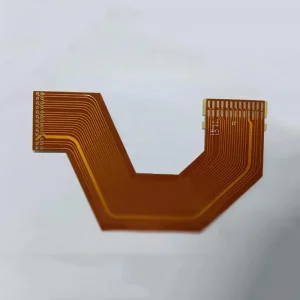
Flexible PCB Solutions for Riyadh Wearables & Smart City Edge Terminals
Lightweight, bendable, and foldable polyimide multilayers designed for space-constrained IoT telemetry devices and consumer electronics across Saudi smart districts.

High-Frequency PCB Solutions for Riyadh 5G Infrastructure & Autonomous Links
Engineered for low dielectric loss, strict impedance control (±5%), and signal integrity under elevated desert operational temperatures.
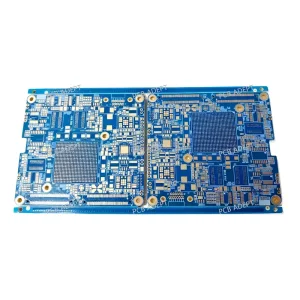
RF & Microwave PCBs for Defense, Anti-Drone & Satellite Stations in KSA
Low-loss PTFE and hydrocarbon hybrid stackups optimized for ≥500MHz to 77GHz radar arrays and communication backhauls in the Riyadh region.

High Thermal Aluminum PCBs for Riyadh Solar PV Inverters & Heavy LED Arrays
Featuring thermal conductivity from 1.5 to 8.0 W/m·K, isolating high power surges in direct-sun desert energy installations and industrial illumination.
The Riyadh Electronics Landscape: Powering Saudi Vision 2030
The Riyadh metropolitan territory has rapidly transitioned from an administrative hub into the epicenter of high-tech manufacturing, defense electronics, renewable energy convergence, and smart city infrastructure across the Middle East. Under the aggressive directives of Saudi Vision 2030, the National Industrial Development and Logistics Program (NIDLP), and substantial capital infusions from the Public Investment Fund (PIF), Riyadh is spearheading unprecedented industrial transformation.
Gigaprojects surrounding the Riyadh province—ranging from the King Salman Energy Park (SPARK) logistics corridors to the intelligent transmission grids connecting the capital with NEOM, the Red Sea Project, and Qiddiya—require massive quantities of mission-critical printed circuit board assemblies (PCBA). However, local electronic assembly capabilities inside the Kingdom are currently focused on tertiary packaging and box-build assembly rather than ultra-fine pitch bare-board fabrication and micro-component SMT production.
As a result, leading Saudi contractors, defense developers (including entities affiliated with SAMI), telecommunications operators like STC and Mobily, and emerging IoT startups based in KACST (King Abdulaziz City for Science and Technology) must establish high-integrity supply chains with international PCB fabrication and assembly powerhouses that combine agile prototype execution with scalable IPC Class 3 volume production.
Macro-Procurement Drivers in KSA
- Grid Modernization: Nationwide deployment of smart metering infrastructure, SCADA control transceivers, and high-voltage power converters.
- Solar & Clean Tech: Inverter modules designed for desert solar arrays demanding heavy copper thickness (3oz to 10oz) and extreme dielectric durability.
- Aero & Defense Localization: Severe thermal cycling radar antennas, RF signal jammers, and counter-UAS (unmanned aerial systems) circuitry.
- Smart City IoT: Dense sensor networks deployed across Riyadh's metro system, intelligent parking, and environmental monitoring nodes.
Engineering Electronics for the Riyadh Climatic Reality
Designing and manufacturing printed circuit boards for Riyadh is fundamentally different from building consumer electronics for temperate climates. Hardware installed in the Central Najd plateau must withstand punishing climatic stress factors.
Ambient Heat & Continuous Thermal Fatigue
Summer ambient temperatures in Riyadh routinely exceed 48°C (118°F), causing junction temperatures inside enclosed electronic housings to surpass 85°C to 105°C. Without high glass transition temperature (High TG ≥ 170°C to 200°C) substrates, conventional FR-4 suffers Z-axis expansion, barrel cracking in plated through-holes (PTH), and delamination under continuous duty.
Particulate Sand & Micro-Abrasion Ingress
Fine silica desert dust poses severe risks of dielectric breakdown and parasitic leakage across high-impedance traces. Our manufacturing protocols include specialized conformal coating formulations (silicone, acrylic, and parylene) complying with IPC-CC-830, delivering moisture, chemical, and abrasive sand resistance for outdoor Riyadh deployments.
High-Voltage Surges & Power Transients
Solar energy distribution lines and heavy petrochemical facilities in Saudi Arabia experience intense inductive switching spikes. We integrate heavy copper layers (up to 10oz), deep-layer clearance routing, high-current busbar bonding, and ceramic fill vias to dissipate kilowatt-level heat and suppress electrical flashover.
Direct Component Procurement Ecosystem
With direct relationships across authorized tier-1 global distributors and original silicon fabricators (including Texas Instruments, Analog Devices, STMicroelectronics, NXP, Microchip, and Murata), our Shenzhen procurement center eliminates gray-market risk and provides 100% Certificate of Conformance (CoC) traceability.
De-risking Electronics Sourcing for Saudi Procurement Directors
For procurement executives managing billion-riyal contracts across Riyadh and the wider GCC region, supply chain latency and counterfeit semiconductors represent existential threats. Project delays on major infrastructure sites can trigger tens of thousands of dollars per day in liquidated damages.
Our turnkey methodology consolidates the entire electronic value chain under a singular, legally accountable partner. By bridging direct component sourcing, bare-board high-layer fabrication, advanced automated SMT placement, in-circuit programming, and functional box-build testing, we insulate Riyadh clients from fragmented vendor buck-passing.
Through systematic Design for Manufacturability (DFM) and Design for Assembly (DFA) reviews delivered within 24 hours of file receipt, our engineering team pinpoints trace bottlenecks, cold-solder risks on large ground planes, and footprint misalignments before fabrication begins.
Macro Industry Turnkey Electronics Solutions
From sub-millimeter High Density Interconnects (HDI) for intelligent surveillance to rigid-flex interconnections capable of enduring thousands of vibration cycles in military transport vehicles.
HDI & Any-Layer Micro-Via PCB
Laser micro-vias down to 0.075mm, fine trace/space of 2.5/2.5 mil, stacked blind and buried vias enabling ultra-compact computing modules for Riyadh AI smart sensors and aerial surveillance.
Heavy Copper Power Boards (Up to 10oz)
Designed for multi-hundred ampere currents in EV charging superchargers, solar combiner systems, and heavy industrial automation equipment across Saudi chemical plants.
Rigid-Flex Multilayers (4 to 22 Layers)
Eliminate failure-prone internal cable harnesses inside aerospace, tactical handheld radios, and dynamic industrial automation equipment subject to shock and vibration.
Turnkey SMT & Box-Build Assembly
Six high-precision automated SMT lines handling 01005 passives and 0.35mm pitch BGAs, integrated with CNC enclosure milling, firmware flashing, and environmental burn-in testing.
Seamless Localized Support, SASO Conformity & SABER Certification
Importing electronic assemblies into Saudi Arabia requires rigorous adherence to the Technical Regulations enforced by the Saudi Standards, Metrology and Quality Organization (SASO). Failure to upload correct conformity documentation into the SABER online portal leads to border rejections, customs detention at King Khalid International Airport (RUH), and punitive demurrage fees.
We provide full-spectrum documentation packages tailored to Riyadh regulatory channels, including:
- SABER Registration Support: Issuance of Product Certificate of Conformity (PCoC) and Shipment Certificate of Conformity (SCoC) in coordination with accredited CABs (Conformity Assessment Bodies).
- RoHS & Environmental Traceability: Complete chemical lab test reports confirming zero lead (Pb), cadmium, or mercury presence across bare boards, solder paste, and mounted components.
- UL 94V-0 Flammability Certification: Essential for building management systems and outdoor electrical cabinets deployed in public Riyadh infrastructure.
- Expedited Air-Freight Logistics: Pre-cleared cargo dispatching with DHL Express, FedEx, and specialized freight carriers reaching Riyadh consignees in 3 to 5 business days.
Quality Assurance Matrix
Every production batch engineered for the Riyadh market is tracked end-to-end within our MES (Manufacturing Execution System):
- SPI (Solder Paste Inspection): 100% 3D volumetric inspection preventing insufficient solder or bridge defects.
- Pre & Post Reflow 3D AOI: Optical detection of component shifting, polarity inversion, and tombstoning.
- X-Ray Inspection (AXI): Non-destructive void ratio verification (<10%) beneath fine-pitch BGAs, QFNs, and thermal pads.
- FCT & Environmental Burn-In: Functional testing at elevated operational temperatures up to 85°C prior to final packing.
Technology Roadmap (2025–2030): Next-Gen Electronics for Saudi Arabia
As Riyadh prepares to host World Expo 2030 and accelerates its automated industrial corridors, electronic hardware requirements will transition toward higher frequencies, denser integration, and zero-carbon manufacturing footprints.
Commercialization of Silicon Nitride (Si3N4) and Aluminum Nitride (AlN) direct-bonded copper boards providing over 180 W/m·K thermal dissipation for megawatt-scale Riyadh solar grid inverters.
Adoption of ultra-low-loss pure PTFE and liquid crystal polymer (LCP) multilayers for autonomous public transportation fleets and automated logistics hubs across the Riyadh metro zone.
Integration of optical wave guides directly into high-layer backplanes for regional Riyadh hyperscale cloud data centers and sovereign AI supercomputing facilities.
Full life-cycle circular manufacturing using halogen-free, recyclable resins and solar-powered cleanroom manufacturing, aligning with Saudi Green Initiative emissions goals.
Frequently Asked Questions for the Riyadh Market
Comprehensive engineering, regulatory, and commercial answers for Saudi project managers, defense contractors, and hardware procurement heads.
How do you guarantee that PCBA components withstand Riyadh’s prolonged 50°C+ summer heat?
Thermal survivability requires a two-pronged strategy: base laminate selection and component grade screening. First, we specify high-performance laminates with a Glass Transition Temperature (Tg) of 170°C to 180°C or higher (such as Shengyi S1000-2M, ITEQ IT-180A, or Rogers substrates) and a Decomposition Temperature (Td) exceeding 340°C. This prevents Z-axis copper barrel cracking during cyclic thermal expansion.
Second, we assist procurement teams in screening for Industrial Grade (-40°C to +85°C) or Automotive Grade (-40°C to +125°C AEC-Q100/200) active silicon and passive components. Finally, we can apply high-durability silicone or polyurethane conformal coatings (meeting IPC-CC-830 standards) to insulate solder joints from thermal stress and abrasive dust.
Can you provide the necessary paperwork for fast Saudi SABER customs clearance?
Yes. We have established protocols for shipping electronics directly into Riyadh and Dammam. We supply complete commercial documentation with exact HS tariff codes, Certificates of Origin (CO), ISO 9001:2015 certificates, UL flame-retardant compliance reports, and full RoHS / REACH lab declarations required for SABER product certificate generation.
We work directly alongside your nominated customs clearance broker in Saudi Arabia or provide door-to-door DDP (Delivered Duty Paid) logistics via DHL, FedEx, or air cargo charters, ensuring shipments clear King Khalid International Airport (RUH) without administrative hold-ups.
What is the typical turnaround time for prototype and production orders shipped to Riyadh?
For bare board prototypes (1 to 8 layers), we offer expedited fabrication services within 24 to 48 hours. Turnkey PCBA prototypes (including complete electronic component sourcing, laser stencil production, SMT placement, and 3D AOI inspection) typically take 5 to 9 business days, depending on component availability.
Express international air express from Shenzhen to Riyadh takes an additional 3 to 5 business days. For medium-to-high volume production batches, standard turnaround is 2 to 3 weeks following DFM and first-article approval.
How do you verify against counterfeit chips in our Bill of Materials (BOM)?
Counterfeit prevention is critical for industrial and defense projects. Our Shenzhen sourcing department procures exclusively through factory-authorized franchised distributors (e.g., Arrow, Avnet, Digi-Key, Mouser) and original component manufacturers.
Every incoming batch passes through our strict Incoming Quality Control (IQC) laboratory, where we conduct visual microscope inspection, date code / lot code verification, digital caliper packaging inspection, X-ray leadframe and die inspection, and solderability testing. Full manufacturer traceability certificates are archived in our MES for ten years.
Do you support reverse engineering and replication of obsolete legacy control boards?
Yes. Many legacy industrial facilities, refineries, and utility stations across Saudi Arabia utilize legacy control boards whose original OEMs have ceased support. If you provide a working physical golden sample, our engineering lab can de-layer the PCB, scan inner layer copper geometry, recreate complete Gerber CAD files, reconstruct the schematic, extract non-protected microcontroller firmware, and re-engineer the board with modern, readily available components.
Advanced PCB & Turnkey Assembly Portfolio for Saudi Enterprise Programs
Select from high-density interconnects, heavy-copper power converters, multi-layer rigid-flex boards, and rapid prototype runs engineered for turnkey manufacturing in Shenzhen and direct deployment in Riyadh.

Micro-Via HDI PCBs for Riyadh Smart City Surveillance & Edge AI Nodes
Equipped with 1+N+1 to Any-Layer HDI technology, facilitating high routing density for BGA packages down to 0.4mm pitch in mobile communications.

Multi-Layer Rigid-Flex PCBs for Saudi Aerospace & Tactical Electronics
Combines FR-4 and polyimide layers to withstand sustained g-forces, physical vibrations, and narrow avionics enclosure envelopes without wire degradation.

Custom Raspberry Pi HATs & Embedded SBCs for Riyadh R&D Incubators
Turnkey embedded expansion boards supporting industrial CAN bus, RS485 telemetry, and environmental sensors for research teams at KSU and KACST.

Heavy Copper Power Circuit Boards for Riyadh EV Chargers & Solar Inverters
Engineered for extreme thermal management and massive current delivery across Saudi Arabia’s expanding electric vehicle and renewable generation infrastructure.

Precision 1-60 Layer Multilayer Boards for Telecom & Data Center Hubs in KSA
IPC Class 2 & 3 fabrication with 48-hour quick-turn options, controlled impedance testing, and premium ENIG surface finishes for maximum longevity.
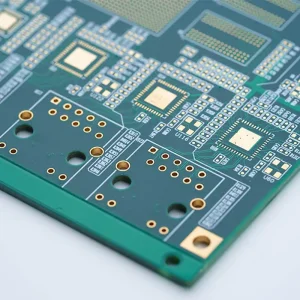
High-TG Circuit Boards for Automotive Under-the-Hood & Desert Oilfield Rigs
Engineered with specialized polyimide and high-performance epoxy systems sustaining operating environments from TG150 up to TG300 without mechanical breakdown.

Rapid Prototype PCB Solutions for Accelerating Riyadh Tech Startups & MVPs
Fast validation cycles from 1 to 50 pcs with complete engineering DFM reports, supporting rapid hardware innovation sprints throughout Riyadh's technology parks.
Single & Double-Sided Rigid-Flex PCBs for Riyadh Medical & Diagnostic Gear
Flexible interconnects certified for sterile, space-critical medical diagnostic monitoring instruments and rugged handheld field terminals across Saudi hospitals.