

Direct Manila Supply Lines
Flagship Component & PCB Platforms Serving Luzon Industrial Parks
Engineered for mission-critical industrial converters, automotive electronics, and IoT assemblies deployed across Calabarzon and Greater Manila manufacturing hubs.
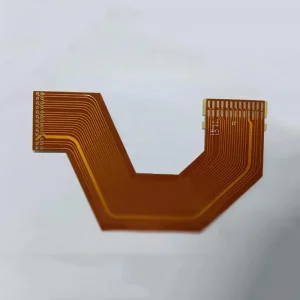
Precision Flexible PCBs for Manila Wearables & Medical Devices
Request Flex PCB Quote
Custom 4–16 Layer Rigid-Flex Circuit Boards for Manila Automation
View Rigid-Flex Parameters
High-Reliability Rigid-Flex PCBs for Telecommunications Infrastructure
Inquire Multi-Layer Build
Industrial Ecosystem Analysis
Navigating the Electronics Manufacturing Landscape in Metro Manila & Calabarzon
The Philippines stands as a formidable titan in the global semiconductor assembly and test (OSAT) sector, generating over 55% of the nation's total commodity exports. The epicenters of this vibrant sector cluster around Metro Manila, expanding outward into the Calabarzon industrial corridor (Cavite, Laguna, Batangas, Rizal, and Quezon), as well as the north-bound economic gateways of Clark and Subic. Facilities operating in the Laguna Technopark, First Philippine Industrial Park (FPIP), and Light Industry & Science Park (LISP) manufacture high-precision electronic equipment ranging from automotive controllers and telecom line cards to medical diagnostic instruments.
However, despite the Philippines' world-renowned status in IC backend encapsulation, local contract manufacturers and Tier-1/Tier-2 OEMs grapple with an acute domestic deficit in active silicon fabrication, specialized passive component supply, and high-density interconnect (HDI) bare-board fabrication. Procurement managers based in Taguig, Pasig, Muntinlupa, and Calamba often face significant lead-time bottlenecks, fragmented customs clearing hurdles, and unpredictable international broker markups when sourcing genuine components for box-build assemblies.
To address this structural imbalance, our component sourcing infrastructure establishes a synchronized Shenzhen-to-Manila electronic supply bridge. By combining direct franchised sourcing channels with rapid air consolidation straight into Ninoy Aquino International Airport (NAIA) and bonded sea-freight corridors into the Port of Manila and Batangas Container Terminal, we ensure continuous line availability for manufacturing plants across Luzon.
Philippine EMS Operational Metrics
Key operational benchmarks driving electronic procurement performance across PEZA (Philippine Economic Zone Authority) registered electronics firms:
58.4%
National Export Share of Electronics
72-96 Hrs
Shenzhen-to-Manila Air Express
100%
PEZA Tax-Exempt Transit Compliance
Zero-Defect
Target Standard (AQL 0.05)
Strategic Supply Chain Architecture
Emerging Procurement Trends & Risk Mitigation in Southeast Asia
How global enterprises operating in Manila are restructuring their Bill of Materials (BOM) to guard against market shortages, counterfeit influxes, and regulatory volatility.
China+1 & ASEAN Supply Diversification
Global original equipment manufacturers (OEMs) are decentralizing their production lines across Vietnam, Malaysia, and the Philippines. Sourcing teams serving Manila need dual-origin component redundancy that unifies Tier-1 Asian manufacturing efficiency with seamless local logistics clearance under ASEAN Trade in Goods Agreement (ATIGA) frameworks.
Zero-Trust Anti-Counterfeit Verification
Grey-market component infiltration remains an existential risk for automotive and industrial controllers produced in Cavite and Laguna. Our procurement protocol adheres stringently to IDEA-STD-1010-B and AS6081 aerospace standards, executing decapsulation, radiographic analysis, and acoustic microscopy before any reel enters the assembly stream.
Proactive BOM Health & Obsolescence Mitigation
Component lifecycles are contracting. Our engineering team conducts continuous parametric BOM audits, identifying End-of-Life (EOL), Not Recommended for New Designs (NRND), and Last Time Buy (LTB) risks 12–18 months in advance, qualifying pin-to-pin, drop-in replacement ICs to prevent catastrophic line stoppages.
Vendor-Managed Inventory (VMI) Buffer Stocks
To hedge against geopolitical shipping disruptions and typhoon-induced maritime delays across Luzon, we operate tailored VMI consignment frameworks. High-turnover passives (Murata, TDK, Samsung MLCCs) and critical microcontrollers are warehoused in bonded proximity, ready for JIT (Just-in-Time) daily dispatch.
Full Lot MES Digital Traceability
High-reliability applications demand granular tracking. Every component reel, batch, and bare-board lamination cycle is synchronized within our proprietary Manufacturing Execution System (MES), binding component date codes, humidity indicators, and reflow thermal profiles directly to unique PCB serial numbers.
RoHS 3 & REACH Compliance Certification
Exporting electronics from the Philippines to European or North American markets requires pristine environmental compliance. We furnish complete Full Material Disclosures (FMD), guaranteeing that all sourced semiconductors, solder pastes, laminates, and surface finishes strictly comply with EU RoHS Directive 2011/65/EU and REACH (EC 1907/2006).
Authorized Brand Penetration
Enterprise-Grade Silicon & Passive Sourcing Matrix
Eliminating procurement friction across global component tiers through deep direct factory relationships and franchised distribution alliances.
Active Semiconductors & Processing Engines
For smart metering, high-voltage battery management systems (BMS), industrial telemetry, and commercial avionics manufactured around Metro Manila, component reliability is non-negotiable. Our dedicated procurement network provides direct-line access to tier-one international semiconductor manufacturers:
Texas Instruments (TI) & Analog Devices (ADI): Ultra-low-noise operational amplifiers, high-resolution ADCs/DACs, isolated gate drivers, and interface transceivers (RS-485, CAN-FD).
STMicroelectronics & Microchip: High-performance 32-bit ARM Cortex-M microcontrollers (STM32 series), automotive-grade PIC microcontrollers, EEPROMs, and crypto-authentication chips.
NXP & Renesas: Automotive networking ICs, safety MCUs, and power management ICs (PMICs) crucial for Calabarzon's automotive harness and sub-assembly suppliers.
Passive Component Volume Consolidation
In high-speed SMT assembly, passives represent over 80% of component placement counts. Shortages of MLCCs or inductors can stall million-dollar programs. We maintain direct allocation pipelines with:
Murata, TDK, Taiyo Yuden, and Yageo: Automotive AEC-Q200 qualified ceramic capacitors, ferrite beads, high-Q RF inductors, and current-sense shunt resistors.
TE Connectivity & Amphenol: Ruggedized industrial connectors, automotive terminal housings, and board-to-board high-speed headers suited for harsh, tropical climatic environments.
Turnkey BOM Optimization Pipeline
How our component engineering team transforms raw customer BOMs into cost-optimized, supply-resilient production packages:
Parametric Cleansing:
Standardizes MPN, footprints, and dielectric ratings
Cost-Down Analysis (VAVE):
Achieves 10%–22% savings via qualified drop-in alternates
Lead-Time Compression:
Replaces 36-week allocation parts with active shelf-stock
Packaging Matching:
Tape & Reel kitting customized for YAMAHA/Panasonic feeders
In-House Verification Laboratory
Six-Stage Anti-Counterfeit & Material Reliability Protocol
Every active component, passive lot, and bare circuit board undergoes uncompromising validation in our Shenzhen testing laboratories before export to Manila.
PHASE 01
Microscopic Surface Inspection
Keyence 4K digital microscopy examines component packaging, lead finishes, pin co-planarity, indentation marks, and laser markings to detect blacktopping, remarking, or sanding.
PHASE 02
Radiographic X-Ray Verification
Non-destructive 2D/3D X-ray analysis reveals internal lead frame geometries, wire-bond integrity, voiding ratios, and silicon die presence against manufacturer golden samples.
PHASE 03
XRF Elemental Analysis
X-Ray Fluorescence (XRF) spectroscopy validates metallurgical composition of component terminations, confirming lead-free solderability and strict RoHS/REACH environmental compliance.
PHASE 04
Chemical Decapsulation & Die Audit
Destructive acid decapsulation dissolves packaging epoxy, exposing the silicon die to authenticate manufacturer logos, copyright dates, mask identifiers, and internal circuit layout.
PHASE 05
Electrical Parametric Testing
Automated curve tracing, pin-to-pin I-V characteristic mapping, impedance profiling, and thermal stress testing verify functional compliance against original manufacturer datasheets.
PHASE 06
Solderability Verification
Wetting balance testing conducted per ANSI/J-STD-002 evaluates terminal shelf-life degradation, guarding against dry solder joints and de-wetting on fast SMT lines in Manila.
PHASE 07
Dry-Pack & Moisture Control
Components classified under JEDEC J-STD-033 MSL 3 through 6 undergo precise desiccant baking, nitrogen-purged vacuum packaging, and real-time humidity indicator card insertion.
PHASE 08
Final MES Barcode Binding
Internal QR/DataMatrix serialization encodes component certificates of conformity (CoC), mill test reports, and inspector signatures directly into customer project records.
PEZA Compliance & Bonded Logistics Mastery
Navigating customs regulations within the Republic of the Philippines requires deep operational expertise. We furnish specialized documentation frameworks designed specifically for businesses operating under the Philippine Economic Zone Authority (PEZA) and the Board of Investments (BOI):
- Zero-Rated Value Added Tax (VAT) commercial invoices conforming to BIR regulations.
- Direct transshipment under Electronic Transit Cargo Monitoring System (e-TRACC) into bonded enterprise zones.
- Complete Certificates of Origin (Form E / ATIGA) for preferential tariff benefits.
- Customs-cleared door-to-door express delivery straight to Laguna Technopark, Gateway Business Park (Cavite), and Clark Freeport Zone.
High-Touch Engineering Engagement
Dedicated Technical Support & Local Alignment for Philippine Projects
Electronics procurement is not simply a transactional exchange; it represents a collaborative engineering discipline. When Manila hardware developers face component lead times exceeding 40 weeks, our FAEs (Field Application Engineers) conduct deep schematic-level reviews to identify pin-compatible microcontrollers, DC-DC buck regulators, and MOSFET arrays that drop into existing copper footprints without requiring board respins.
Furthermore, we bridge the temporal and communication gap between Western OEMs operating development centers in Ortigas or Bonifacio Global City (BGC) and manufacturing lines situated in the South Luzon expressway corridor. Our multilingual engineering managers (fluent in English and Mandarin) facilitate synchronous DFM feedback, real-time yield reports, and overnight sample dispatches, ensuring your product launch milestones remain intact.
Advanced PCB Fabrication Array
High-Reliability Bare Board Technologies Supporting Manila Production Lines
Fully compliant with IPC-A-600 Class 2 and Class 3 standards, delivered to OEM assemblers across Metro Manila and surrounding freeport hubs.
Industrial Grade Rigid-Flex Circuit Boards for Manila Automation Systems
Order Rigid-Flex PCBs
High Thermal Aluminum Substrates for Manila Solid-State Lighting
Get Thermal PCB Specs
Heavy Copper Boards for Extreme Current Distribution in Manila
Inquire Power Converter PCB
Advanced High Density Interconnect (HDI) PCBs for Manila 5G Hardware
Explore HDI Capabilities
Metal Core Aluminum PCBs for Electric Mobility Assemblies in Laguna
Download Metal Core Specs
Fast-Turn PCB Prototyping & Validation for Manila Hardware Labs
Submit Prototype Gerber
Complex 4–16 Layer Rigid-Flex Solutions for Aerospace Systems
Review Aerospace Substrates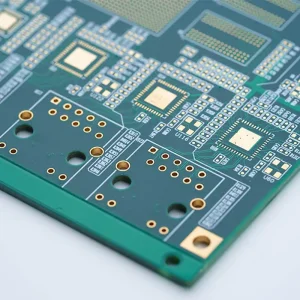
High-TG Multilayer PCBs for Extreme Tropical Industrial Environments
Select High-TG Substrate
Future-Proofing Hardware
Component Sourcing Technology Roadmap (2025–2030)
How we are infusing AI-predictive algorithms and advanced packaging integration into our Southeast Asian supply chain architecture.
2025 – 2026
AI-Predictive BOM Parsing
Deploying Large Language Models trained on parametric electronic catalogs to automatically cleanse BOMs, cross-referencing over 150 million global MPNs in seconds to spot allocation bottlenecks before purchasing.
2026 – 2027
ASEAN Bonded Micro-Hubs
Establishing localized bonded consignment mini-warehouses directly adjacent to the NAIA cargo zone and Laguna Technopark to enable same-day replenishment of critical passive reels for tier-one assemblers.
2027 – 2028
Digital Twin Reliability Modeling
Simulating component thermal, mechanical, and signal degradation profiles under Philippine tropical heat and humidity (85°C / 85% RH) prior to PCB fabrication, maximizing product longevity in field deployments.
2028 – 2030
Heterogeneous Integration & SiP
Expanding substrate sourcing to support System-in-Package (SiP) and chiplet architectures, empowering Manila's burgeoning telecommunications and medical device designers with ultra-dense microelectronic modules.
Technical Clarifications
Frequently Asked Questions: Sourcing & PCBA for Manila Enterprises
Detailed insights into shipping timelines, customs mechanics, quality certifications, and component authenticity guarantees.
What are the standard freight times from Shenzhen to Metro Manila?
By leveraged air express (DHL/FedEx/SF Express), delivery from our Shenzhen factory floor to Ninoy Aquino International Airport (NAIA) or directly to corporate offices in Taguig, Makati, or Pasig takes 2 to 4 business days. For consolidated sea shipments destined for the Manila South Harbor or Batangas Port, transit time typically ranges between 7 to 10 days, ideal for high-volume passive and enclosure consignments.
Can you provide PEZA-compliant tax-exempt documentation?
Yes. We routinely coordinate with PEZA-registered enterprises located in Laguna Technopark, First Philippine Industrial Park, and Gateway Business Park. We provide commercial invoices, packing lists, and non-VAT/zero-rated documentation aligned with Bureau of Internal Revenue (BIR) and Bureau of Customs (BOC) guidelines, facilitating duty-free bonded transit without customs demurrage.
How do you guarantee that components are authentic and not counterfeit?
Our incoming quality control operates under IDEA-STD-1010-B protocols. Every active device is sourced either directly from authorized original component manufacturers (OCMs) or franchised global distributors. In the event of hard-to-find legacy parts, we conduct non-destructive X-ray inspection, XRF spectral testing, acetone rub mark permanence tests, and acid decapsulation to verify authentic internal silicon dies before kitting.
What is your Minimum Order Quantity (MOQ) for turnkey PCBA and sourcing?
We maintain an agile manufacturing mindset with no stringent MOQ. We support R&D engineering teams and university incubators in Metro Manila with prototype builds starting from 1 to 10 boards with full turnkey component kitting. For commercial production runs in Calabarzon, our lines effortlessly scale up to 100,000+ units with high-speed automated placement lines.
Can you recommend drop-in alternatives for allocated or obsolete parts?
Absolutely. Our component engineering department has over 15 years of BOM optimization expertise. When high-lead-time ICs (e.g., specific STM32 microcontrollers or TI gate drivers) face global allocations of 30+ weeks, we present fully vetted, pin-compatible alternates complete with comparative datasheet analyses, electrical margin tests, and sample validation kits.
How do you handle moisture-sensitive components in the humid Philippine climate?
Given the tropical, high-humidity atmospheric conditions characteristic of Luzon (frequently exceeding 80% RH), all Moisture Sensitive Level (MSL) components classified 3 and higher are baked according to JEDEC standards, sealed in heavy-duty ESD moisture-barrier bags with fresh desiccants, and accompanied by calibrated Humidity Indicator Cards (HIC) to prevent popcorning during reflow.
What quality management certifications govern your assembly lines?
Our manufacturing facilities operate under ISO 9001:2015 (Quality Management System), ISO 13485:2016 (Medical Devices), and IATF 16949:2016 (Automotive Electronics). Bare PCBs comply with UL 94V-0 flammability ratings and IPC-6012 standards, while surface mount assemblies strictly adhere to IPC-A-610 Class 2 or Class 3 workmanship criteria.
What data files are required to initiate an inquiry and receive an engineering quote?
To receive a comprehensive, line-by-line DFM review and component pricing matrix within 24 hours, simply submit your Bill of Materials (BOM) in Excel format (including manufacturer part numbers, descriptions, footprints, and target quantities) along with your Gerber files (RS-274X or ODB++) and pick-and-place centroid data.
Accelerate Your Hardware Production in Manila Today
Eliminate component delays, neutralize counterfeit risks, and optimize your production costs with a unified, transparent electronics manufacturing and sourcing partner.