
Priority Products Engineered for Nigerian Deployment
Rigid-flex, high-frequency RF, and aluminum thermal substrates optimized for West African tropical heat, micro-grid inverters, and urban telecom infrastructure.
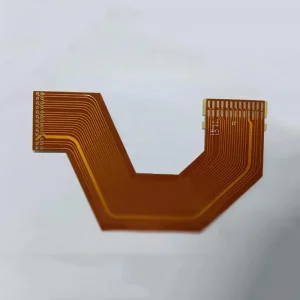
OEM Flexible PCB Solutions for Nigerian Handheld Terminals & Smart Meters
Ultra-thin, dynamic bend radius Polyimide flex circuits designed for POS financial hardware, biometric readers, and compact medical telemetry.

High-Frequency PCB Solutions for West Africa Telecom & Base Stations
Strict impedance control substrates built for cellular tower expansions, 5G microcells, and suburban point-to-point microwave backhauls across Lagos and Abuja.
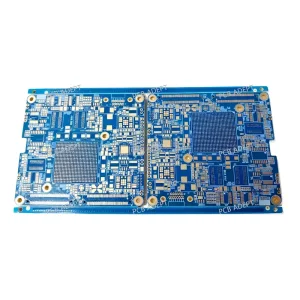
RF & Microwave PCBs for Oilfield SCADA & Satellite Comms Systems
Low-loss PTFE laminates with tight tolerance routing engineered for maritime satellite uplinks and remote Niger Delta oil rig pipeline monitoring arrays.

High Thermal Conductivity Aluminum PCBs for Solar Inverters & LED Drivers
Single and double-layer aluminum core boards designed for high-heat solar MPPT chargers, off-grid pure sine wave inverters, and municipal LED lighting.
The Nigerian Electronics Landscape: Industrial Modernization & Hardware Demands
With a population surpassing 220 million and Africa's largest digital economy, Nigeria is experiencing an unprecedented structural transition from finished-good imports to localized device assembly, solar retrofits, and ruggedized power infrastructure.
Solar & Off-Grid Inverter Acceleration
National grid unreliability has spurred massive adoption of domestic and commercial photovoltaic microgrids across Kano, Ibadan, and Kaduna. High-efficiency MPPT charge controllers and pure sine wave inverters demand thick copper (2oz–6oz) and high-thermal-conductivity metal-core PCBs (MCPCBs) capable of surviving continuous ambient operating temperatures exceeding 42°C.
Fintech POS & Mobile Banking Hardware
Lagos has emerged as the fintech capital of Africa. Handheld agency banking POS terminals, QR code scanners, and biometric smart cards require 4-layer to 10-layer High Density Interconnect (HDI) and thin flex circuits that fit miniature handheld enclosures while offering continuous drops and flex durability in humid markets like Alaba and Ikeja Computer Village.
Telecom & Security Base Station Backbone
With MTN, Airtel, and Glo expanding 4G and 5G suburban coverage, base station maintenance and tower-mounted amplifiers require low-loss high-frequency substrates (Rogers 4350B, Taconic TLX) and hybrid multilayer laminates that resist signal attenuation in dense tropical atmospheric corridors.
Why Global & Nigerian Firms Source Direct from Shenzhen, China
Local Nigerian hardware integrators face prohibitive domestic fabrication costs and lack of raw copper clad laminate (CCL) mills. Shenzhen offers the world's most concentrated electronics cluster, reducing prototype cycles from months to days.
Ultra-Dense Component Sourcing
Situated in Bao'an District, Shenzhen, PCB ADEPT interfaces directly with original component manufacturers and franchised distributors (TI, STMicroelectronics, ADI, Murata, TDK). Our direct pipeline eliminates broker markups, cuts counterfeit exposure, and ensures 100% original ICs and MLCCs for African mission-critical infrastructure.
Automated Quality & DFM Verification
Before copper is etched, our CAM engineers conduct full Design For Manufacturability (DFM) reviews to prevent solder bridging, thermal traps, and acid traps. Our factory deploys automated Solder Paste Inspection (SPI), in-line high-speed 3D AOI, first article inspection (FAI), and flying probe electrical testing to guarantee a 99.8% pass rate.
Economies of Scale & Cost Compression
Standardized panelization schemes across large-volume production runs allow us to compress bare PCB pricing to sub-market levels while offering volume pricing discounts. For Nigerian OEMs navigating FX fluctuations (USD to NGN), this structural cost-down preserves downstream commercial margins.
Looking for Complete Turnkey Box-Build & SMT Assembly in Nigeria?
Beyond raw bare-board PCB fabrication, we manage custom aluminum enclosure extrusion, injection molding, MCU firmware flashing, selective conformal coating, and finished packaging ready for air freight to Murtala Muhammed International Airport (LOS) or sea freight to Apapa Port.
2026/2027 Factory Direct PCB Pricelist & Technical Capabilities
Transparent benchmark matrix for hardware procurement engineers, project managers, and electronic product importers across West Africa.
| PCB Product Category | Layer Count / Material | Standard Lead Time | Key Performance Specs | Estimated FOB Shenzhen Pricing | Primary Nigerian Application |
|---|---|---|---|---|---|
| Standard Multilayer FR-4 | 1–8 Layers (TG135–TG170) | 3–6 Working Days | HASL / ENIG Min 3/3 mil trace/space | $0.015 – $0.055 / sq.inch (Volume) | Smart energy meters, IoT gateways, industrial timers |
| Aluminum Metal Core (MCPCB) | 1–2 Layers / 5052 AL Core | 4–7 Working Days | 1.5–3.0 W/m.K Dielectric breakdown >3kV | $0.022 – $0.075 / sq.inch | Solar MPPT regulators, off-grid inverters, LED streetlights |
| Flexible Circuit (FPC) | 1–4 Layers / Polyimide (PI) | 5–8 Working Days | 0.05–0.2mm Thickness Dynamic flex life | $0.045 – $0.120 / sq.inch | Handheld POS devices, medical monitors, mobile electronics |
| Rigid-Flex Circuitry | 4–16 Layers (FR-4 + PI) | 8–12 Working Days | IPC-6013 Class 3 Multi-zone HDI build | $0.120 – $0.350 / sq.inch | Defense, aerospace drone avionics, oil & gas logging tools |
| High Frequency / Microwave | 2–12 Layers (Rogers/Taconic) | 6–10 Working Days | Dk 2.2–3.58 Tight tolerance ±5% Zo | $0.150 – $0.480 / sq.inch | Cellular microcell transceivers, radar systems, satellite dishes |
| Heavy Copper Power PCB | 2–8 Layers / 3oz–6oz Copper | 6–10 Working Days | Up to 100A+ High thermal dissipation | $0.065 – $0.210 / sq.inch | Industrial battery BMS, welding machinery, motor drives |
| High Density Interconnect (HDI) | 4–16 Layers (1+N+1 to 3+N+3) | 7–12 Working Days | Laser Microvias 0.1mm via diameter | $0.085 – $0.290 / sq.inch | Android POS machines, 4G/5G smart routers, wearable tablets |
*Note: Final pricing depends on exact panel layout, finished copper thickness, drill hole count, and surface finish (ENIG 1u"-3u", OSP, Immersion Tin, or Hard Gold). Quotations are provided in USD, EUR, or RMB. For Form M, NXP, and SONCAP documentation support, please contact our export logistics desk.
Engineering PCBs for Nigerian Operating Realities
Hardware failures in West Africa typically trace back to four environmental stressors: Harmattan dust ingress, intense coastal humidity, extreme ambient thermal cycling, and continuous electrical grid spikes.
Harmattan Dust & Coastal Humidity Defense
Between November and March, sub-Saharan Harmattan dust carries micro-silica particles that cause localized conductive creepage. In coastal hubs like Lagos and Port Harcourt, relative humidity regularly exceeds 85%. We deploy industrial-grade robotic conformal coating (acrylic, polyurethane, or silicone) complying with IPC-CC-830B to completely seal sensitive high-impedance traces against moisture condensation and particulate contamination.
High TG & Extreme Thermal Cycling (Up to 180°C)
Solar inverters installed on tin roofs in northern cities (e.g., Sokoto, Maiduguri) endure internal chassis temperatures exceeding 70°C. Standard FR-4 with glass transition (Tg) of 130°C quickly suffers micro-via delamination and copper barrel cracking under continuous expansion. We standardize on High-Tg materials (Tg 170°C–180°C, like Shengyi S1000-2M and Isola 370HR) with low z-axis CTE expansion.
Grid Fluctuations & Over-Current Surges
Frequent load shedding and diesel generator switch-overs create intense voltage spikes and inrush currents. For power management hardware, automated transfer switches (ATS), and solar charge controllers, we integrate heavy copper inner and outer layers (3oz to 6oz) combined with thermal relief via arrays and UL 94V-0 certified flame-retardant laminates.
Specialized Hardware & Substrate Solutions for Enterprise Buyers
Explore our complete manufacturing spectrum: from quick-turn prototypes and heavy copper power converters to multi-tier HDI boards for next-generation tech hardware.

High Density Interconnect (HDI) PCBs for Smart POS & Mobile Computing
Laser-drilled microvias and ultra-fine pitch routing for compact Nigerian fintech hardware, payment soundboxes, and vehicle fleet GPS trackers.

Single & Double-Sided 4–16 Layer Rigid-Flex Solutions for Aerospace & Defense
High-reliability hybrid flexible interconnects engineered to eliminate cable harnesses in surveillance drones, radar pods, and pipeline testing equipment.

OEM Raspberry Pi HAT & Single-Board Computer Modules for African STEM & AgTech
Custom peripheral daughterboards, 4G LTE HATs, and sensor expansion shields for precision agriculture automation, soil telemetry, and educational robotics.

Heavy Copper PCBs for High-Current Power Converters & EV Charging Rigs
Extra-thick copper traces that handle hundreds of amperes without overheating. Ideal for 10kVA–100kVA commercial solar inverters and electric three-wheeler chargers.

High-Layer Multilayer PCBs (1–60 Layers) with 48-Hour Factory Expedited Turn
IPC Class 2 and 3 compliant backplanes, complex industrial motherboards, and network routing switches built with blind/buried via technology.
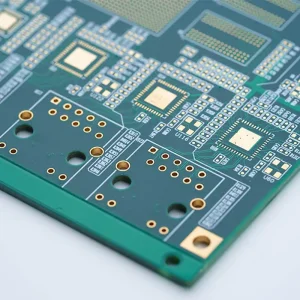
High TG PCBs (TG150–TG300) for Automotive, Generator Electronics & Mining
Ultra-stable laminates engineered for intense engine-bay environments, deep-well drilling instruments in the Niger Delta, and heavy agricultural equipment.

Quick-Turn PCB Prototype Solutions for Nigerian Hardware Startups & R&D Labs
Cost-effective pilot batches and prototype assemblies supporting Nigerian innovators, university research centers, and hardware incubators with zero MOQ.
ODM Rigid-Flex 4–16 Layer Complex Circuit Boards with Custom Stiffeners
Precision hybrid stackups combining FR4 stiffness with polyimide flexibility, incorporating FR4, PI, stainless steel, and aluminum stiffeners for ruggedized deployments.
International Certifications & Inspection Protocols
Defects cost tenfold when discovered across international supply routes. Our Shenzhen facility operates under aerospace-grade and medical-grade manufacturing disciplines.
ISO 9001:2015 & MES Tracking
Every bare PCB and fully mounted PCBA is linked to a unique 2D DataMatrix barcode tracked via our central Manufacturing Execution System (MES). From CCL lot numbers to SMT solder paste inspection and reflow oven temperature curves, complete provenance is archived for 5 years.
IPC-A-600 & IPC-A-610 Class 2 & 3
Bare boards adhere to IPC-6012 and IPC-A-600 standards for plating thickness, barrel integrity, annular ring breakout prevention, and solder mask registration. Assembled boards comply with IPC-A-610 Class 2 (Standard Commercial) or Class 3 (High-Reliability Mission Critical).
UL 94V-0 Flame Retardance & RoHS 3.0
All laminates, soldermasks, and encapsulants carry Underwriters Laboratories (UL) flammability certifications (File E-number certified) and comply with EU RoHS 3.0 (2015/863) lead-free directives, facilitating smooth customs clearance and regulatory approval across West Africa and Europe.
Importing PCBs into Nigeria: Logistics, Freight & Compliance
Navigating Nigerian customs (NCS), foreign exchange allocations via the Central Bank of Nigeria (CBN), and trade compliance is critical for frictionless supply chain operations.
Form M & PAAR Documentation
For commercial volume imports via sea freight (Apapa / Tin Can Island) or air cargo, we supply standardized Commercial Invoices, Packing Lists with accurate gross/net weights, and clean Certificates of Origin (CO) mapped precisely to HS Codes (8534.00 for bare PCBs, 8537.10 / 8542.39 for assembled boards) to expedite Pre-Arrival Assessment Report (PAAR) issuance.
SONCAP Conformity Certification
Products regulated under the Standards Organisation of Nigeria Conformity Assessment Programme (SONCAP) require Product Certificates (PC) and SONCAP Certificates (SC). We coordinate with accredited international inspection agencies (SGS, Intertek, CCIC) to furnish required lab test reports and factory inspection audits.
Air Courier vs. Consolidated Sea Freight
For urgent R&D prototypes and NPI verification runs (1–500 units), air express via DHL, FedEx, or air cargo consolidation delivers from Shenzhen (SZX/HKG) to Lagos (LOS) within 4 to 7 business days. For volume manufacturing pallets, consolidated LCL/FCL sea cargo reaches Lagos port in 30 to 38 calendar days.
Hardware Procurement & Engineering FAQ for Nigerian Buyers
Detailed technical answers to common queries regarding ordering, file verification, testing, payment options, and delivery guarantees.
We maintain zero strict MOQ constraints for engineering prototypes. You can order from 1 to 5 pieces for initial breadboard and field testing. For volume commercial production, mass runs scale up to 100,000+ square meters per month with progressive tiered discounts.
For bare PCB fabrication: Gerber files (RS-274X format or ODB++) including layer stackup and drill files. For turnkey PCBA: Gerber files + complete Bill of Materials (BOM) in Excel with manufacturer part numbers (MPN), package footprints, and pick-and-place centroid (XY) coordinates.
Yes. Our Shenzhen supply chain team sources directly through authorized global distributors and original chipmakers. Every active and passive component lot undergoes incoming quality inspection (IQC), date code validation, and anti-counterfeit testing before entering SMT feeders.
Every bare PCB undergoes 100% automated electrical testing: high-speed Flying Probe Testing for prototypes and dedicated bed-of-nails E-test fixtures for high-volume batches. We also perform Automated Optical Inspection (AOI), microsection solderability testing, and ionic contamination tests.
We deploy heavy copper laminates (3oz–6oz) with thermal via arrays, aluminum-backed metal core PCBs (MCPCBs) boasting thermal conductivity of 2.0–3.0 W/m.K, and hybrid stackups using ceramic-filled thermally enhanced dielectrics to rapidly transfer heat away from power MOSFETs.
For coastal West Africa, Electroless Nickel Immersion Gold (ENIG 2u"-3u" gold) or Electroless Nickel Electroless Palladium Immersion Gold (ENEPIG) is strongly advised over standard Lead-Free HASL. ENIG creates a flat, non-porous noble barrier that resists oxidation and contact degradation.
We accept International Wire Transfers (T/T in USD/EUR/CNY), Irrevocable Letters of Credit (L/C at sight) for large-volume industrial orders, and standard credit card / PayPal options for small R&D prototypes and pilot engineering runs.
Yes. We construct custom functional test jigs (ICT/FCT) with pogo pins, flash your proprietary firmware onto MCUs/Flash memory, perform complete voltage/signal validation, and run extended burn-in aging chamber cycles to eliminate infant mortality defects prior to export.
All boards are vacuum-sealed in ESD moisture-barrier bags with silica gel desiccant packs and humidity indicator cards (HIC). Flex and fragile HDI boards feature custom internal honeycomb framing, packed within heavy 5-ply reinforced outer export cartons designed to endure global air and sea cargo handling.
Our component engineering team regularly conducts lifecycle audits on client BOMs. If an integrated circuit or passive component enters End-of-Life (EOL) or Not Recommended for New Designs (NRND) status, we recommend verified drop-in second-source alternatives from Pin-to-Pin compatible manufacturers.
Accelerate Your Hardware Production for the Nigerian Market
Send your Gerber files and BOM today. Our Shenzhen engineering team will perform a complimentary Design For Manufacturability (DFM) review and return a comprehensive quotation within 2 to 24 hours.