
Featured Rigid-Flex & High-Frequency Solutions
Engineered for extreme form factor reduction, high-speed differential signal propagation, and high-density IPC Class 3 compliance.
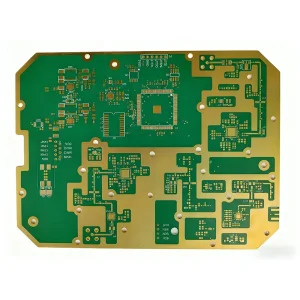
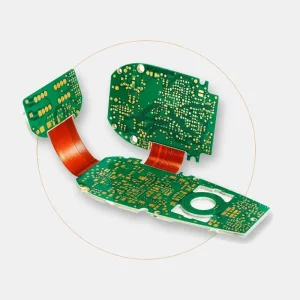
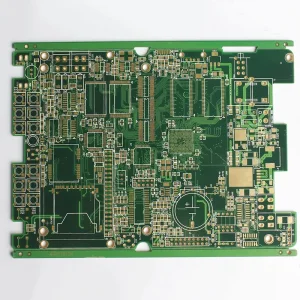
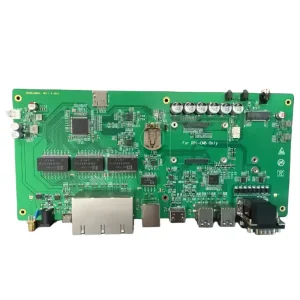
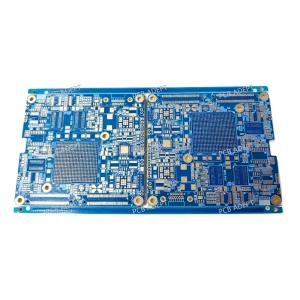
KiCad Open-Source EDA • Rigid-Flex Technical Architecture
Modern commercial hardware design has shifted dramatically toward open ecosystem tools. With KiCad v7, v8, and upcoming v9 releases, electrical engineers gain comprehensive stack-up definitions, customized dielectric layer bounds, and native 3D MCAD STEP integration that rival proprietary tool suites like Altium and Cadence.
KiCad Stackup Zone Management
Seamlessly define multiple physical zones within a single board file. Assign rigid zones with FR-4 stiffeners and multilayer prepregs while constraining intermediate flex zones to adhesive-less polyimide (PI) cores with coverlay boundary masks.
Trace Routing & Fillet Geometries
Eliminate stress concentration points across the flex-rigid transition zone. Automatic teardrop generation, curved track routing perpendicular to the bend axis, and staggered differential pairs ensure signal integrity without copper work hardening.
3D Clearance & MCAD Synergy
Direct STEP export enables mechanical engineers to simulate board unfolding, static installation clearance, and dynamic robotic arm flex cycles. Zero-clearance connector-free interconnects bypass bulky wire harnesses with 100% CAD precision.
KiCad Rigid-Flex Cost Drivers & Engineering Pricelist
Unlike standard rigid boards, rigid-flex manufacturing requires multi-stage selective pressing, specialized acrylic or epoxy prepregs, and precision laser routing. Below is an indicative benchmark pricing structure for prototype and ODM batch runs.
| Layer Architecture | Stackup Profile | Base Materials | Sample Lead Time | Prototype NRE (5-10 Pcs) | ODM Mid-Vol (1k-5k Pcs) |
|---|---|---|---|---|---|
| 4-Layer (1R + 2F + 1R) | Dual Rigid Caps / Sym-Flex Core | Shengyi S1000-2 + Dupont Pyralux PI | 5 - 7 Days | $280 - $390 | $4.80 - $7.50 / unit |
| 6-Layer (2R + 2F + 2R) | Buried Flex / High-Speed Stripline | TG170 FR4 + Adhesive-less FCCL | 7 - 9 Days | $420 - $560 | $8.20 - $12.80 / unit |
| 8-Layer (3R + 2F + 3R) | Multilayer Flex w/ Blind Microvias | Isola / Rogers 4350B Hybrid + PI | 9 - 12 Days | $650 - $880 | $14.50 - $21.00 / unit |
| 10-16 Layer Custom HDI | Any-Layer Flex / Multi-Stiffener SUS | Panasonic Megtron 6 + Dupont AP PI | 12 - 16 Days | Custom Quote | Engineered Quote |
Copper Foil Type
ED (Electro-Deposited) vs RA (Rolled-Annealed): For dynamic flex applications, RA copper is mandatory to endure >100,000 bend cycles without micro-fissuring, adding 8-12% material cost over standard ED foil.
Adhesive vs Adhesive-less FCCL
Adhesive-less flexible copper clad laminates reduce total dielectric thickness, improve thermal dissipation, and eliminate z-axis expansion issues in plated through-holes, providing superior IPC Class 3 reliability.
Laser Profiling & Routing
Flexible zones demand UV laser ablation rather than mechanical milling to eliminate mechanical micro-cracks and fiber fraying. High-precision laser depth-control enables selective coverlay window creation.
China Factory 4.0 • Supply Chain Resilience & Speed
Situated in the heart of Shenzhen's industrial corridor, our digitalized manufacturing facility combines intelligent MES execution, automated optical metrology, and deep local component distribution networks.
LDI Precision Exposure
Orbotech Laser Direct Imaging systems guarantee line/space resolution down to 2.5/2.5 mil (65μm), compensating dynamically for flex substrate thermal distortion.
Vacuum Hydraulic Presses
Multi-stage computer-controlled vacuum laminators provide uniform pressure across irregular step-down zones, eliminating void formation and delamination risks.
Inline 3D AOI & X-Ray
Comprehensive 3D Automated Optical Inspection and non-destructive micro-focus X-ray inspection verify barrel plating thickness and internal BGA solder integrity.
72-Hour Rapid Turn ODM
Direct KiCad gerber-to-tooling CAM automation drastically compresses pre-production engineering reviews, enabling bare-board delivery in as fast as 72 hours.
Mission-Critical Macro Industry Solutions
Rigid-flex circuits replace traditional wire-to-board connectors that fail under high shock, high thermal oscillation, and continuous dynamic mechanical articulation.
Medical Implants & Diagnostics
Class 3 biocompatible flexible circuits for continuous glucose monitors, endoscopic cameras, and neural interface probes. Ultra-miniaturized geometries with 01005 passives and 0.35mm pitch flip-chip packaging.
Aerospace & Anti-Drone Defense
Vibration-immune interconnects for airborne radar assemblies, gimbal counter-UAS electro-optics, and telemetry units. Stackups survive extreme shock loads up to 50G and thermal operating zones from -55°C to +125°C.
Automotive BMS & ADAS Radars
Integrated heavy-copper rigid-flex interconnects replacing complex wiring harnesses inside EV battery modules. Polyimide busbar structures monitor cell voltages with integrated thermistors and zero wiring fault points.
KiCad Rigid-Flex Roadmap: 2026 - 2028 Outlook
Anticipating next-generation manufacturing capabilities, our R&D team works in lockstep with open-source tool maintainers to define process design kits (PDKs) and automated design rule constraints.
Sub-50μm Fine Pitch & Semi-Additive Process (mSAP)
Migration toward modified semi-additive chemistry on ultra-thin 12μm polyimide films, enabling line/space dimensions down to 25μm for next-gen ultra-dense wearable smart glasses.
Embedded Passives & Thin-Film Magnetics
Direct embedding of thin-film capacitance layers and planar transformer cores inside rigid-flex inner laminates, eliminating external SMT footprints and cutting RF impedance discontinuities.
Optical Waveguide Flex Interconnects
Integration of hybrid electro-optical flexible substrates in KiCad, combining copper power paths with polymer optical waveguides capable of >112 Gbps per channel data propagation without EMI emissions.
Compliance Assurance & DFM Verification
Procuring from overseas requires absolute transparency. Every production lot leaving our Shenzhen facility is backed by non-negotiable physical verification protocols and regulatory compliances.
IPC-6013 & IPC-2223 Class 3
Rigorous adherence to qualification and performance standards for flexible and rigid-flex printed boards. 100% microsection verification for hole-wall plating integrity, coverlay adhesion, and barrel knee elongation.
UL 94V-0 & RoHS/REACH
All polyimide substrates, bonding films, FR-4 cores, and epoxy solder masks carry UL flame retardant certification, halogen-free options, and lead-free RoHS/REACH compliance documentation.
Global Logistics & Local FAE Support
Dedicated English-speaking hardware Field Application Engineers (FAEs) conduct real-time KiCad DFM file reviews within 2 hours. Seamless worldwide express delivery (DHL, FedEx, air freight DDP options).
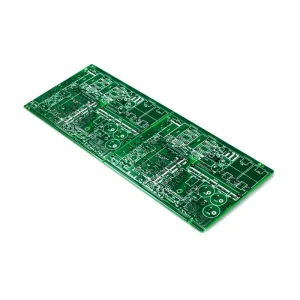
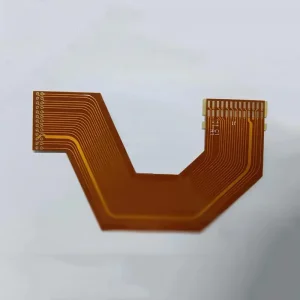
Comprehensive PCB & ODM Assembly Capabilities
From heavy copper high-current converters to specialized anti-drone jamming electronics and flexible interconnects.
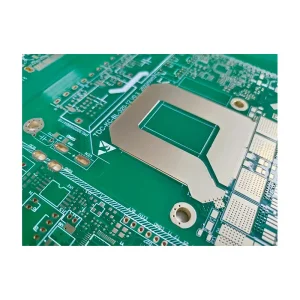
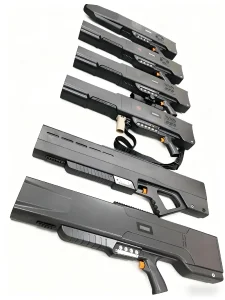
Frequently Asked Questions: KiCad Rigid-Flex Manufacturing
Key technical insights for procurement managers and hardware design teams before submitting KiCad project archives.
Can I submit native KiCad .kicad_pcb layout files directly for manufacturing?
.kicad_pcb project files along with design rules ensures complete stack-up zone visibility, custom drill definitions, and accurate polyimide coverlay window translations without data loss.