
Featured PCB Capabilities for East African Hardware Innovators
Accelerating product development from Nairobi's tech incubators to commercial production with zero minimum order quantities and full turnkey traceability.
-
 Rapid Prototype PCB Engineering & SMT Kitting
 -
 Aluminum Core MCPCB for PayGo Solar & Mini-Grids
 -
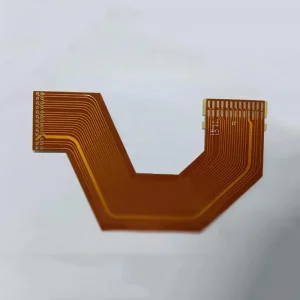 Polyamide Flex Circuit Solutions for Wearables & AgTech
 -
 Precision Microvia HDI Boards for Cellular Gateways
Electronics Manufacturing in Kenya: The Rise of the "Silicon Savannah"
Kenya is rapidly solidifying its position as East and Central Africa’s primary technological powerhouse. Catalyzed by progressive digital transformation initiatives, the establishment of the Konza Technopolis ("Silicon Savannah"), and a vibrant startup corridor along Nairobi’s Ngong Road, demand for bare printed circuit boards (PCBs) and full-turnkey PCB Assembly (PCBA) has experienced unprecedented exponential expansion over the past decade.
Historically, the East African electronics market was largely characterized by wholesale importation of completely assembled consumer hardware. However, a major paradigm shift is taking place across Kenyan enterprises. Domestic hardware developers, research centers such as Gearbox and FabLab Nairobi, and multi-scale original equipment manufacturers (OEMs) are producing proprietary, localized hardware. These home-grown innovations span clean energy (Pay-As-You-Go solar home systems), mobile financial payment processing terminals (mPOS), IoT agricultural weather arrays, and decentralized smart water-metering networks.
Because Kenya currently possesses limited domestic high-layer bare-board chemical wet-fabrication plants due to high capital and rigorous environmental wastewater-treatment prerequisites, leading Kenyan enterprises form strategic manufacturing alliances with world-class facilities in Shenzhen. This hybrid model empowers Kenyan engineers to rapidly iterate prototypes and scale mass production without having to finance billion-shilling capital outlays on local wet-chemical fab plants.
Empowering Nairobi’s Hardware Ecosystem
Our turnkey pipeline acts as an off-shore cleanroom for Kenyan engineers. By handling complex raw PCB fabrication (FR-4 High TG, Aluminum MCPCB, Rigid-Flex) and mounting 01005 passives and 0.35mm pitch BGAs, we deliver finished circuit assemblies directly to Nairobi, Mombasa, and Kisumu with expedited air clearance.
Pre-Shipment PVoC & KEBS Alignment
Navigating Kenya Bureau of Standards (KEBS) requirements and Pre-Export Verification of Conformity (PVoC) can cause costly border delays. We integrate mandatory RoHS testing reports, UL94V-0 flammability certificates, and COC documentation directly into every commercial shipment.
Global Electronics Dynamics vs. East African Localized Needs
Understanding the engineering balance between offshore high-yield fabrication and localized final integration in Kenya.
| Evaluation Parameter | Local African Assembly (Workshops) | Global Off-shore Tier-1 (Our Factory) | Impact on Kenyan Hardware Startups |
|---|---|---|---|
| Layer Count Scalability | 1–2 Layer manual/semi-auto routing | 1–64 Multi-layer, HDI Blind/Buried Vias | Enables compact high-performance IoT devices |
| SMT Placement Speeds | 500 - 3,000 components/hour | Up to 120,000 CPH per automated line | Dramatically drops unit pricing for volume runs |
| BOM Component Sourcing | High reliance on fragmented local retail stock | Direct factory partnerships (TI, ST, ADI, Murata) | Eliminates counterfeit components; minimizes supply bottlenecks |
| Thermal Profiling | Standard manual heat guns or basic batch ovens | 10-Zone Nitrogen Reflow + 3D AOI & X-Ray | Guarantees 0-defect solder joints for high-reliability field units |
| Environmental Standards | Variable chemical disposal constraints | Closed-loop ISO 14001 zero-emission facilities | Ensures full compliance with international ESG & RoHS mandates |
Tariff & Duty Optimization
Under the East African Community (EAC) Common External Tariff, importing bare boards and individual electronic components often incurs significantly lower tariffs than importing fully boxed consumer end-products, incentivizing local casing assembly in Nairobi.
Harsh Environment Engineering
Kenya presents diverse regional environments: high salinity along the coastal Mombasa belt, elevated UV in the Rift Valley, and severe red dust in arid northern regions. We supply military-grade conformal coatings (acrylic, silicone, or polyurethane) to prevent circuit corrosion.
Power Grid Fluctuation Defense
Power irregularities in off-grid solar mini-stations require heavy-copper (2oz–6oz) architectures. Our engineering team incorporates specialized suppression layouts to ensure board survival against grid transients and lightning-induced voltage spikes.
Turnkey PCB Factory Capabilities: Built to IPC-A-610 Class 3
Our 8,000 m² Shenzhen facility operates six advanced Yamaha SMT production lines coupled with end-to-end MES tracking, delivering dependable hardware directly to Kenyan OEMs.
Stringent 5-Stage Quality Verification
1. Incoming Quality Control (IQC): All silicon ICs, passives, and substrate materials undergo rigorous inbound verification via digital microscopy and electrical characterization to weed out degraded lots and counterfeit parts.
2. Solder Paste Inspection (SPI): Inline 3D laser scanners examine volume, thickness, and registration accuracy of solder deposits before boards progress to pick-and-place mounting.
3. Pre & Post-Reflow AOI: Automated high-resolution optical inspection verifies component orientation, skew, missing chips, and solder bridging across multi-pin chips and QFNs.
4. 3D X-Ray Inspection (AXI): Ball Grid Arrays (BGAs) and hidden ground-pad packages are non-destructively inspected to ensure void ratios remain safely below 15% under IPC Class 3 guidelines.
5. Functional Testing (FCT): Custom programming jigs flash firmware onto client microcontrollers (ESP32, STM32, Nordic nRF), validating live RF signal transmission prior to vacuum packaging.
Logistics Pipeline to East Africa
We coordinate end-to-end air cargo shipping to Jomo Kenyatta International Airport (NBO) in Nairobi and sea freight to the Port of Mombasa, simplifying Kenyan operations:
- Daily express shipments via DHL / FedEx / UPS directly into Nairobi (3-5 business days).
- Consolidated air cargo clearing support with direct delivery to Nairobi Industrial Area or Westlands offices.
- Full documentation compliance: Commercial Invoices, Packing Lists, Certificates of Conformance (CoC), and Material Safety Data Sheets (MSDS).
- Flexible payment processing terms adapted to international trading currencies (USD, EUR).
Localized Application Scenarios Across Kenya
Tailoring PCB technologies to the specific demands of Kenya’s fastest-growing industrial and consumer sectors.
PayGo Solar & Clean Energy Storage
Kenya is an established global capital for off-grid Pay-As-You-Go solar home systems. Modern charge controllers integrate GSM/GPRS micro-controllers for SIM-card communications with heavy-copper, high-current buck converters, requiring reliable thermal substrates and low-ESR copper layouts.
AgTech & Precision Irrigation
From tea plantations in Kericho to large horticultural greenhouses in Naivasha, agricultural automation relies on soil-moisture probes, ambient telemetry units, and autonomous drip-irrigation pumps. These IoT boards demand ultra-low quiescent sleep currents and corrosion-proof gold finishes (ENIG).
Financial Tech (FinTech) & mPOS Terminals
Kenyan businesses depend heavily on frictionless mobile transactions. We assemble compact, multi-layer HDI circuits with integrated NFC antennas, secure cryptoprocessors, and drop-resistant rigid-flex links, built for continuous daily operation in busy retail hubs.
Wildlife Conservation & Asset Tracking
Kenya leads wildlife protection innovations with GPS/satellite collar transmitters and geofencing beacons. Space constraints dictate 6-to-10 layer rigid-flex PCB designs capable of withstanding rough mechanical shocks, immersion in muddy waters, and wide diurnal temperature swings.
Smart Utilities & Water Metering
Municipal water suppliers in Nairobi, Eldoret, and Kisumu are replacing legacy analog meters with LoRaWAN and NB-IoT smart ultrasonic flow meters. These long-life installations demand ultra-reliable circuit boards, low-leakage solder flux washes, and robust potting protection.
E-Mobility (Electric Bodas & Tuk-Tuks)
With Kenya leading Africa's transition to electric two-wheelers, local OEMs build Battery Management Systems (BMS) and motor controllers that handle high vibrational stress, intense heat, and high pulse currents using heavy copper and aluminum heat sinks.
Complete Production-Grade PCB Solutions for Kenya OEMs
Explore our specialized manufacturing classes, ranging from heavy copper power inverters to microwave RF communications and high-TG industrial boards.
-
 Heavy Copper (Up to 6oz) Solar Inverter PCB
 -
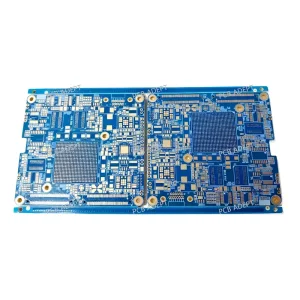 High-Frequency RF Rogers/PTFE Wireless Boards
 -
 Precision High Frequency Boards for 4G/5G Repeaters
 -
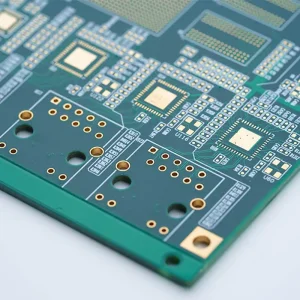 High-TG (TG170/TG180) Industrial Grade Laminates
 -
 Multilayer FR-4 Boards (Up to 32 Layers Controlled Impedance)
 -
 Multi-Layer Rigid-Flex Circuits for Compact IoT
 -
Leading HDI Fab: Advanced Microvia Multi-Lamination
-
Automotive Grade High TG (TG150–TG300) PCB Direct
Frequently Asked Questions for Kenyan Procurement & Hardware Engineers
Clear answers regarding international shipping, design validation, minimum order sizes, and regional quality standards.
What are typical delivery times from your factory to Nairobi or Mombasa?
For bare PCB rapid prototyping (2 to 4 layers), manufacturing takes 24 to 72 hours. Turnkey PCBA (fabrication, component sourcing, SMT assembly, and automated testing) generally finishes within 7 to 12 working days. Once dispatched, international air express couriers (DHL Express, FedEx, UPS) deliver directly to doorsteps in Nairobi, Mombasa, or Kisumu within 3 to 5 business days, complete with tracking.
How do you assist Kenyan companies with KEBS and import certification?
We supply full Pre-Export Verification of Conformity (PVoC) compliance documentation on request, including RoHS compliance test reports, UL 94V-0 flammability certificates, Certificate of Conformance (CoC), and detailed harmonized system (HS) billing codes. This paperwork allows your freight forwarder or customs broker to clear consignments smoothly through the Kenya Revenue Authority (KRA) and Kenya Bureau of Standards (KEBS).
Can our startup order low quantities for initial prototyping and field testing?
Yes. We have no minimum order quantities (MOQ). You can order anywhere from 1 to 5 pieces for initial field verification in Kenya, then scale to 500, 5,000, or 100,000+ units as your commercial distribution rolls out, all without requiring re-qualification of your Bill of Materials.
Which PCB design files are needed for an accurate quotation?
To provide a detailed DFM analysis and quotation within 24 hours, please share your standard Gerber RS-274X or ODB++ files, drilling parameters, layer stackup specifications, and an itemized Excel Bill of Materials (BOM) including manufacturer part numbers (MPNs), reference designators, and package footprints.
How do you verify component authenticity and avoid grey-market parts?
We source active silicon and passive components through authorized global distributors (Digi-Key, Mouser, Element14, Arrow) or directly from certified original component manufacturers (Texas Instruments, STMicroelectronics, Analog Devices, Espressif). Every batch undergoes incoming inspection, date-code tracking, and X-ray verification to ensure complete reliability.
What surface finishes are best suited for Kenya's varied climatic zones?
For general East African applications, Electroless Nickel Immersion Gold (ENIG) is strongly recommended over standard HASL. ENIG provides a flat coplanar surface for fine-pitch ICs, along with superior resistance to oxidation and corrosion in humid coastal areas like Mombasa and Malindi.
Do you offer customized firmware programming and box-build assembly?
Yes. Beyond SMT mounting and through-hole soldering, we offer custom enclosure fabrication (injection molding, CNC, sheet metal), potting, secure firmware flashing for popular platforms (ESP32, STM32, Microchip, Nordic), and functional testing using client-specified test jigs.
Scale Your Electronics Production with Confidence
Connect directly with our engineering team for comprehensive DFM reviews, reliable component procurement, and fast turnkey assembly delivered straight to your operations in Kenya.