
Precision Core Circuit Architectures for Seoul Hardware Innovators
Engineered specifically to support rapid iterative cycles for robotics labs in Pangyo, telecommunication testbeds in Bundang, and microelectronics ventures across Greater Seoul.



The Greater Seoul Microelectronics Matrix & Procurement Demands
A deep dive into the unique convergence of semiconductor heavyweights, autonomous vehicle tech corridors, and the surging requirement for agile cross-border PCB turnkey manufacturing.
Pangyo & Teheran-ro Clusters
South Korea’s premier technology corridors—stretching from Gangnam’s Teheran-ro venture hub to Pangyo Techno Valley—generate immense demand for rapid high-complexity board prototyping. Emerging AI server edge appliances, autonomous mobile robots (AMRs), and smart defense systems necessitate instant NPI cycles without multi-week tooling delays.
- Strict adherence to IPC Class 2 & Class 3 reliability
- Same-day DFM analysis with comprehensive impedance modeling
- Direct air delivery to Incheon Int'l Airport within 24 hours
Strategic Dual-Sourcing Imperatives
With domestic Korean board shops increasingly focusing exclusively on ultra-high-volume semiconductor package substrates (FC-BGA, FC-CSP), local OEMs facing high-mix medium-volume requirements encounter local capacity bottlenecks. Sourcing through qualified Shenzhen manufacturing channels eliminates these capacity locks while protecting commercial margins.
- Cost-reduction margins exceeding 18-28% against domestic tooling
- Resilient secondary supply chain mitigation (China + Korea)
- Scalable transition from 5-piece pilot batches to 100k+ mass runs
Gasan & Incheon Manufacturing
The historical Guro and Gasan Digital Complexes, alongside Incheon’s automotive corridor, host hundreds of high-precision mechatronics, medical scanner, and industrial instrumentation developers. These enterprises require robust component traceability, long-lifecycle part protection, and turnkey box-build validation.
- Traceability through comprehensive MES lot logging
- Counterfeit component detection via XRF and microscope IQC
- Strict ISO 9001:2015 and IATF 16949 production controls
Overcoming Global Component Volatility & Lead Time Risks
How our integrated BOM engineering and SMT assembly infrastructure safeguards hardware timelines for international design houses operating in South Korea.
Strategic Active Component Sourcing & BOM Scrubbing
Navigating global supply chain volatility demands more than basic ordering. Our Shenzhen procurement division leverages direct franchised relationships with Texas Instruments, Analog Devices, STMicroelectronics, and Murata. Before any quotation leaves our desk, dedicated component engineers scrub your Bill of Materials to flag lifecycle alerts, end-of-life (EOL) risks, and unmanageable factory lead times.
For Seoul clients facing sudden inventory freezes on microcontrollers or power management ICs, our team provides functional drop-in pin-compatible alternatives, pre-vetted against electrical schematics and thermal tolerances to maintain hardware launch deadlines.
- Pre-order component verification and authentic X-ray screening
- In-house inventory reserve for standard passives (0201, 0402, 0603)
- Transparent manufacturer part number (MPN) trace records
Integrated One-Stop Turnkey Assembly (SMT & Box-Build)
Fragmented vendor models—buying bare boards from one factory, sourcing chips from brokers, and contracting local assembly—waste critical weeks and obscure engineering accountability. We compress this workflow into a single traceable contract managed in an 8,000 m² advanced facility equipped with 6 high-speed YAMAHA SMT production lines.
From solder paste inspection (SPI) to pre-reflow optical checks, dual-sided 3D AOI, First Article Inspection (FAI), and customized functional circuit testing (FCT), every stage is serialized directly to our MES database, ensuring painless compliance verification for foreign audits.
- Fine-pitch BGA mounting down to 0.35 mm pitch with X-ray inspection
- Selective wave soldering and lead-free RoHS-compliant reflow
- Custom mechanical integration, cable harnesses, and potting
Technological Roadmap: Enabling Next-Generation Substrates
Aligning manufacturing tolerances with South Korea's forward-looking 6G wireless infrastructure, AI computing, and electric autonomous vehicle architectures.
High-Layer Any-Layer HDI
Sub-40µm microvia technology, stacked microvias with copper-filled cores, and ultra-dense routing for miniaturized medical trackers and handheld edge computing nodes.
Hybrid High-Frequency Stacks
Laminating Rogers RO3003/RO4835 and Taconic with high-Tg FR-4 prepregs. Engineered specifically for ADAS millimeter-wave radar modules and low-loss satellite transceivers.
Ultra-Low Insertion Loss (mSAP)
Transitioning toward Modified Semi-Additive Processes (mSAP) to achieve 20/20µm line/space geometry, supporting high-speed PCIe Gen 5/6 and PAM4 112Gbps signal integrity.
Extreme Thermal Substrates
Heavy copper structures exceeding 6oz, embedded copper coin integration for GaN/SiC power modules, and specialized ceramic-filled hydrocarbon dielectrics.
Seamless Incheon Clearance & Rigorous Regulatory Standards
Eliminating import friction through automated customs documentation, KC marking compatibility, and daily express air freight to South Korea.
Incheon Cargo Hub Synergy
Operating directly out of Bao'an, Shenzhen—minutes from Shenzhen Bao'an International Airport (SZX)—enables daily non-stop cargo flights directly into Incheon International Airport (ICN). Standard prototype shipments clear customs seamlessly and arrive at Seoul or Bundang engineering desks within 24 to 48 hours of line completion.
KC Compliance & Testing Preparation
Bringing electronics into the Republic of Korea requires strict adherence to KC (Korea Certification) EMC and safety standards. We fabricate dedicated test coupons, impedance verification reports, and supply full material declarations (RoHS/REACH compliant) to guarantee rapid laboratory approval.
Transparent Bilateral Support
Our English-fluent technical sales engineering desk bridges timezone nuances seamlessly. With instant quotation response times, comprehensive engineering queries (EQ) resolved before copper etching, and flexible billing systems, your team experiences domestic-level communication with direct factory pricing.
Advanced PCB Technologies Engineered for Heavy Industrial Demands
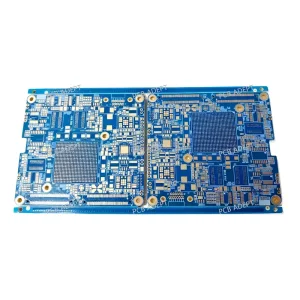
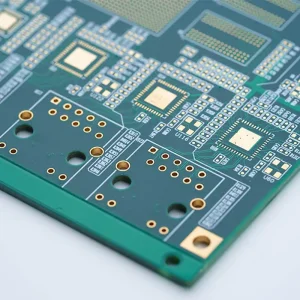
From heavy copper motor drives to high-frequency radar and aerospace telemetry, our certified factory lines deliver unyielding electrical stability.




Frequently Asked Questions for Engineers & Buyers
Transparent insights covering customs handling, technical capabilities, quality validation, and supply chain management for the Korean market.
How fast can PCB prototypes be delivered to an office in Seoul or Pangyo?
For standard 2 to 4-layer FR-4 prototype builds, fabrication takes 24 hours. Once handed over to our express air logistics partner (DHL/FedEx or direct Incheon consolidated air couriers), customs clearance and local ground transport to Seoul, Seongnam-si (Pangyo), Suwon, or Incheon typically take an additional 24 to 48 hours. Turnkey PCBA runs generally complete within 3 to 9 working days once components are marshaled.
What documentation do you provide for Korean customs and KC EMC certification?
We supply comprehensive documentation required for Korean import compliance, including commercial invoices with harmonized system (HS) codes, packing lists, Certificate of Conformance (CoC), material flame resistance ratings (UL 94V-0), and full RoHS/REACH substance declarations. For KC certification testing, we can incorporate dedicated test coupons, impedance coupons, and cross-section microsection reports with every shipment.
How do you guarantee against counterfeit active electronic components?
Our procurement division maintains an uncompromising zero-tolerance counterfeit prevention policy. All microcontrollers, FPGAs, and active analog ICs are procured directly from franchised distributors (e.g., Arrow, Avnet, Mouser, DigiKey) or authorized tier-1 factory channels. Incoming components undergo stringent IQC inspection: optical surface inspection, pin coplanarity validation, marking permanence testing, date-code checks, and X-ray imaging for die verification before kitting.
Can you manufacture high-frequency hybrid stackups with Rogers and FR-4?
Yes. We specialize in hybrid lamination cycles bonding high-frequency hydrocarbon/PTFE ceramic laminates (such as Rogers RO4350B, RO4003C, or RO3003) with standard mid or high-Tg FR-4 cores. This approach allows Korean RF developers to position expensive low-loss laminates solely on outer RF signal layers while using cost-effective FR-4 for internal power and digital routing layers, drastically reducing fabrication expense.
What is the minimum order quantity (MOQ) for PCBA pilot runs?
There is no minimum order quantity. We support hardware development teams from early-stage proof-of-concept (POC) builds starting at just 1 to 5 pieces. Our SMT setup workflows are optimized for agile changeovers, allowing fast pilot transitions to 500-unit pilot market evaluations and subsequent scaling to 50,000+ unit mass production without switching manufacturers.
How do you safeguard intellectual property (IP) and proprietary schematics?
We operate under legally enforceable bilateral Non-Disclosure Agreements (NDAs). Design files, Gerber layers, firmwares, and proprietary test jigs are stored in segregated, encrypted local networks with role-based access controls. Customer firmware is injected into MCUs via automated, locked fixtures with verification checksums, ensuring zero exposure or leakage throughout the production lifecycle.
Partner with an Accountable OEM PCB Leader
Join over 500 electronics innovators worldwide who depend on our ISO 9001 quality system, 99.8% first-pass yield, and rapid cross-border delivery to South Korea.
Send Inquiry Now