
Agile Hardware Prototyping & High-Density Interconnects
Immediate access to qualified rapid turn fabrication platforms, multilayer stacks up to 60 layers, and turnkey microelectronics assemblies.

Famous China PCB Prototyping: Leading Suppliers and Factory Solutions
Explore Solution →
High-Quality 1-60 Layers Multilayer PCB - Fastest 48 Hours, IPC2 Grade
Explore Solution →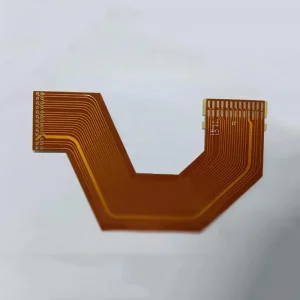
OEM Flexible PCB Suppliers - Bending, Folding Connections for Electronics
Explore Solution →
OEM Rapid PCB Prototyping and Validation for Modern Electronics
Explore Solution →
High-Quality Raspberry Pi HAT Manufacturers & IoT Assembly Solutions
Explore Solution →
High-Density Interconnect (HDI) PCB - Advanced Circuit Microvia Solutions
Explore Solution →
China Flexible PCB Factory - Lightweight, Bendable Circuits For Smart Tech
Explore Solution →
Raspberry Pi HAT Expansion Boards - Direct OEM Integration for Edge AI
Explore Solution →The Paradigm Shift in Fast-Turn Electronic Manufacturing Services
The global electronics design life cycle has condensed from quarters to weeks. Hardware engineering teams operating in robotics, aerospace, medical microdevices, and high-speed edge AI compute can no longer tolerate segmented supply chains where PCB fabrication, passive sourcing, active IC procurement, and Surface Mount Technology (SMT) mounting operate in silos.
Current State of Global ODM PCB Assembly Ecosystems
Understanding supply chain localization, high-density demand, and geopolitical shifts driving rapid-turn electronics manufacturing in 2026 and beyond.
High-Mix, Low-to-Mid Volume (HMLV) Hegemony
Traditional Tier-1 EMS conglomerates concentrate on multi-million-unit consumer production, stranding medium-scale innovators. Modern fast-turn ODM companies have re-engineered agile production lines capable of switching SMT programs and feeder setups in under 15 minutes, lowering setup costs while supporting batch runs of 5 to 5,000 units.
AI Hardware Prototyping Cycle Acceleration
With edge inference devices, FPGA evaluation systems, and neural network sensor nodes driving hardware upgrades, development timelines have compressed. ODM fast turn manufacturers eliminate standard 6-week prototyping latency, condensing bare-board fabrication, components sourcing, automated assembly, and X-ray inspection into 3 to 7 working days.
Shenzhen Component Supply Chain Density
The geographic proximity within the Pearl River Delta (Bao'an & Huaqiangbei) enables direct access to verified distributors of Texas Instruments, Analog Devices, STMicroelectronics, and Murata. Sourcing latency is reduced by up to 80% compared to Western assembly facilities, preventing supply chain gridlocks.
Localized Deployment Scenarios & Case Blueprints
How industry leaders leverage fast-turn ODM assembly across extreme environmental, thermal, and signal integrity requirements.
Automotive & EV BMS
Heavy copper circuitry (3oz to 10oz) combined with specialized thermal substrate assembly for high-voltage battery management systems, on-board chargers, and dynamic traction inverters adhering to strict automotive tolerances.
RF & Anti-Drone Systems
Hybrid stack-ups bonding Rogers 4350B or Taconic with FR-4. Controlled impedance tolerances within ±5% designed for phased-array radar, counter-UAS directional jammers, and satellite uplink modules.
Class-II/III Medical Devices
Ultra-miniature rigid-flex assemblies deployed in non-invasive patient monitors, diagnostic lab-on-a-chip hardware, and high-frequency ultrasound transducer probes requiring lead-free biocompatible soldering.
Industrial Robotics & PLCs
High-reliability, conformal-coated PCBA modules constructed to withstand constant mechanical shock, wide operating temperature swings (-40°C to +125°C), and corrosive atmospheric exposure.
Process Capabilities: Fast-Turn vs Conventional Assembly
Benchmark analytical parameters across DFM validation, surface finishes, pick-and-place precision, and non-destructive testing.
| Process Vector | Standard Commercial EMS | Adept PCBA Fast-Turn ODM Framework | Verification Standard |
|---|---|---|---|
| BOM & DFM Verification | Manual review (3-5 business days) | AI CAM + Automated DFM Check within 2 Hours | Valor MSS / Genesis CAM |
| Micro-BGA Placement Pitch | Down to 0.5 mm ball pitch | Down to 0.3 mm pitch (01005 passive capability) | Yamaha S20 / Optical Fiducial |
| Solder Quality Verification | Manual optical / 2D AOI sampling | 100% 3D SPI (Inline) + 3D Multi-Angle AOI | IPC-A-610 Class 3 Standard |
| Hidden Joint Inspection | Destructive cross-section testing | High-Resolution 3D AXI (X-Ray Computed Tomography) | Voiding Analysis < 15% |
| Supply Chain Traceability | Lot-level tracking | Component-Level 2D DataMatrix UID (MES System) | Full Digital Audit Trail |
DFM & BOM Scrubbing
- Automated clearance and annular ring verification
- Component footprint vs package dimension cross-checking
- Lifecycle analysis (EOL, NRND, Obsolete mitigation)
Precision SMT & Soldering
- High-precision laser cut stepped stencils
- 10-zone nitrogen reflow ovens with custom profiles
- Selective soldering for through-hole connector modules
FCT & Box-Build Integration
- In-circuit test (ICT) and flying probe validation
- Custom functional test fixtures with boundary scan
- Thermal stress screening, aging chambers, and potting
Mitigating High-Risk Engineering Pitfalls in Fast-Turn ODM
Systematic engineering protocols to eliminate delays, thermal warping, and counterfeit components before bare copper hits the assembly lines.
Thermal Gradient Matching in Mixed Assemblies
Combining heavy-copper power rails with delicate 0201 sensor networks leads to uneven heat sinking during reflow, causing tombstones and voiding. Our thermal profiling team applies custom carrier jigs, specialized thermal relief layouts, and staggered reflow heating curves to guarantee balanced heat distribution across asymmetric PCB layouts.
Counterfeit IC Mitigation & Component Verification
Uncontrolled fast-turn brokers frequently introduce refurbished or clone ICs into the assembly process. Our dedicated Incoming Quality Control (IQC) protocol executes decapsulation tests, X-ray leadframe evaluations, marking acetone tests, and electrical pin impedance tests to verify authenticity against manufacturer datasheets.
Legacy Re-Engineering & Firmware Integration
When original schematics are unavailable or key active components face sudden obsolescence, our ODM reverse engineering engineers regenerate complete CAD stack-ups, develop pin-compatible drop-in replacement circuitry, and flash validated base firmware within the fast-turn prototype execution window.
Frequently Answered ODM PCB Assembly Inquiries
Actionable guidance addressing fabrication lead times, BOM sourcing validations, and Quality Control metrics.
How does Adept PCBA achieve 24 to 48-hour prototype delivery?
By coupling in-house automated bare board quick-turn lines with a comprehensive inventory of standard passives, high-precision laser stencil cutters, and real-time electronic component supply chain integration across Shenzhen's local semiconductor distribution network.
What exact documentation is required for an instant DFM and PCBA quotation?
Provide Gerber RS-274X or ODB++ files, NC drill files, centroid (pick-and-place XY data), and a structured BOM containing manufacturer part numbers (MPN), reference designators, and approved alternative vendors.
Can your lines process mixed surface finish boards and hybrid laminates?
Yes. Our lines routinely fabricate and assemble hybrid multi-layer stacks (e.g., Rogers bonded with FR-4) using specialized selective soldering, ENIG, ENEPIG, and Hard Gold finishes for high-wear edge connectors and RF antennas.
How do you verify solder joint integrity beneath bottom-terminated BGA/QFNs?
We deploy offline high-magnification 3D Automated X-ray Inspection (AXI). This non-destructive test checks for solder bridging, void percentages, wetting angles, and solder ball alignment according to IPC-A-610 Class 3 specifications.
Do you support partial turnkey and consigned component workflows?
Yes. Clients can ship specialized custom microcontrollers, pre-programmed ASICs, or sensitive mechanical parts directly to our Shenzhen warehouse, while our engineering team sources the remaining passives and power semiconductors.
What capabilities do you offer beyond basic SMT board level assembly?
Full ODM turnkey delivery covers plastic and metal CNC machining, 3D additive prototyping, custom cable harnessing, silicon conformal coating, ultrasonic welding, firmware burning, and complete functional retail packaging.
Specialty High-Frequency, Heavy Copper & Rigid-Flex PCBs
Direct factory production lines for thermal management, high current handling, and extreme frequency electronics.

Famous High Frequency PCBs: Solutions for Signal Loss, Crosstalk & EMI
Explore Solution →
High Thermal Conductivity Aluminum PCB - Superior Heat Dissipation
Explore Solution →
ODM Single & Double-Sided Rigid Flex PCBs, 4-16 Layer Complex Multi-Layer
Explore Solution →
ODM Heavy Copper PCB for Power Converters - High Current Capacity
Explore Solution →
China Heavy Copper PCB: Enhanced Heat Dissipation & Current Capacity
Explore Solution →
Famous Rapid PCB Prototyping and Validation for Efficient Development
Explore Solution →
China Flexible PCB Suppliers - Lightweight, Bendable & Foldable Solutions
Explore Solution →